Double Compartment Trash Can: Honest Review
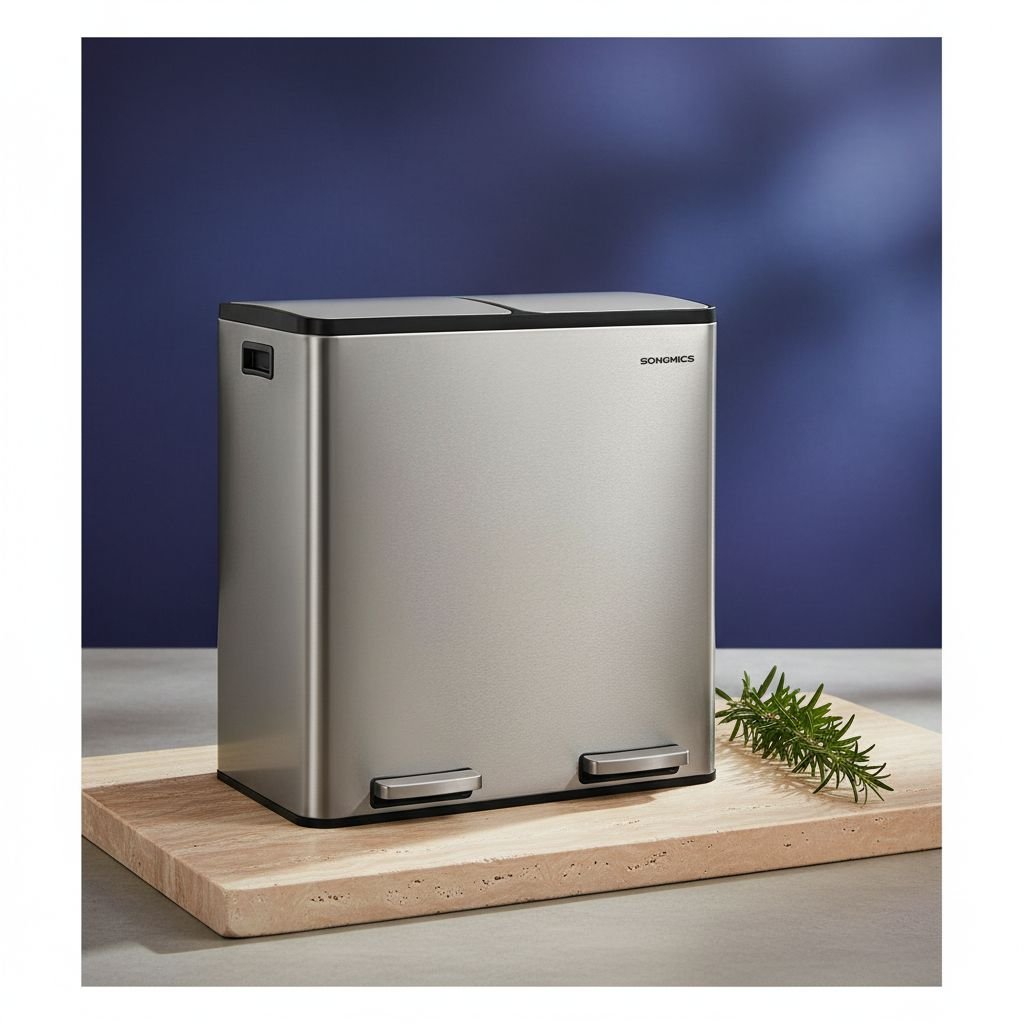
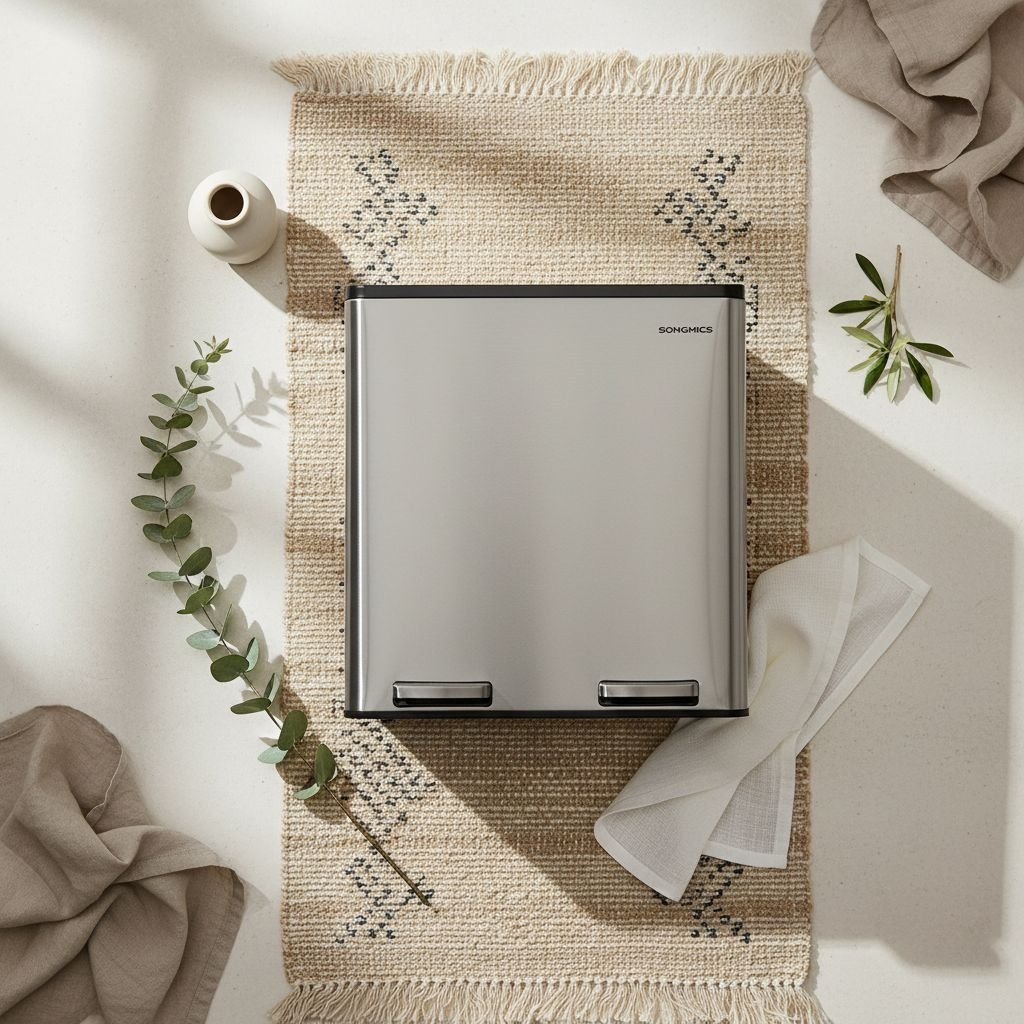
The moment I stopped hiding my trash can inside a cabinet and started treating it like the functional design object it actually deserves to be.
There is a specific kind of shame reserved for trash cans. We tuck them under sinks, wedge them beside refrigerators, drape dish towels over them like small, sad curtains. My kitchen had one of those squat plastic bins I’d owned since my first apartment, the kind that rocks slightly when you step on the foot pedal and smells of the lid’s interior no matter how many times you clean it. On a rainy Tuesday in late October, while making a pasta sauce that required me to separate vegetable scraps from a crumpled paper bag, I hit my limit. The bin was full on one side and empty on the other, and I was standing there trying to balance composting ambitions against a very small kitchen and zero patience. That was the evening I started actually shopping for the SONGMICS Trash Can, 2 x 8 Gallon Double Compartment, and I have genuinely not thought about my old bin since.

The First Time I Saw It
I found this piece the way most of us find things we end up genuinely loving: deep in a research spiral that started somewhere logical and drifted into increasingly specific searches. I had been browsing small-space kitchen organization ideas and kept circling back to the same problem. I didn’t want a bin that would disappear under my cabinet. I wanted something that could sit in the open, near my prep area, without making the room feel messier for its presence.
The double compartment design stopped me cold. Two distinct chambers, clean lines, a solid neutral finish. It looked like something you’d see in a kitchen that had actually been designed, not just assembled from necessity. I ordered it that same week, which, for me, is a very fast turnaround on anything that touches a floor.
How It Actually Lives in the Room
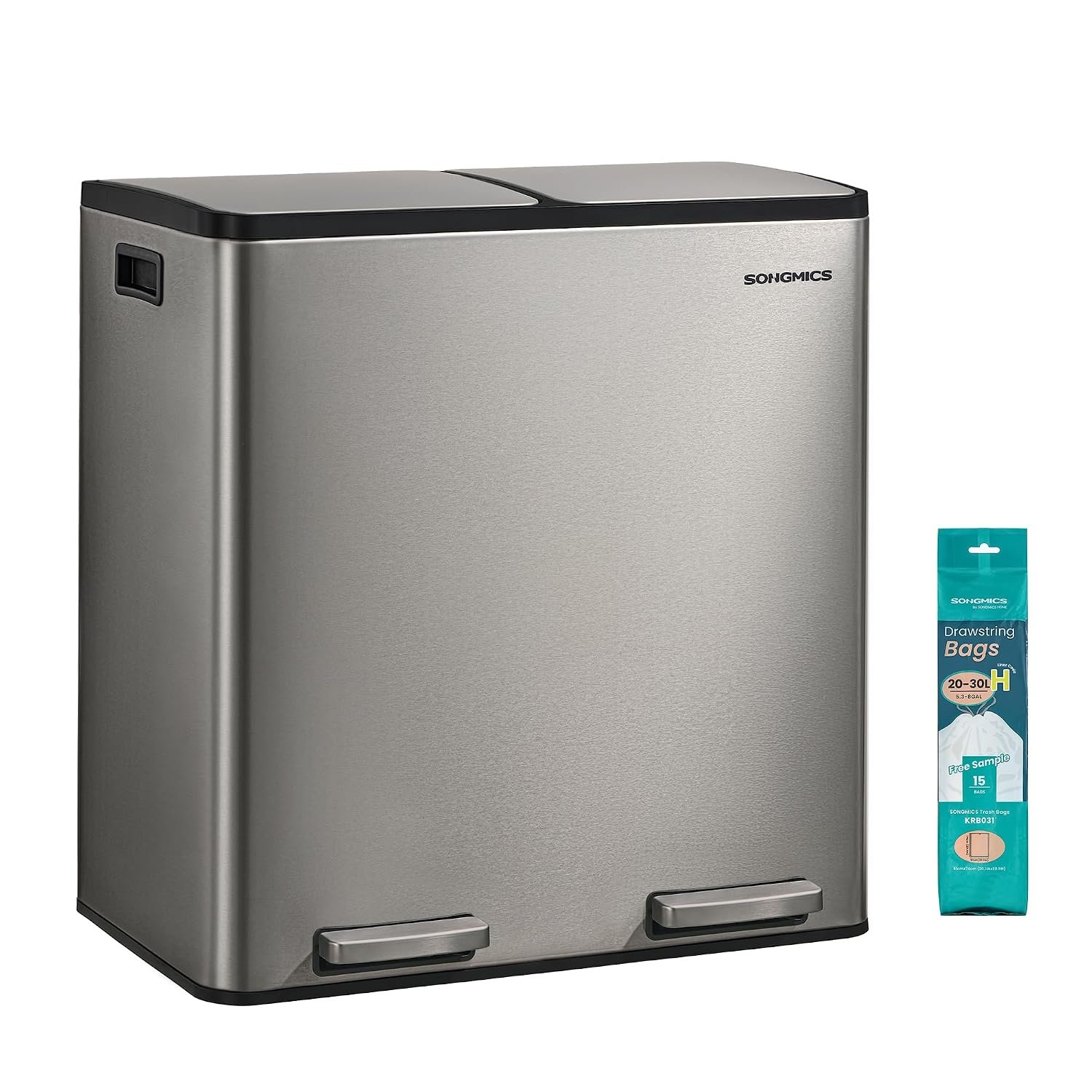
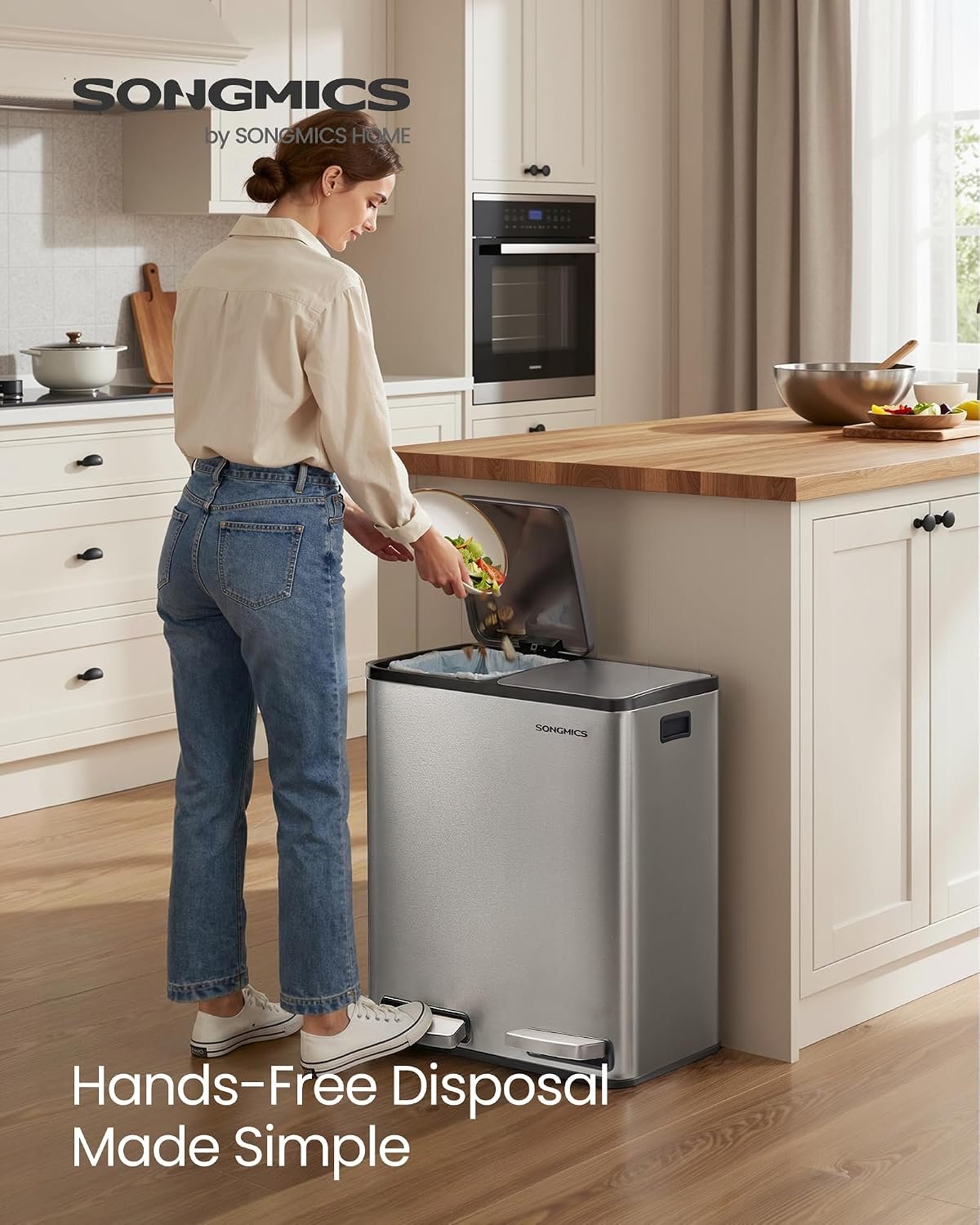
The unit arrived in clean packaging and assembled without any real drama. What I didn’t expect was how the proportions would read in person better than in any product photo. In images it looks slightly corporate, maybe better suited to an office break room than a home kitchen. In my actual space, standing beside my lower cabinets with its low, rectangular silhouette, it reads contemporary and settled. The powder-coated finish has a matte quality that doesn’t attract fingerprints the way a high-gloss surface would, and it reflects just enough of the overhead light to feel intentional rather than invisible.
“A trash can that you don’t feel the need to hide is, quietly, one of the better design decisions a kitchen can make.”
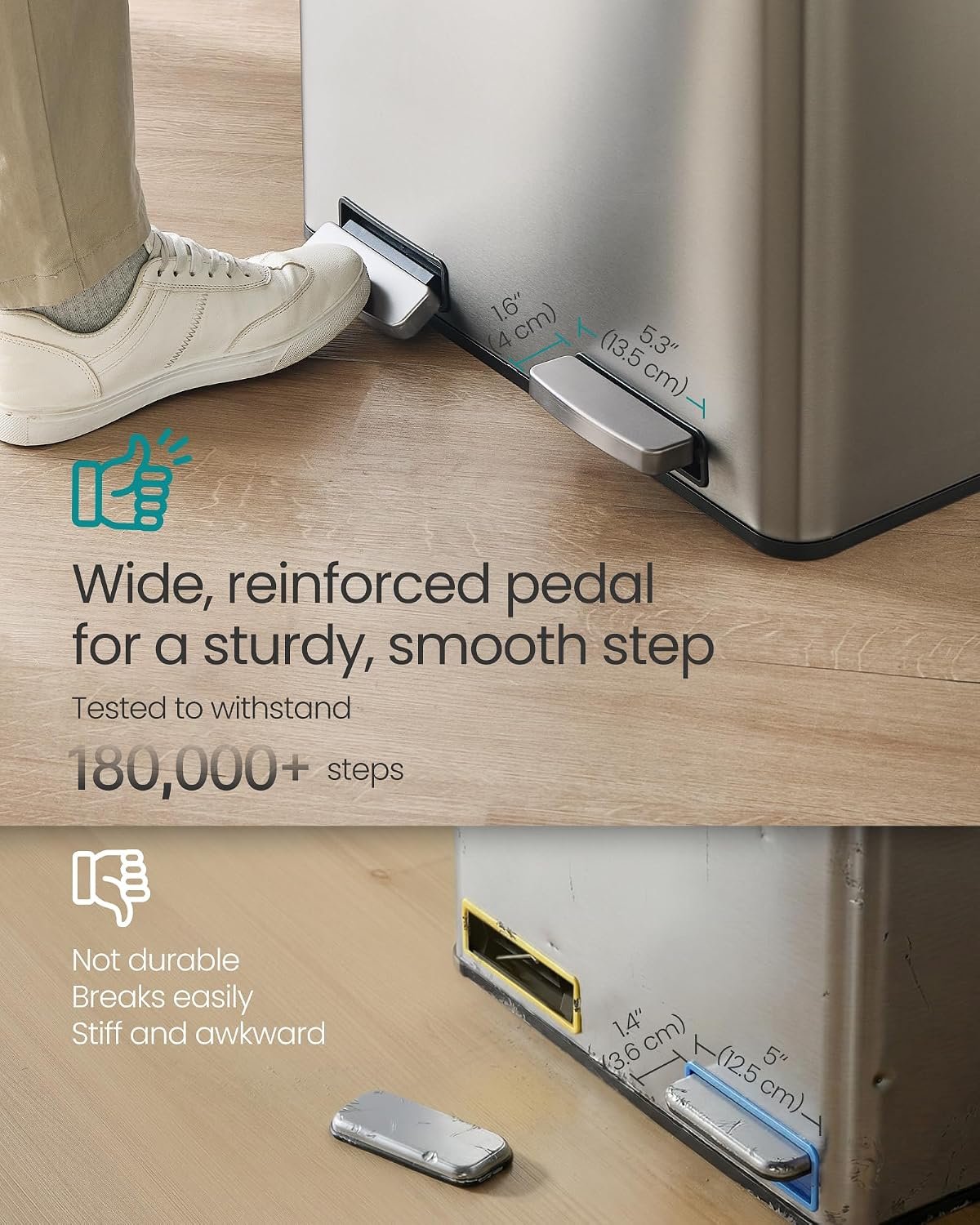
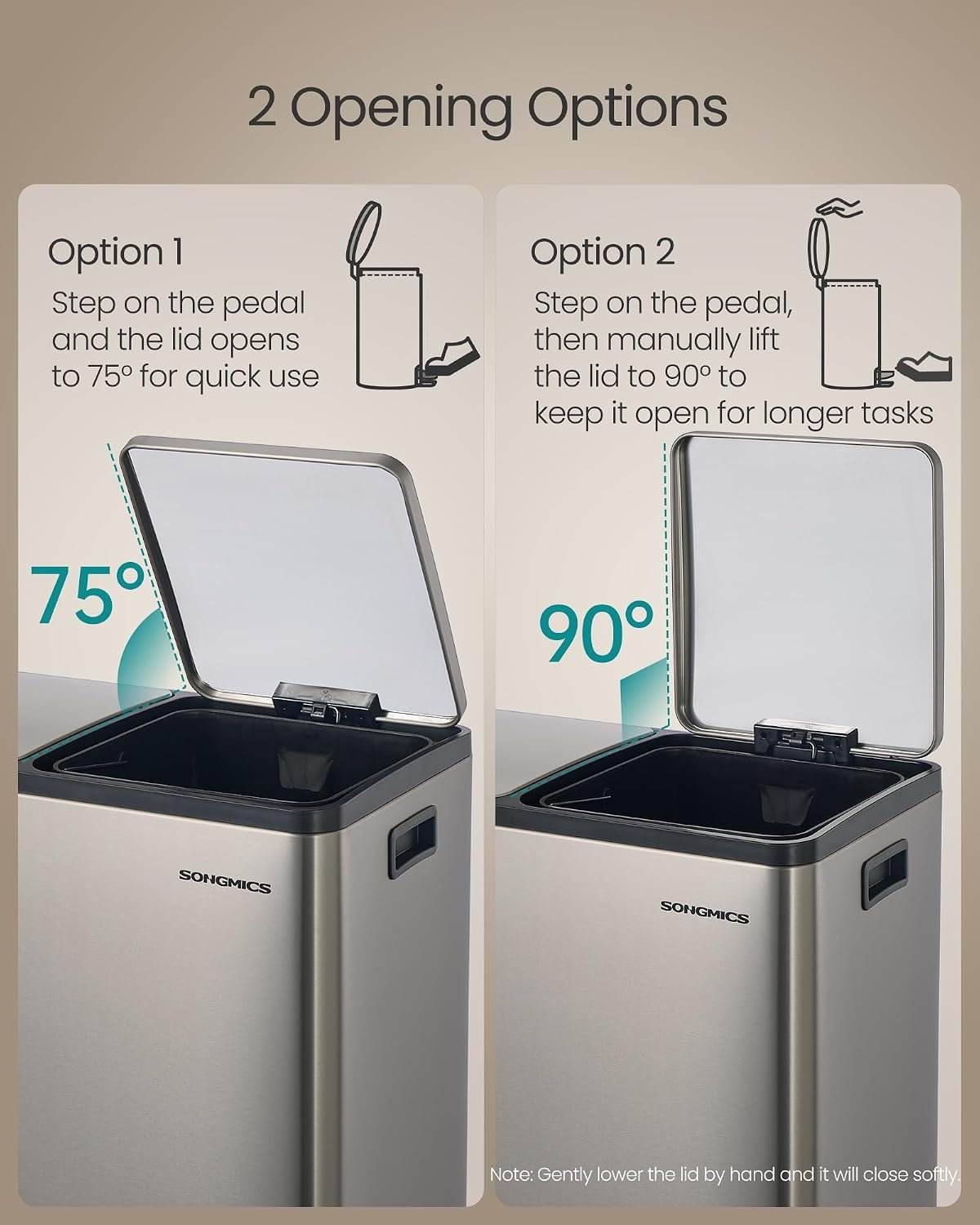
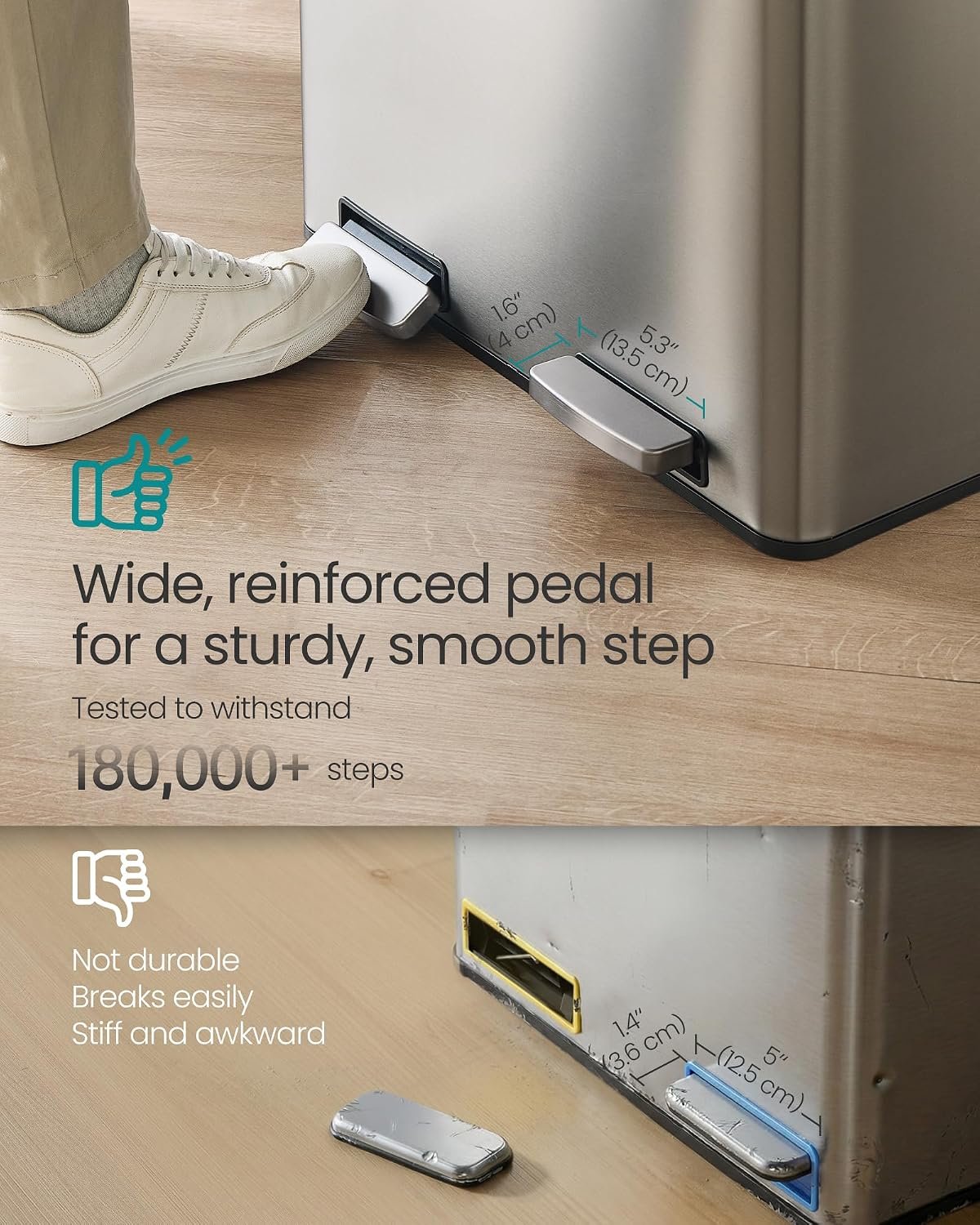
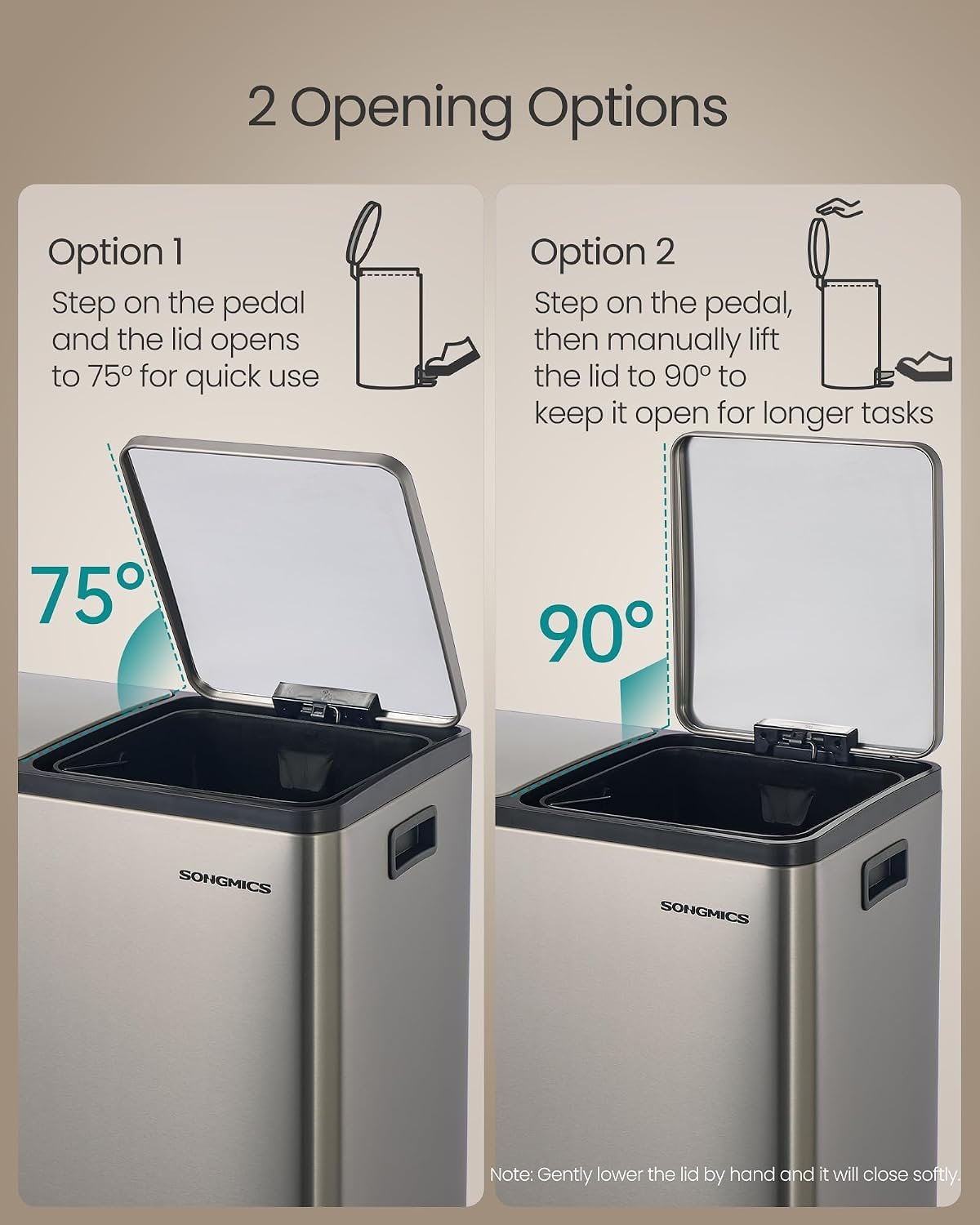
The two 8-gallon compartments are genuinely equal in size, which sounds obvious but isn’t always the case with divided bins. Each side functions independently, which matters when one fills faster than the other. If I am being fully honest, the foot pedal requires a slightly more deliberate press than I expected, less a whisper-light tap and more of a purposeful step. It’s not a flaw exactly, but it’s a calibration. Kitchen design experts frequently note that the mechanics of everyday objects matter as much as their aesthetics, and this one lands somewhere squarely in the functional middle.


The Vignettes I Actually Built Around It
Vignette 1: Sunday Morning, Breakfast Prep + Natural Light
Sunday mornings in my kitchen are quiet and slightly chaotic in the domestic way I’ve come to love. Coffee grinding, an egg or two, citrus peels accumulating on the cutting board. Before this bin, every bit of scraps went into a single container that I was constantly redistributing later. Now the compostable material goes left, the dry waste goes right, and the entire rhythm of cleaning as I cook has changed. The act of sorting is built into the bin itself, which means I’m no longer making small frustrated decisions mid-recipe. There’s something about a kitchen that functions cleanly in the morning that sets a different tone for the whole day. I cannot overstate how much this small shift has improved my Sunday.
Vignette 2: Dinner Party, Six Guests, a Lot of Packaging
The real test of any kitchen object is a dinner party, because that’s when your kitchen operates at actual capacity. I hosted six people in early November, a long meal with multiple courses, which meant a sustained period of opening things, trimming things, and generating a surprising amount of cardboard, glass wrapping, and vegetable waste. The double compartment design meant I wasn’t constantly making judgment calls about what went where. Each guest who wandered into the kitchen during the meal immediately understood what the two sides were for without me explaining a single thing. It was intuitive in a way that good design usually is. The bin sat in full view near my island, and nobody looked at it the way you look at something you weren’t supposed to see.

Vignette 3: A Quiet Weeknight, the Kind Where You Notice Things
There is a specific hour after dinner, dishes mostly done, the kitchen going quiet, where I actually notice what my space looks like. It’s the hour when things that are merely functional become either satisfying or mildly annoying. Standing at the sink on a Wednesday, I looked at the bin from across the room and thought: it belongs there. It doesn’t beg for attention or apologize for existing. Paired with the matte black cabinet hardware and the pale gray of my lower cabinets, it reads like it was always part of the plan. The best functional objects in a kitchen are the ones that stop being objects and start being part of the room. This one crossed that line faster than I expected.
What Other People Are Saying
This SONGMICS double compartment trash can review landscape reflects something interesting: the people who love it tend to cite the same two things, the compartment symmetry and the visual presence in an open kitchen. The people who are more measured in their enthusiasm usually mention the foot pedal weight or the liner sizing, which requires a moment of attention during setup but is not a dealbreaker by any common account.
With well over two thousand ratings sitting at a strong aggregate score, the pattern is consistent enough to be meaningful. The praise is functional, not aspirational, which is actually the more reliable kind.

Who Should Skip It
If your kitchen is genuinely compact and you’ve already committed to an under-counter or pull-out drawer bin system, this freestanding unit won’t work for you spatially. It needs floor clearance and a visible position to make sense. It also won’t suit kitchens with a warmer aesthetic, think farmhouse shiplap, distressed wood, terracotta tile. The modern minimalist profile is specific enough that it reads slightly cold in spaces that are built around texture and warmth. And if you are a one-person household generating very low waste volume, two 8-gallon compartments may simply be more bin than your daily life requires.
What It Replaces in My Space
What this replaced was a plastic bin that had served me loyally and without distinction for several years. It was the kind of object I never thought about until the moment it annoyed me, which was frequently. Beyond the physical object, it replaced the habit of hiding. I had organized my kitchen workflow around concealing the trash function rather than integrating it. Removing that workaround has made the room feel more coherent. I also gave up a small amount of floor space to the larger footprint, which was worth the trade almost immediately. See our full kitchen countertop and surface decor ideas if you’re also rethinking what else deserves to live in the open.

FAQ
What are the actual footprint dimensions, and will it fit in a standard kitchen layout?
The unit’s footprint is compact enough for most kitchens when placed beside cabinetry or at the end of an island, but measure your floor run before ordering. It sits lower than you might expect, which actually helps it read as furniture-adjacent rather than appliance-adjacent.
What liner bags does this take, and are they easy to find?
Each 8-gallon compartment takes standard kitchen bags in that size range, which are widely available in most grocery and home stores. The liner ring design holds bags securely so they don’t slip down during use, which is one of those small details that matters more than it sounds.
Where in the kitchen does it work best?
Near a prep zone is the most logical placement, somewhere between your cutting board and your sink. It also works well at the end of a kitchen island if you have an open-plan layout, since the clean profile holds up from multiple sightlines.
Is the quality consistent with what you’d expect from a bin at this price point?
The finish and construction read above what this tier typically delivers. The metal is solid, the lid mechanism is consistent, and nothing about the build suggests it will degrade quickly with daily use. For what you’re paying, the quality-to-longevity ratio is genuinely strong.
Is assembly required, and what is the return experience like if it doesn’t work?
Minimal assembly is involved and most people complete it without tools in under fifteen minutes. Returns follow standard platform policy, and given the packaging quality, it ships well enough that arrival damage is not a common complaint in the review record.
The Verdict
I keep coming back to that rainy Tuesday, the one where I was standing over a single bin trying to sort a sauce’s worth of scraps by feel. What I wanted was a kitchen that functioned the way I cooked, with some intention, with a little organization built in rather than bolted on afterward. The SONGMICS 2 x 8 Gallon Double Compartment bin gave me that, and it did it while looking like it always belonged in the room. It is not a statement piece in the way a pendant light or a ceramic bowl is. But it is a considered piece, and in a well-used kitchen, that distinction matters more than most people expect.
If you are rethinking your kitchen organization from the ground up, explore our complete kitchen and dining decor category for the full picture. If you’re specifically building out a waste-and-sorting system, check our editor’s top kitchen picks for what pairs well with this bin in a cohesive setup. For anyone who enjoys gifting practical-but-beautiful objects, this is also worth bookmarking in our home and kitchen gift ideas guide.
The bin I replaced served me without complaint. This one serves me with a little more dignity. For a daily-use object that lives in plain sight, dignity is exactly the right standard to hold it to. And for what you’re paying, this one clears that bar with room to spare. Browse companion pieces in kitchen glassware and everyday tableware or pick up some thoughtfully designed kitchen dish towels to finish the aesthetic, because once you start treating your kitchen as a designed space rather than a functional one, the good decisions tend to compound.
Recommended. Especially for open kitchens, two-person households, and anyone whose composting habits have outpaced their bin situation.
Every Angle
The piece as photographed for Amazon — front, side, back, detail.
As an Amazon Associate I earn from qualifying purchases.