Metal Tilt-Out Trash Cabinet: Honest Review
The moment I stopped hiding my trash can behind a curtain panel and started treating waste management like the design problem it actually is, my kitchen finally made sense.
There is a particular kind of Sunday morning that exposes every flaw in a kitchen. The light comes in flat and honest, the counters are cluttered from yesterday’s dinner, and the trash can, that humble, necessary, deeply unglamorous object, sits in its corner radiating chaos. Mine was a silver step-can I’d owned since my first apartment, and for years I tolerated it the way you tolerate a flickering overhead light: constantly, quietly, resentfully. It was only when I started rethinking the kitchen as a whole room rather than a collection of appliances that I admitted the problem out loud. **The trash situation was undermining everything else.** That’s when I found the JFHID Metal Double Tilt Out Trash Can Cabinet, and I decided to take it seriously.
The First Time I Saw It
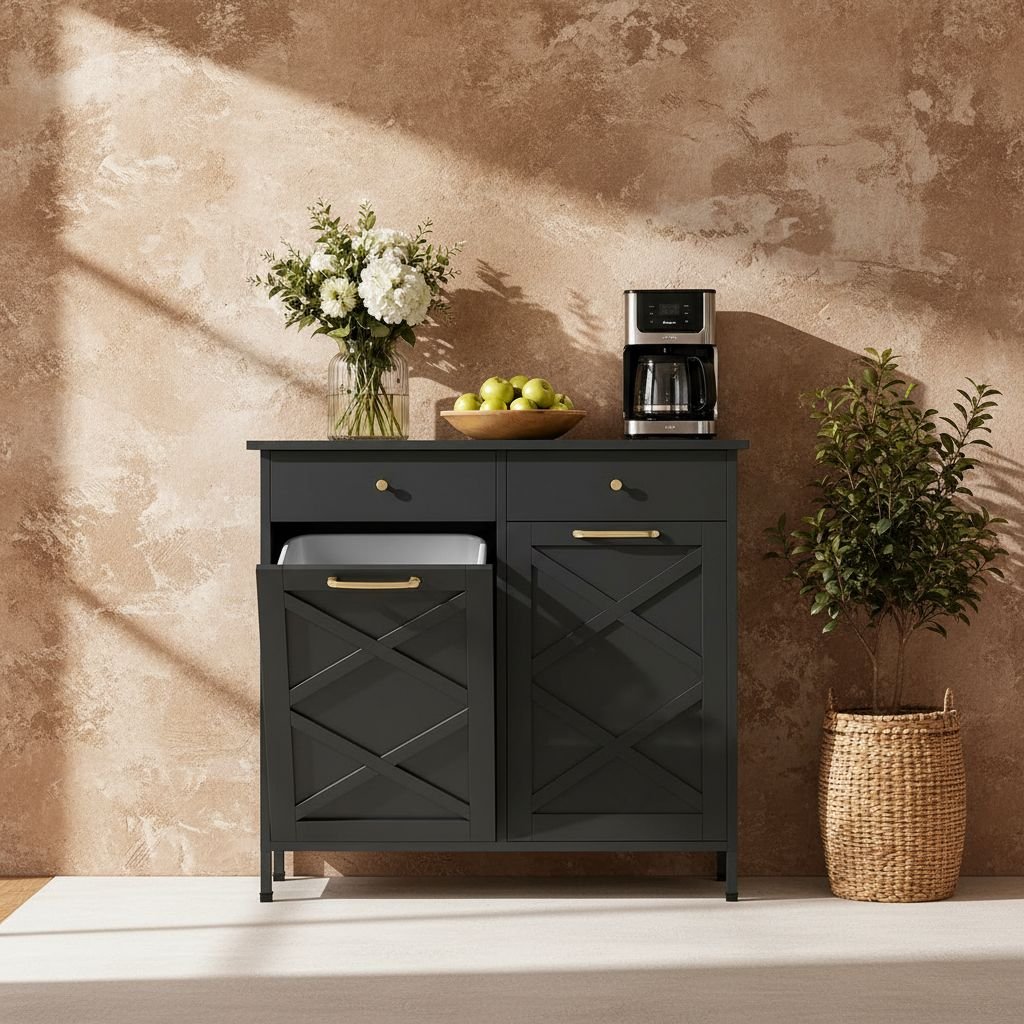
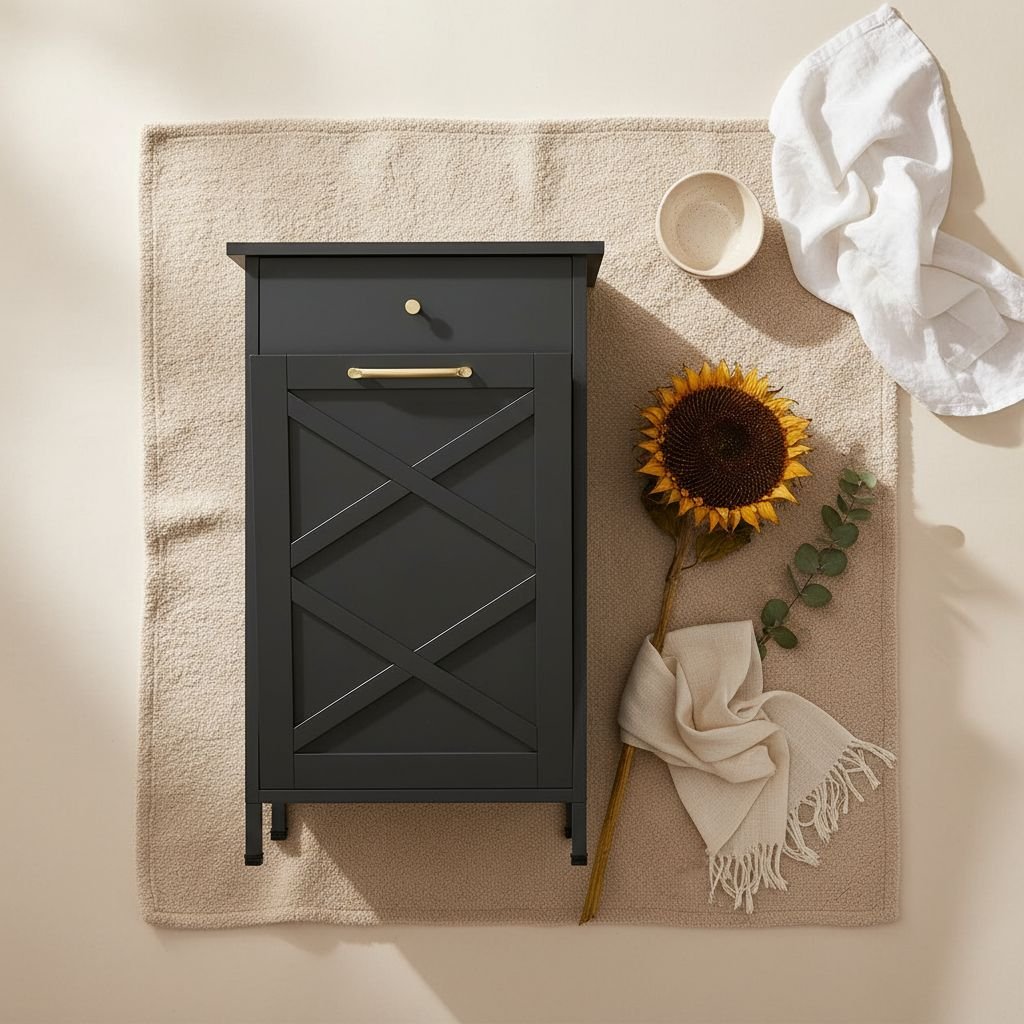
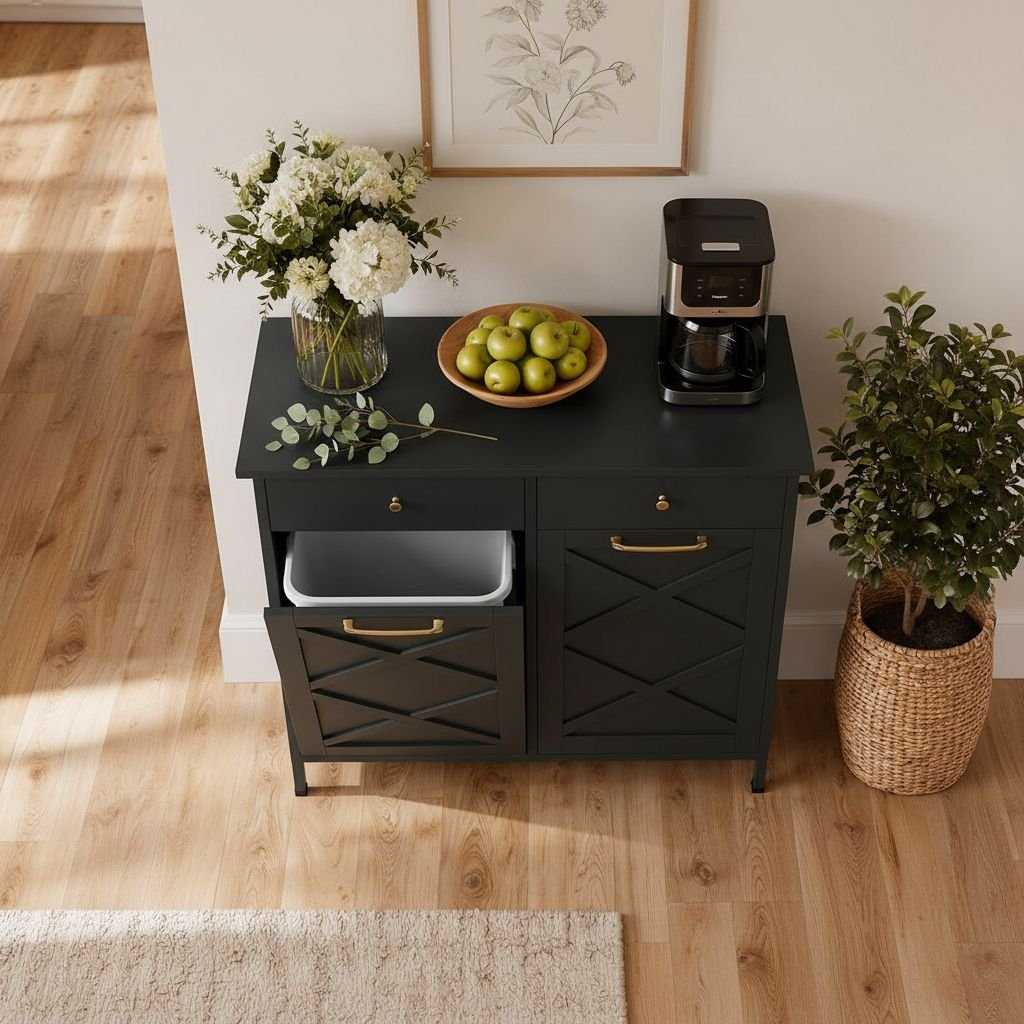
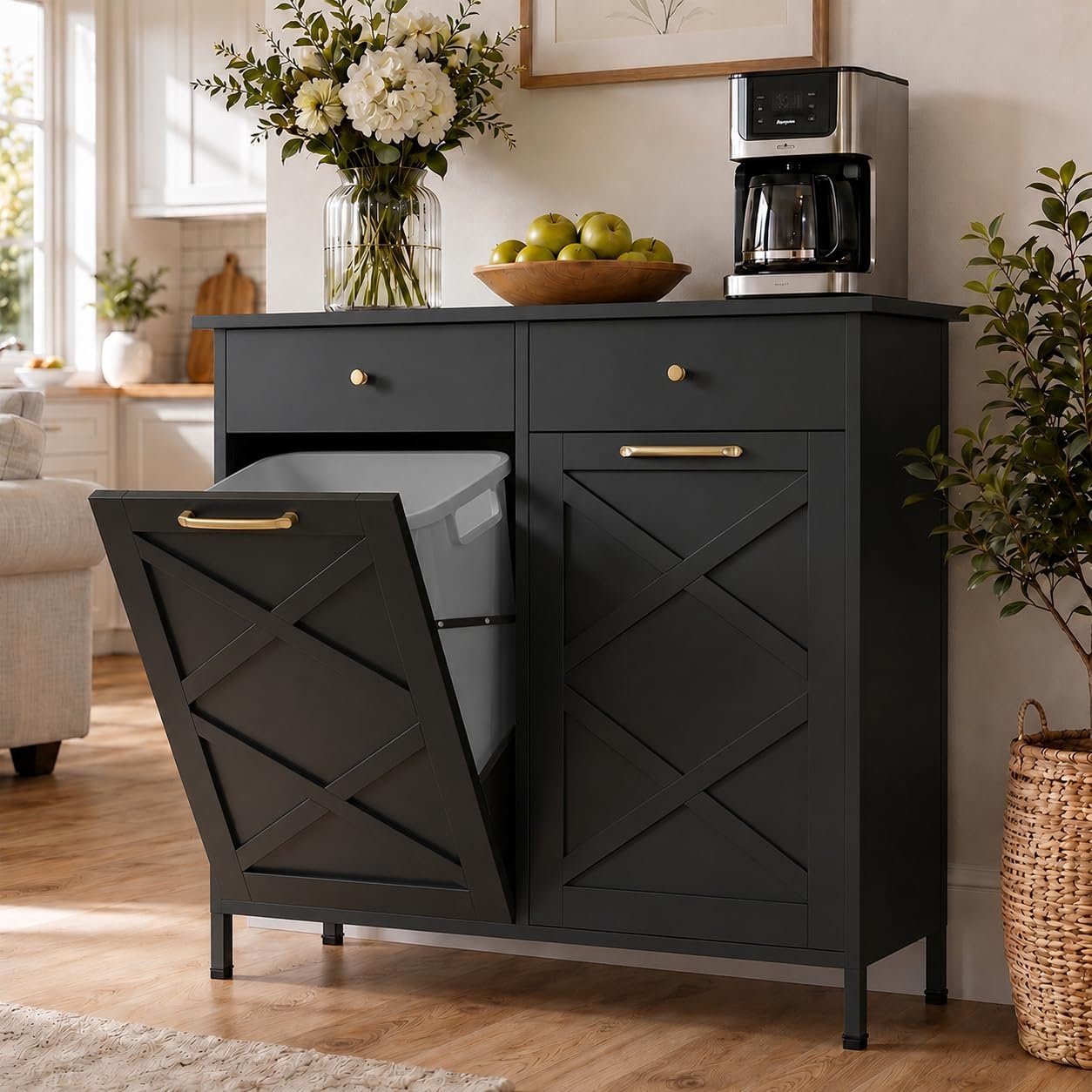
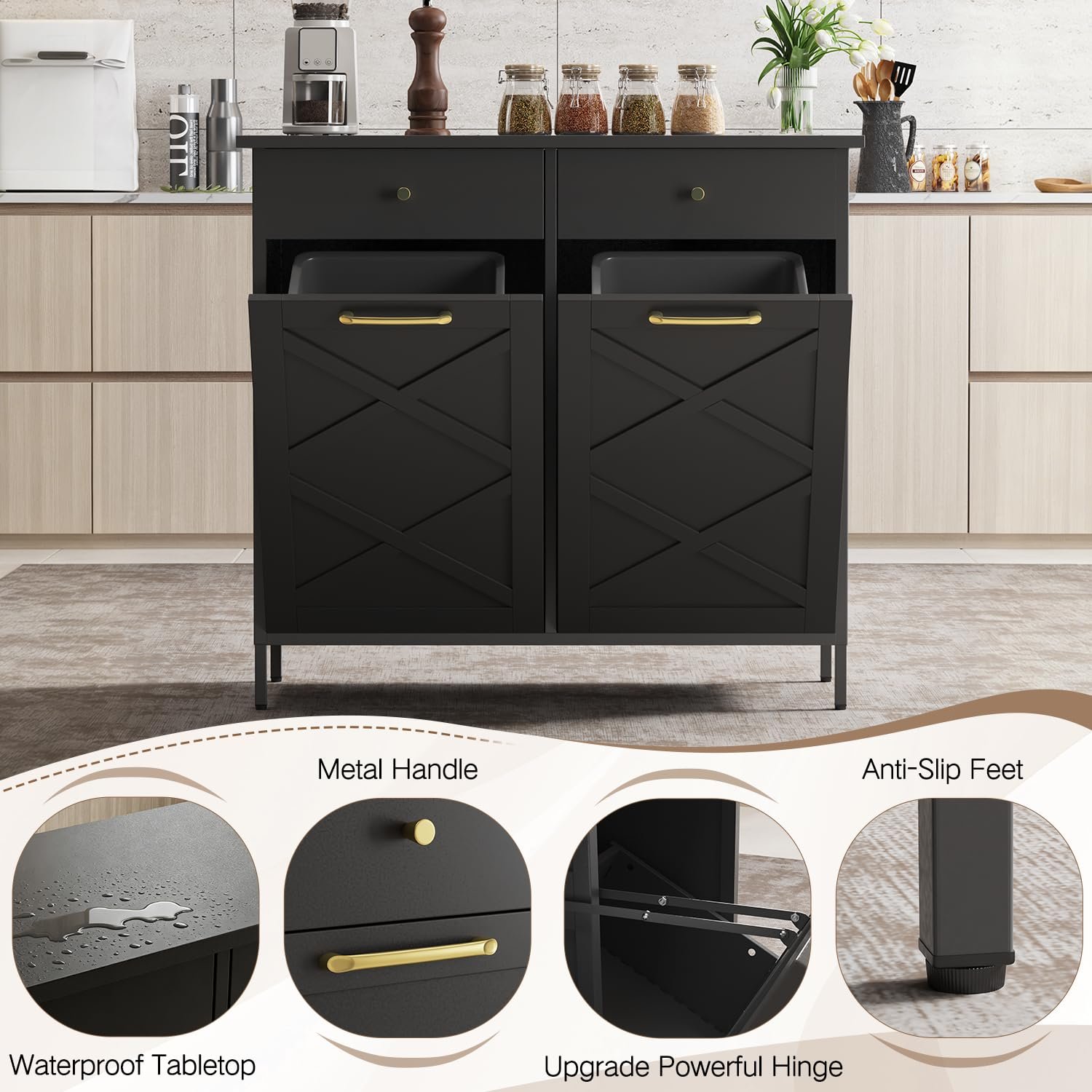
I came across this piece during one of those late-night spirals through kitchen storage solutions, the kind that starts with “how to organize under the sink” and ends somewhere in the territory of cabinetry philosophy. The JFHID double tilt-out trash cabinet appeared in a product listing and I stopped, genuinely stopped, because it looked less like a trash can and more like a piece of furniture. Black powder-coated metal, clean rectangular lines, two drawers sitting flush beneath two tilt-out bin doors. It looked like something from a considered kitchen renovation, not a weekend online find.
What struck me was the specificity of the design. Someone had thought about this. Someone had decided that waste management deserved the same visual attention as a bar cart or a coffee station. I added it to my cart before I’d even finished reading the description, which is, I’ll admit, exactly the kind of impulsive decision that has occasionally served me very well.
How It Actually Lives in the Room
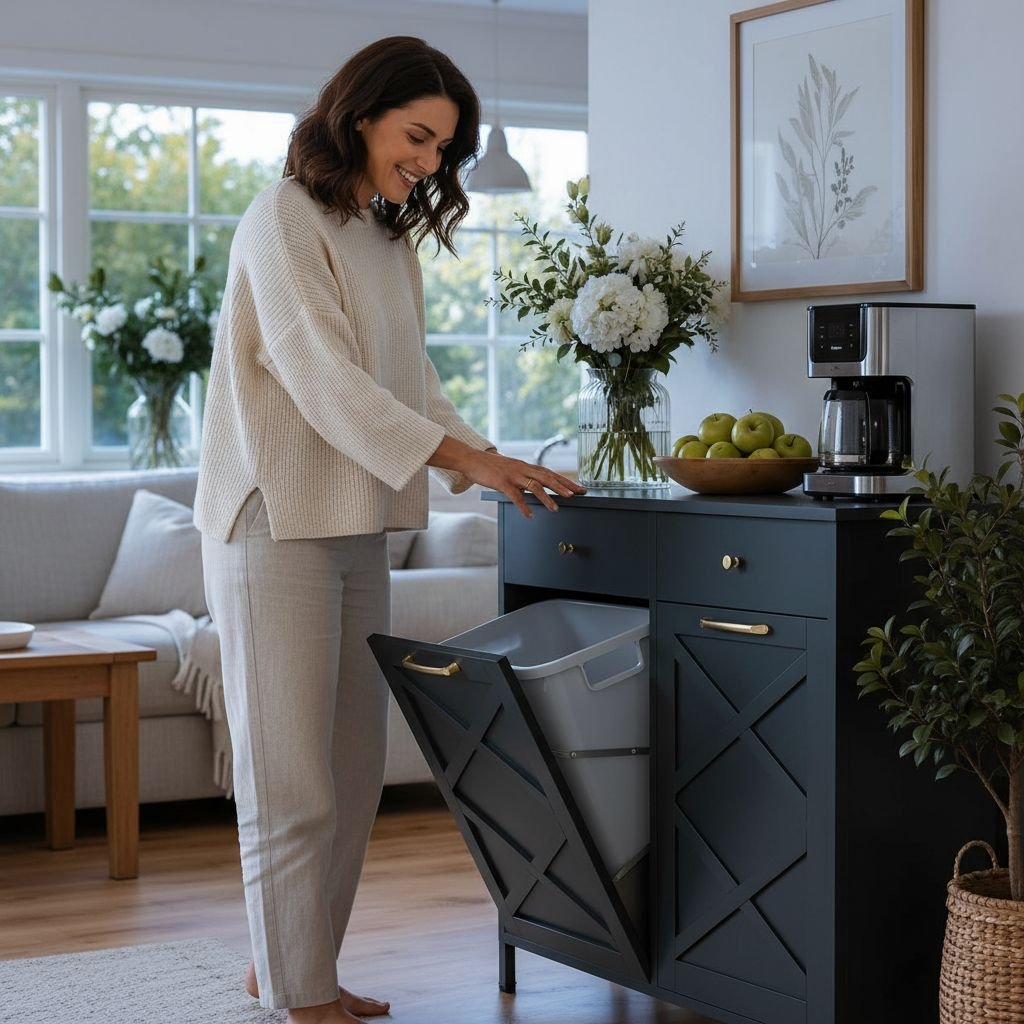
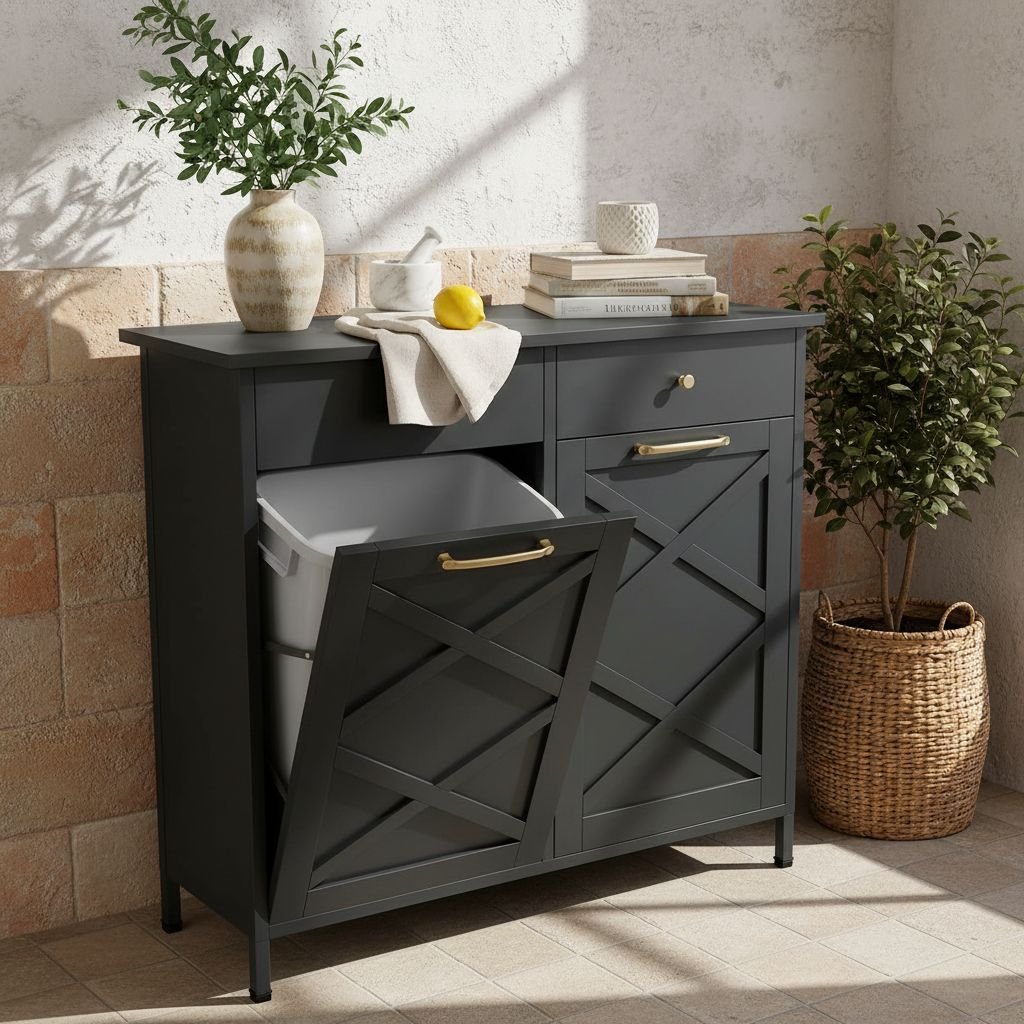
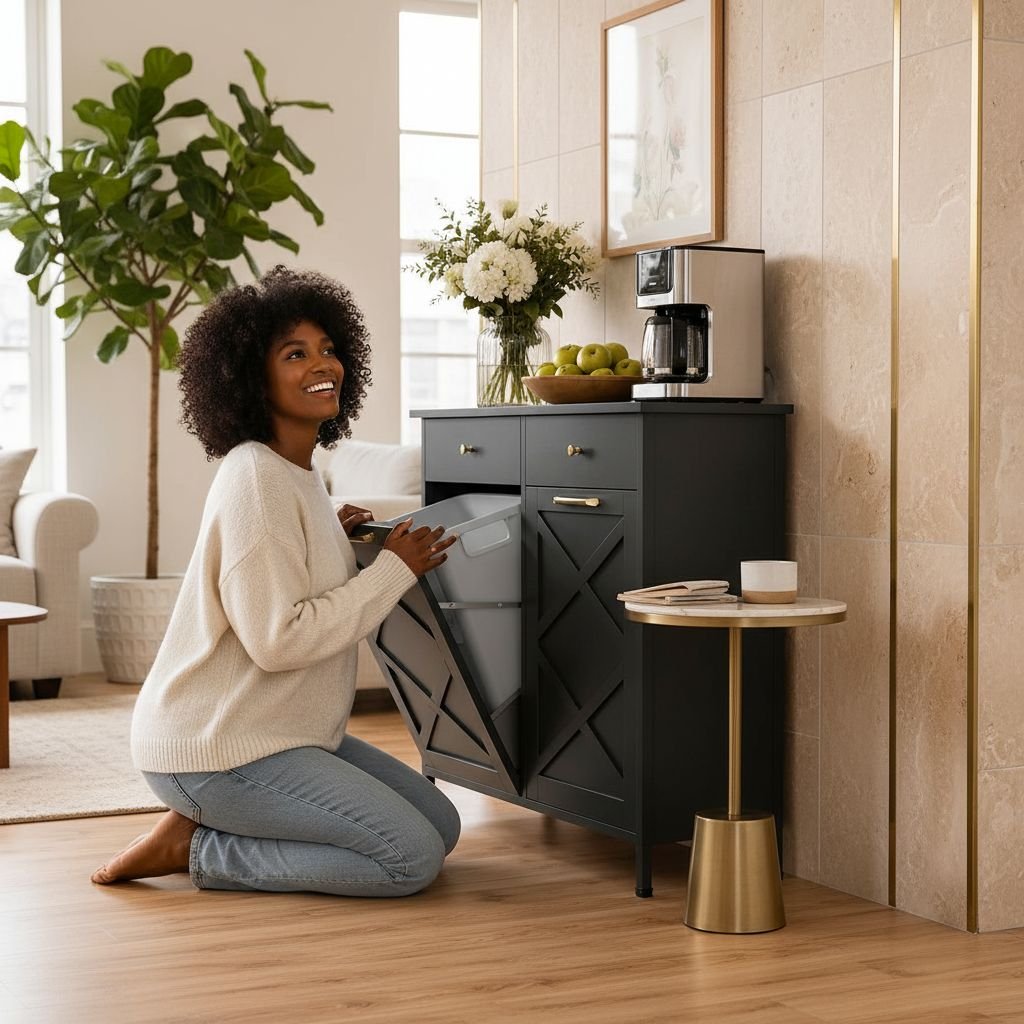
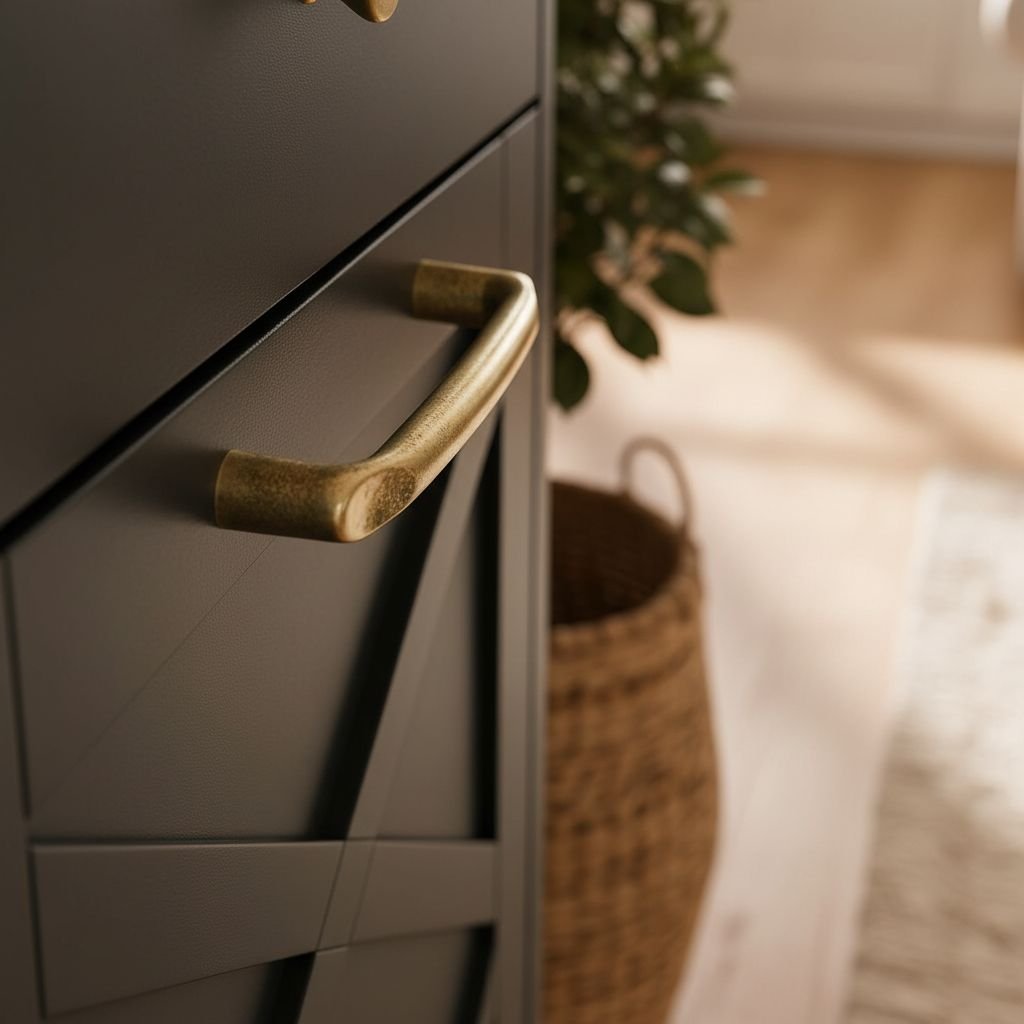
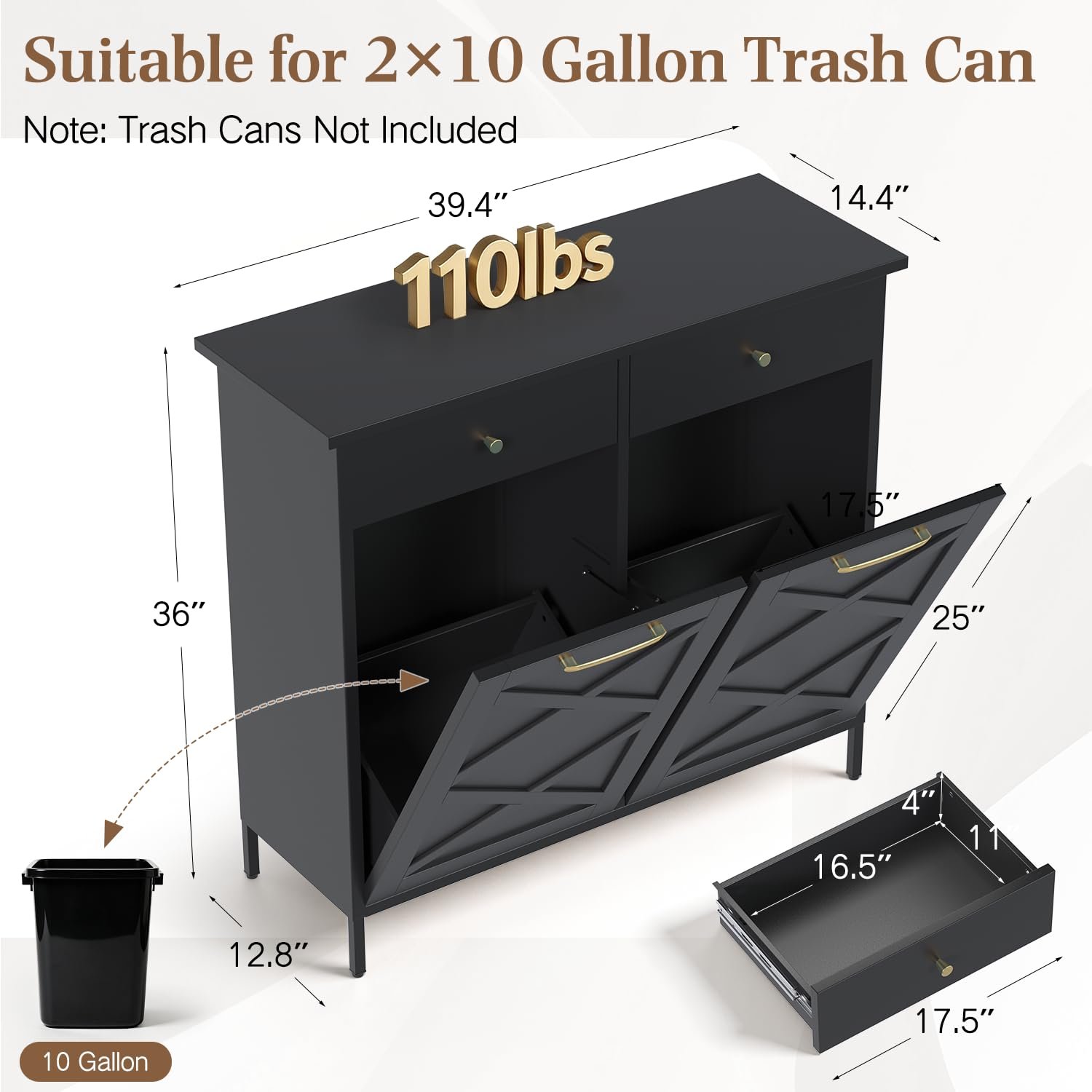
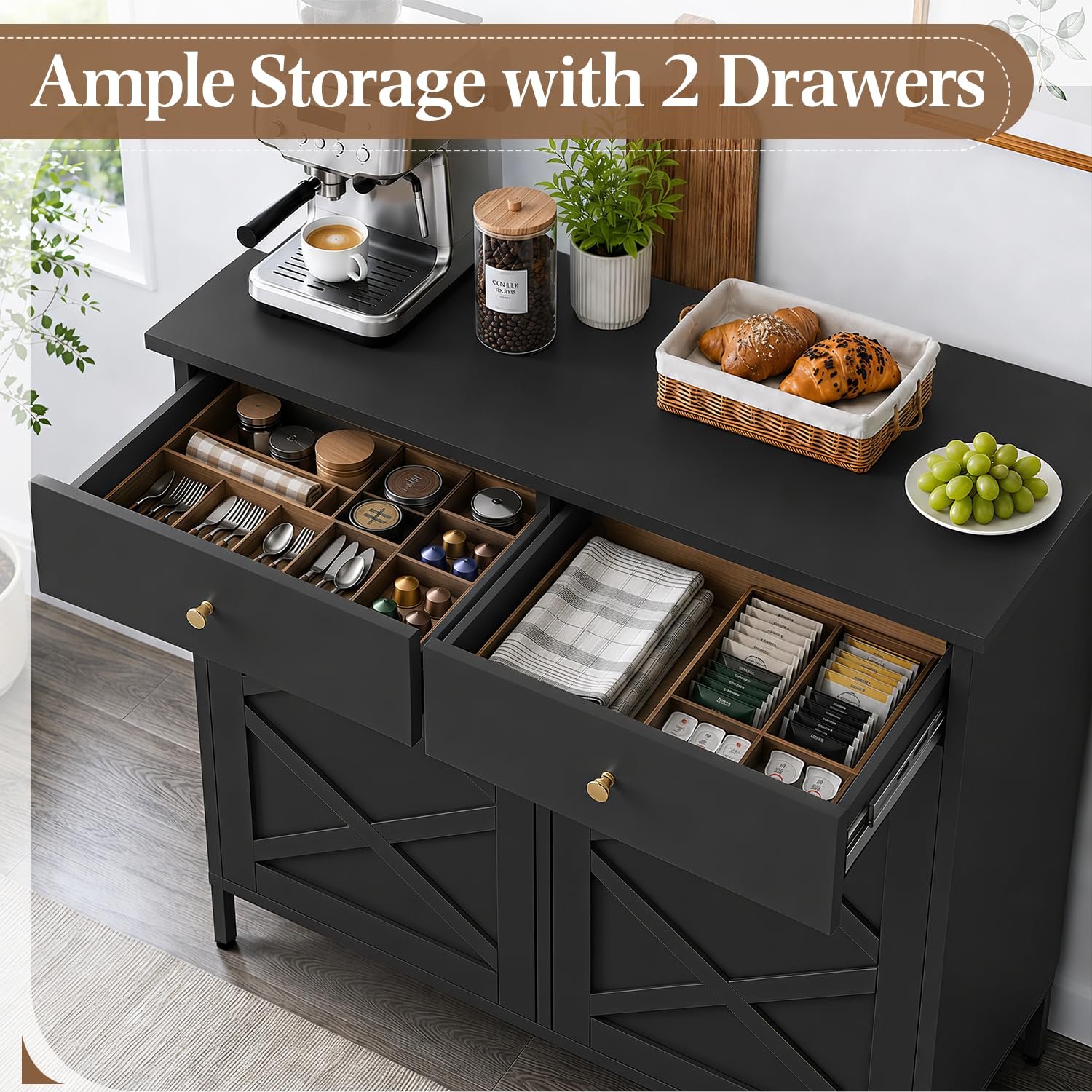
In person, the cabinet is heavier than you’d expect. The metal construction has genuine heft, the kind that makes it feel permanent rather than temporary, and when you press against it, nothing flexes or wobbles. The matte black finish is consistent across every surface, no streaking, no thin patches at the corners, which is where lesser metal pieces tend to show their budget. The tilt-out bin doors open smoothly on their hinges and hold their position long enough for you to actually use them without holding the door open with your knee. The two lower drawers slide cleanly and are deep enough to hold kitchen linens, batteries, twist ties, all those small items that usually end up in a drawer you try to avoid opening.
“This is what happens when you treat your trash can as a kitchen storage cabinet rather than an afterthought.”
That said, I want to be honest about one thing: the interior bins themselves are functional but not extraordinary. They’re standard plastic liners, and if you were hoping for something more refined on the inside, you’ll need to manage your expectations. The exterior is where all the design intention lives. For ideas on how editors at publications like House Beautiful approach kitchen aesthetics holistically, it’s worth noting that the consistent advice is to treat visible storage as part of the room’s visual story, and this cabinet does exactly that.
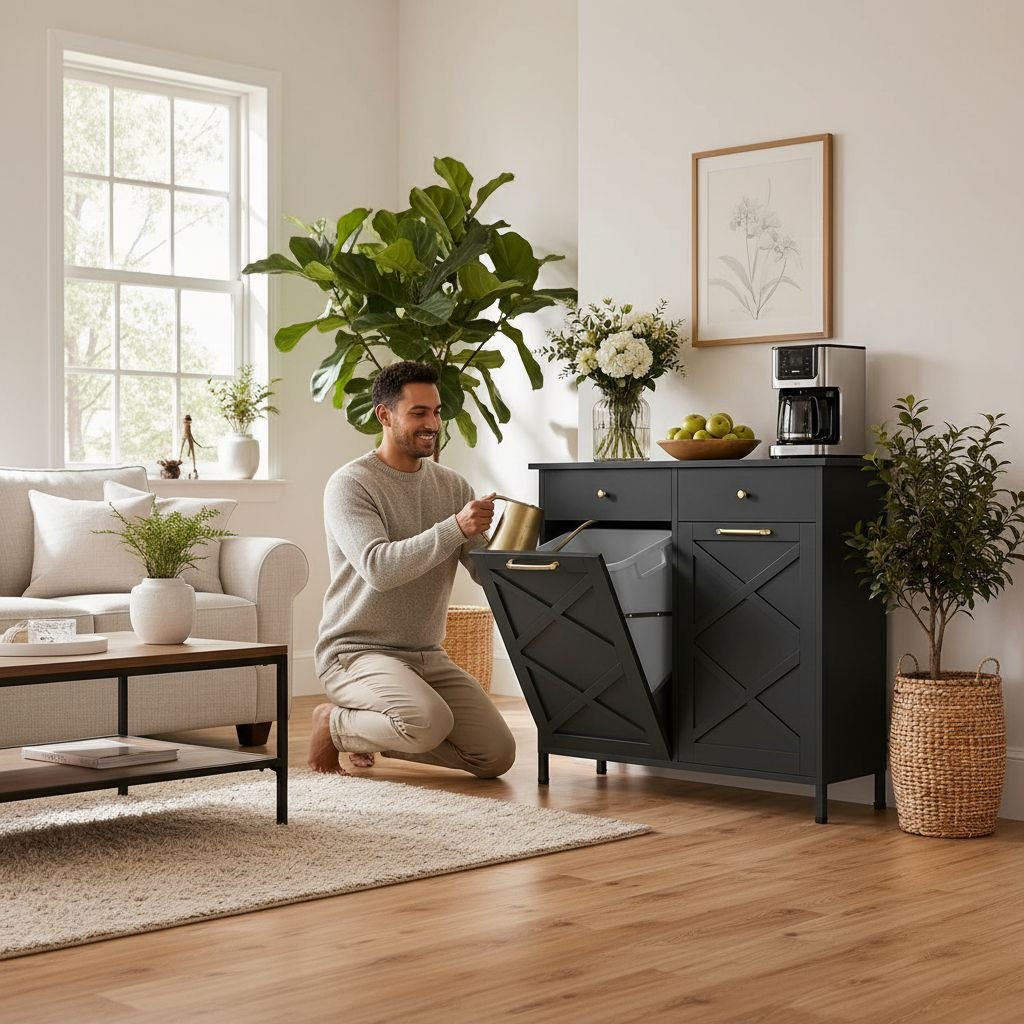
The Vignettes I Actually Built Around It
Vignette 1: Tuesday Morning, Coffee Brewing, Chaos Managed
My kitchen is not large. It is a galley-style space with black hardware, open shelving along one wall, and more activity per square foot than most rooms in my home. Before the JFHID cabinet, the trash corner was visually loud, the silver step-can, a recycling bin, and a small compost container all competing for the same floor space. Now there is a single black cabinet, its surface catching the morning light in a way that reads as furniture rather than utility. I keep the compost on the counter in a small ceramic crock, and everything else goes behind those tilt-out doors. The kitchen feels quieter. That is not a small thing.
Vignette 2: First Dinner Party of the Season
I had eight people in my apartment for a long dinner in early spring, the kind of evening with multiple courses and a lot of wine bottles to dispose of. I was dreading the moment when the kitchen became a staging area and the trash situation became visible to guests. Instead, the cabinet absorbed the evening’s debris without announcing itself. Nobody had to ask where the trash was because the tilt-out doors are intuitive. One friend actually asked whether it was a cabinet for pots and pans. I took that as the highest possible compliment. For more inspiration on kitchen-dining spaces that function beautifully when entertaining, browse our kitchen and dining category.
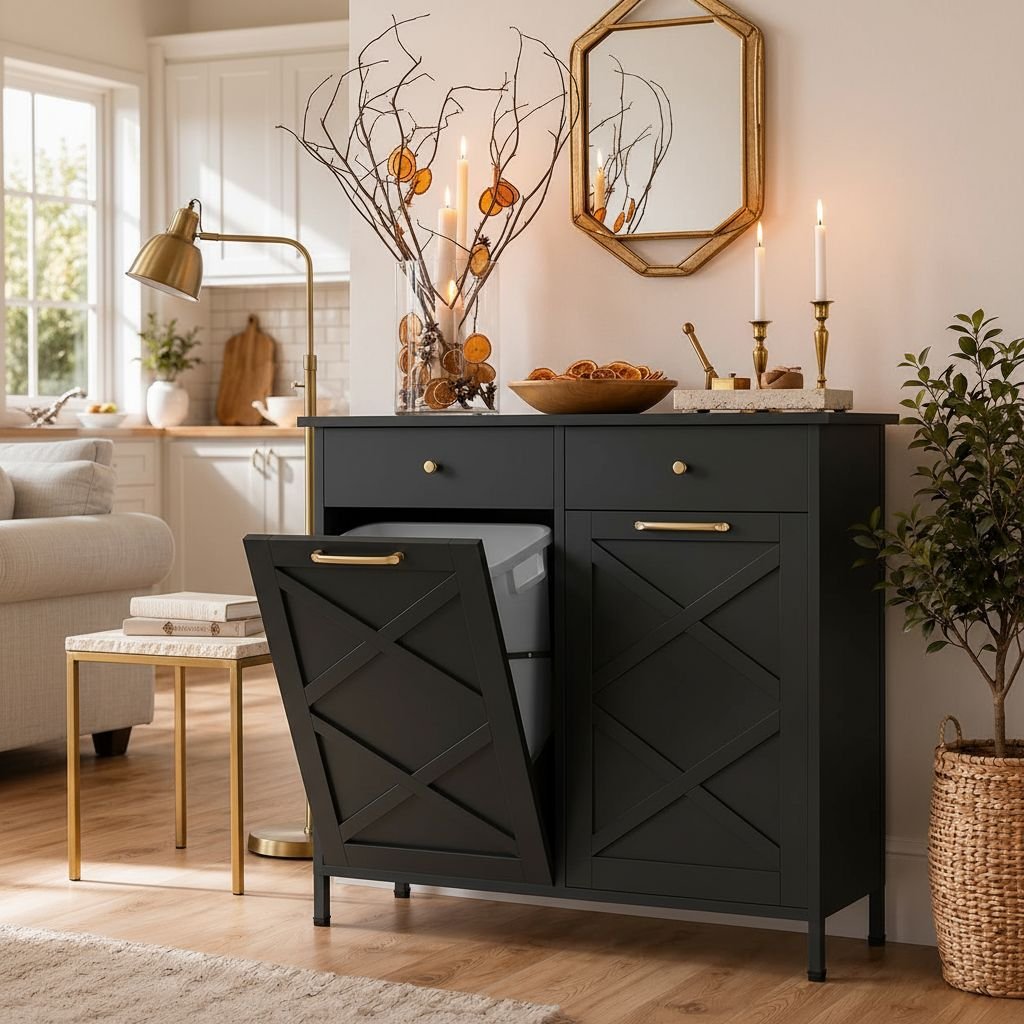
Vignette 3: A Rainy Saturday, Reorganizing Everything
I spent a wet November afternoon pulling everything out of my kitchen and putting it back in ways that made more sense. The two drawers on the JFHID cabinet became the home for dish towels, a rubber band collection, and a small flashlight I’d been unable to locate for months. There is something genuinely satisfying about a piece that solves two problems at once. The drawers are the unexpected gift here, the part of the design you don’t think about until you need it and then wonder how you managed without it. If you’re also rethinking your kitchen dish towel storage and organization, this drawer situation might actually be your solution.
What Other People Are Saying
This cabinet is new enough to the market that the review pool is still shallow. One verified buyer gave it a perfect rating and noted the sturdy build, which tracks with my own experience. The absence of a large review sample means I’m working mostly from my own use, which honestly might be more useful to you anyway.
The single reviewer’s enthusiasm, combined with the design logic of the piece itself, suggests that anyone who buys this knowing what it is will likely respond the same way. It is not a product that oversells itself and then disappoints. If anything, it undersells on the listing and overdelivers in person.
Who Should Skip It
If your kitchen runs warm and wood-heavy, all honey-toned butcher block and rattan accents, this cabinet will feel like a visitor from a different design conversation. It is a genuinely modern piece, and it does not apologize for that. It wants to live alongside matte black hardware, concrete or white tile, and flat-front cabinetry. Cottagecore kitchens, maximalist country kitchens, anything with a lot of pattern and warmth will likely find it jarring. If you’re unsure whether this aesthetic suits your space, Kinfolk’s slow-living kitchen guides offer a useful lens for understanding whether minimal metal furniture fits your home’s overall sensibility.
I’d also say this isn’t the right pick if you generate very high trash volume and need oversized bin capacity. The tilt-out bins are practical for a one-to-two person household or a kitchen that composts aggressively and only sends a modest amount to the main bin. Heavy cooking households with large families may find the capacity runs short between bag changes.
What It Replaces in My Space
The silver step-can went to a friend who was grateful for it, which made the transition feel clean and karmic. But beyond the literal replacement of one container with another, what this cabinet replaced was the mental weight of that corner. I had a second, smaller open-top recycling bin crammed alongside the step-can, and both of them made the kitchen feel provisional, like I was still figuring things out. This cabinet made the kitchen feel decided. It drew a clean line under the question of where things go and what the room looks like, and that psychological shift is, I’d argue, the actual product you’re buying. You can explore our editor’s curated kitchen picks if you’re working through a similar kitchen rethink and need a starting point beyond the trash situation. And if you’ve already landed on the storage front, it’s worth considering how kitchen countertop storage jars pair with this kind of minimal, considered approach to the room.
FAQ
What are the cabinet’s dimensions, and will it fit in a standard kitchen gap?
The cabinet is sized for standard kitchen use and fits comfortably in a floor-level corner or beside a run of cabinetry. Measure your intended space before purchasing, particularly if you’re placing it between existing furniture or appliances, as the dual-bin width does require a reasonable footprint.
How easy is the metal finish to clean and maintain?
Powder-coated metal wipes clean with a damp cloth and mild soap. Avoid abrasive scrubbers, which can dull the finish over time. Fingerprints show more on matte black than on glossy finishes, but a quick wipe handles them easily.
Can this be used outside the kitchen, say in a home office or mudroom?
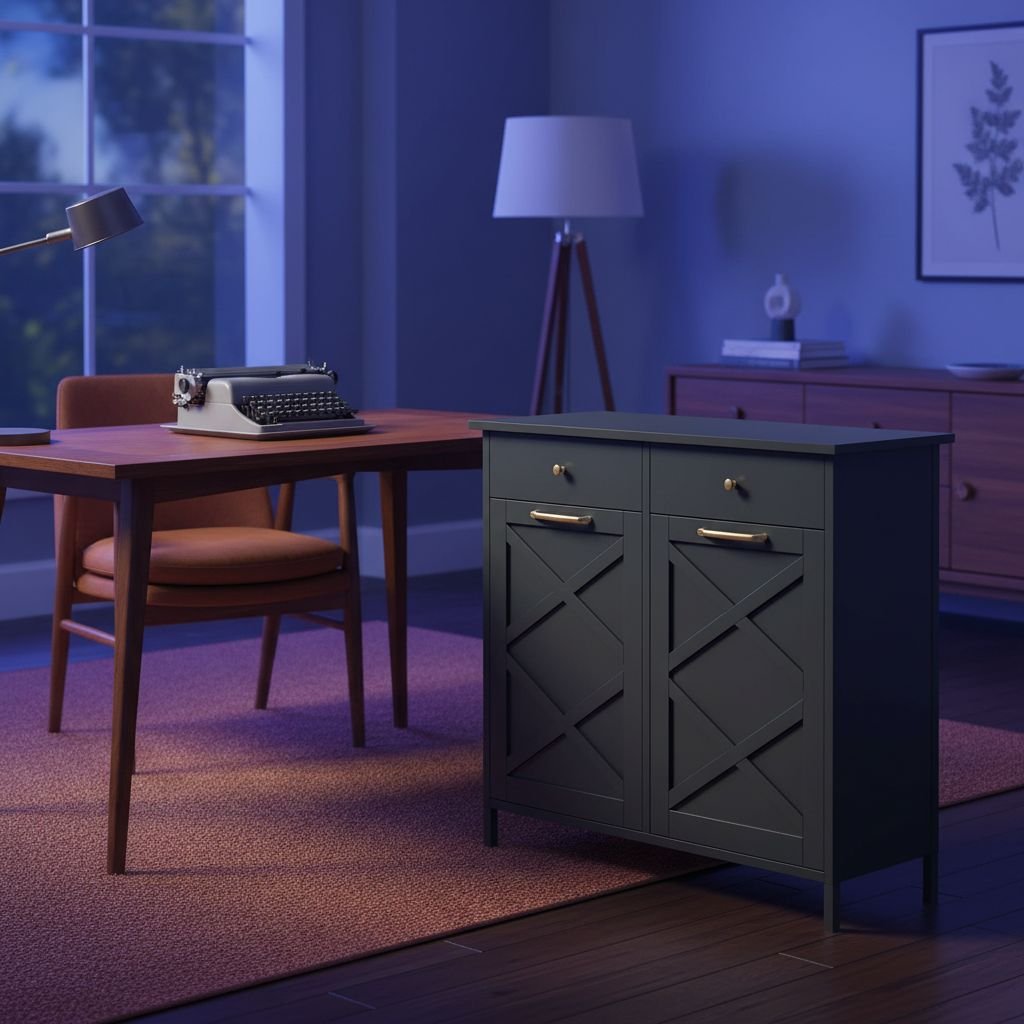
Yes, and it actually works beautifully in a home office corner where document shredding and recycling create similar sorting needs. The two-drawer storage also makes it useful in a mudroom for small accessories. The aesthetic suits any modern minimal space.
Does the quality match what you’d expect given the finish and build?
For this price point, the quality reads noticeably above what you’d typically encounter. The metal construction, consistent finish, and smooth hardware all signal a level of attention that’s not always present in this tier of kitchen furniture, and nothing about it feels like a compromise.
How does assembly work, and is the process manageable solo?
Assembly is required and is manageable for one person with basic tools and patience. Most buyers report the process is straightforward if you follow the instructions in sequence. Budget about an hour and lay out all components on a clear floor before beginning.
The Verdict
Six weeks from now, on a quiet weeknight, I’ll stand at my kitchen counter slicing vegetables and feel nothing about the trash situation. That is the ideal outcome. Not delight, not notice, just the clean absence of a problem that used to occupy low-level mental real estate every single day. The JFHID Metal Double Tilt Out Trash Can Cabinet, in this kitchen and this life, has become a piece of furniture I no longer have to work around. I style around it, I use its drawers without thinking, and I let the tilt-out doors do their quiet, functional work while the rest of the kitchen gets to be what I want it to be.
If you’re in the middle of a kitchen overhaul and you’ve been treating the trash can as the last thing to sort out, I’d gently push back on that instinct. It might be the first thing. The JFHID tilt-out trash cabinet review I’d write after a full season with this piece is the same one I’d write today: it is a considered, well-built object that solves an ugly problem with visual intelligence. Whether you’re looking for the best kitchen trash storage for a modern home or simply trying to make your kitchen feel finished, this cabinet earns a permanent spot in the room. For more thoughtful takes on small-space kitchen organization and storage design, and for a look at what pairs beautifully with a minimal kitchen setup, explore our kitchen mugs and glassware picks or browse the full editor gift guide if you’re shopping for someone who is in the middle of exactly this kind of kitchen rethink.
Buy it, put it in the corner, and stop thinking about your trash can. That is the whole point.
Every Angle
The piece as photographed for Amazon — front, side, back, detail.
As an Amazon Associate I earn from qualifying purchases.