Minimalist Step Trash Can for Kitchen: Honest Review
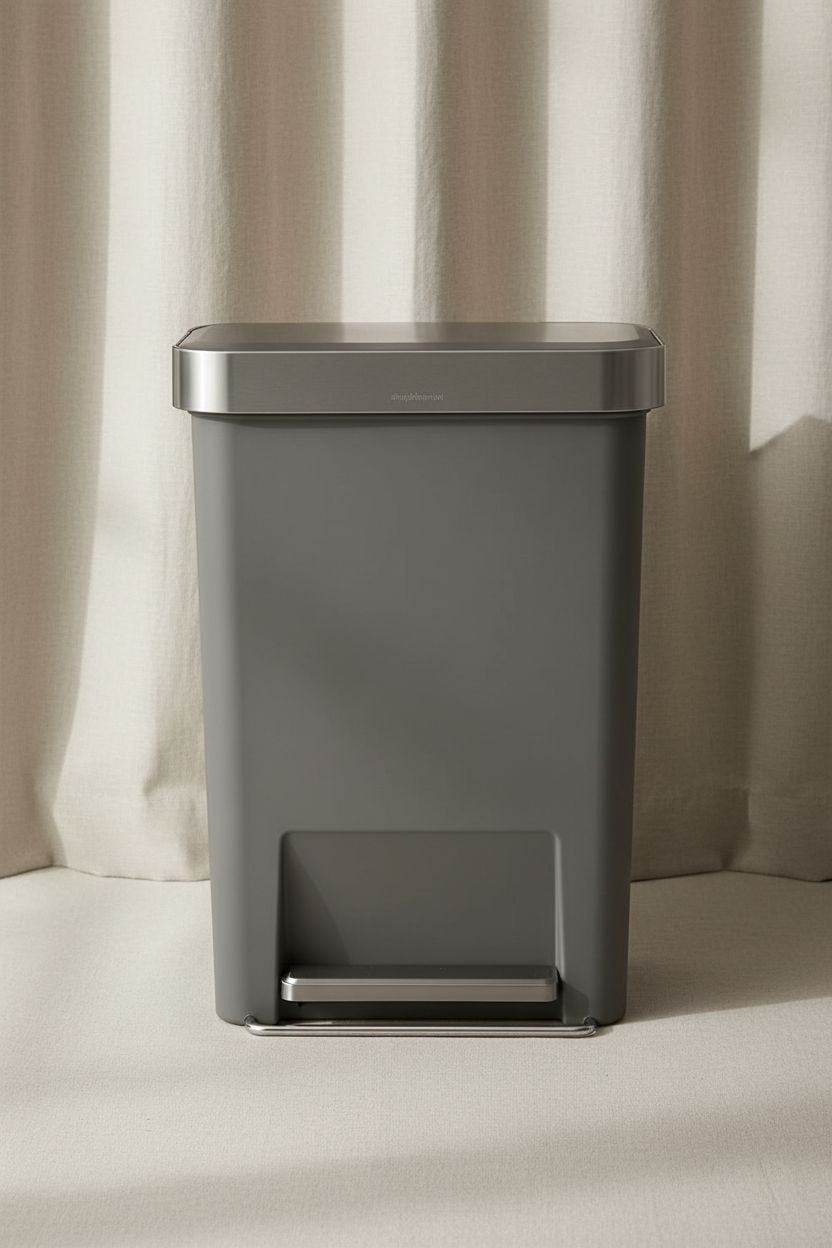
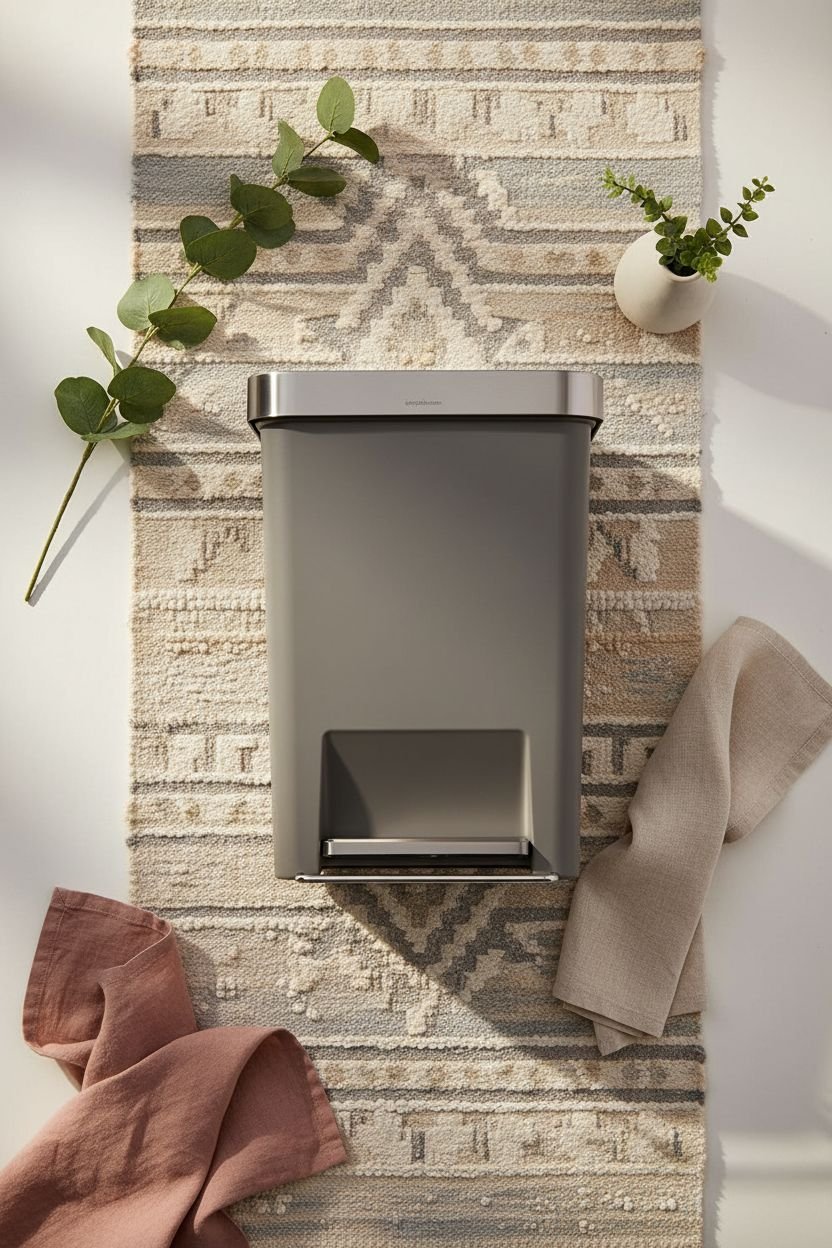
The trash can you never think about until it slams shut at midnight and wakes the whole apartment — and then, quietly, the one that doesn’t.
It was a Tuesday night, nearly eleven o’clock, and I had just finished cleaning up after a dinner that had stretched far longer than planned. The kitchen was quiet. The last wine glass had been rinsed, the counters wiped down, and I lifted the lid of my trash can to drop in the damp paper towels — and the lid slammed shut behind my hand like a period at the end of an argument. Not loud enough to wake anyone, technically. But loud enough to shatter the particular peace of a kitchen after a good meal. I stood there for a moment, annoyed in that specific way you only get annoyed by things you’ve tolerated for too long. **That was the night I started looking for something better.**
The First Time I Saw It
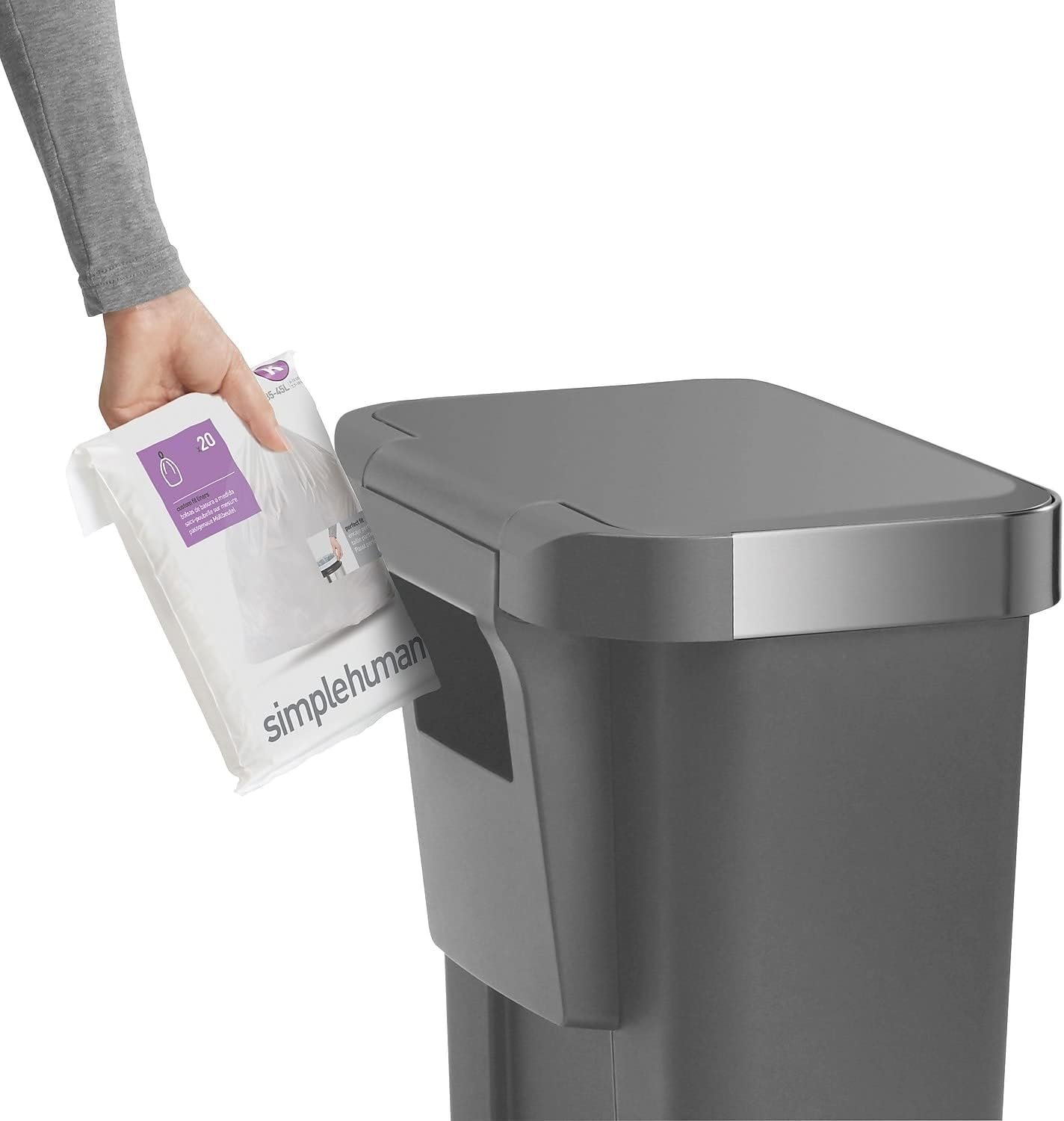
I found the simplehuman 45 Liter / 12 Gallon Rectangular Kitchen Step Trash Can the way I find most things that end up staying in my home: down a rabbit hole that started somewhere entirely else. I had been reading through a kitchen organization deep-dive when someone in the comments mentioned it almost in passing, the way people mention things they assume everyone already knows about. I didn’t. I stopped scrolling. Grey plastic, soft-close lid, pedal activation. The photography showed it sitting next to a cabinet toe-kick with the kind of quiet confidence that most trash cans do not possess.
I read the listing three times before I added it to my cart, which is more than I do for most things. There was something about the combination of features that felt considered rather than assembled. And I wanted to know if that translated into real life.
How It Actually Lives in the Room
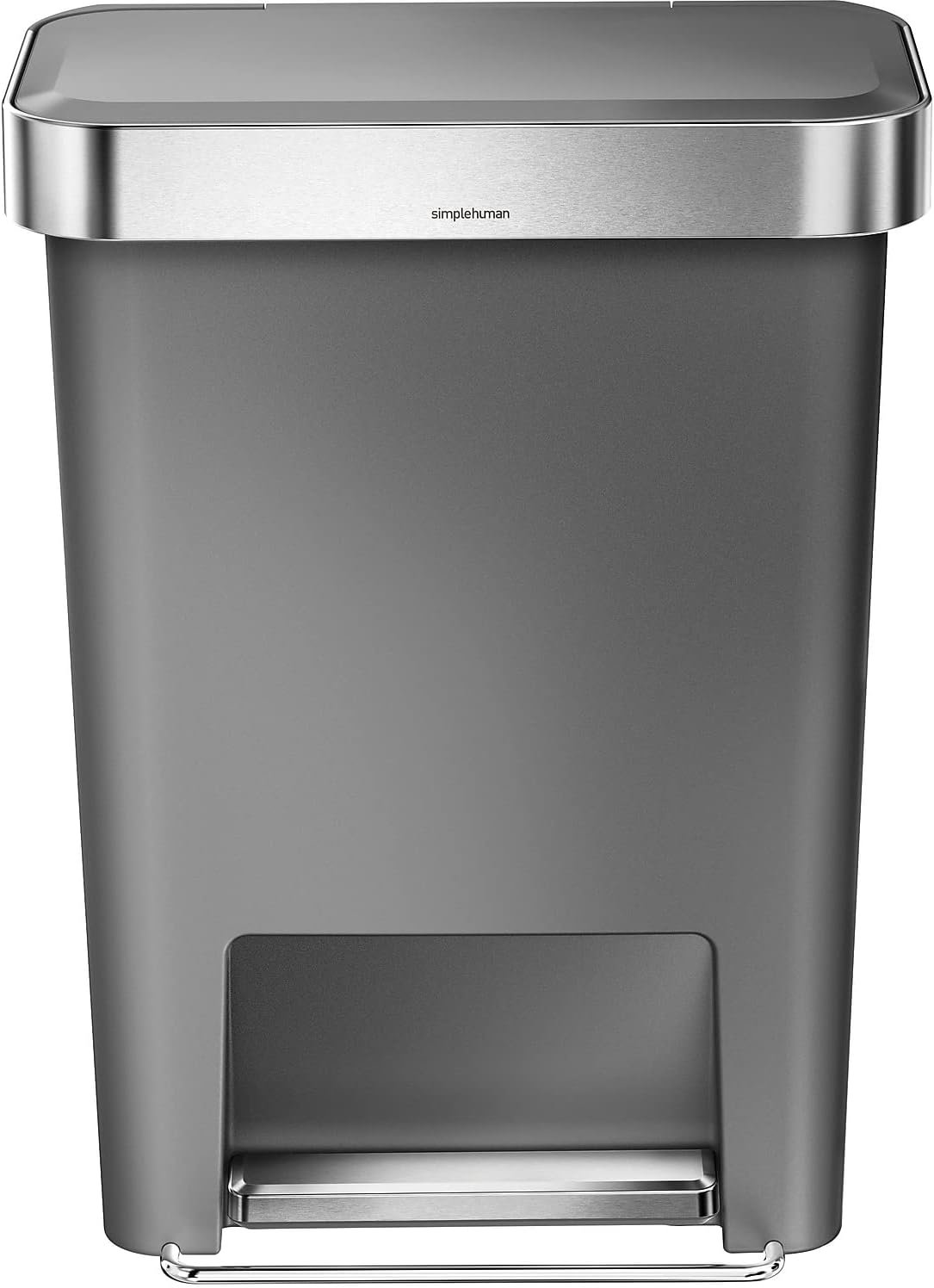
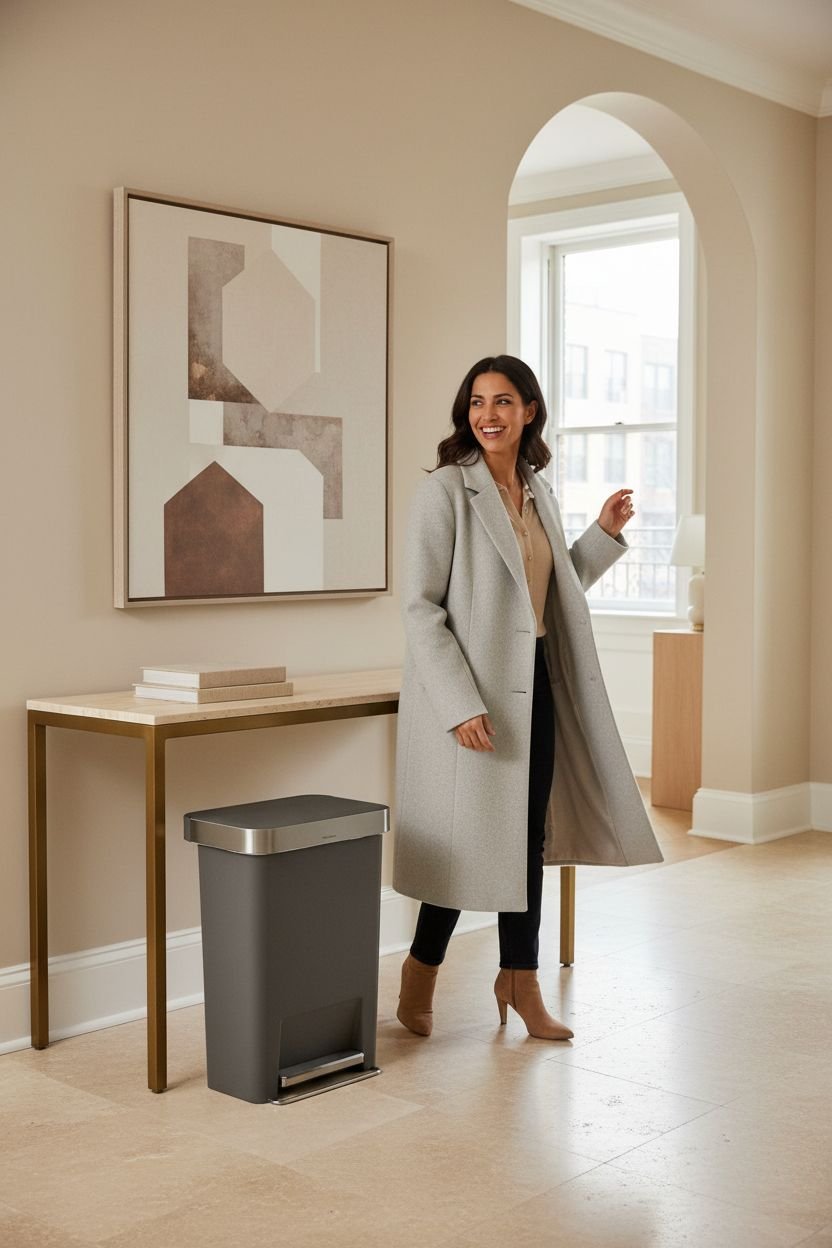
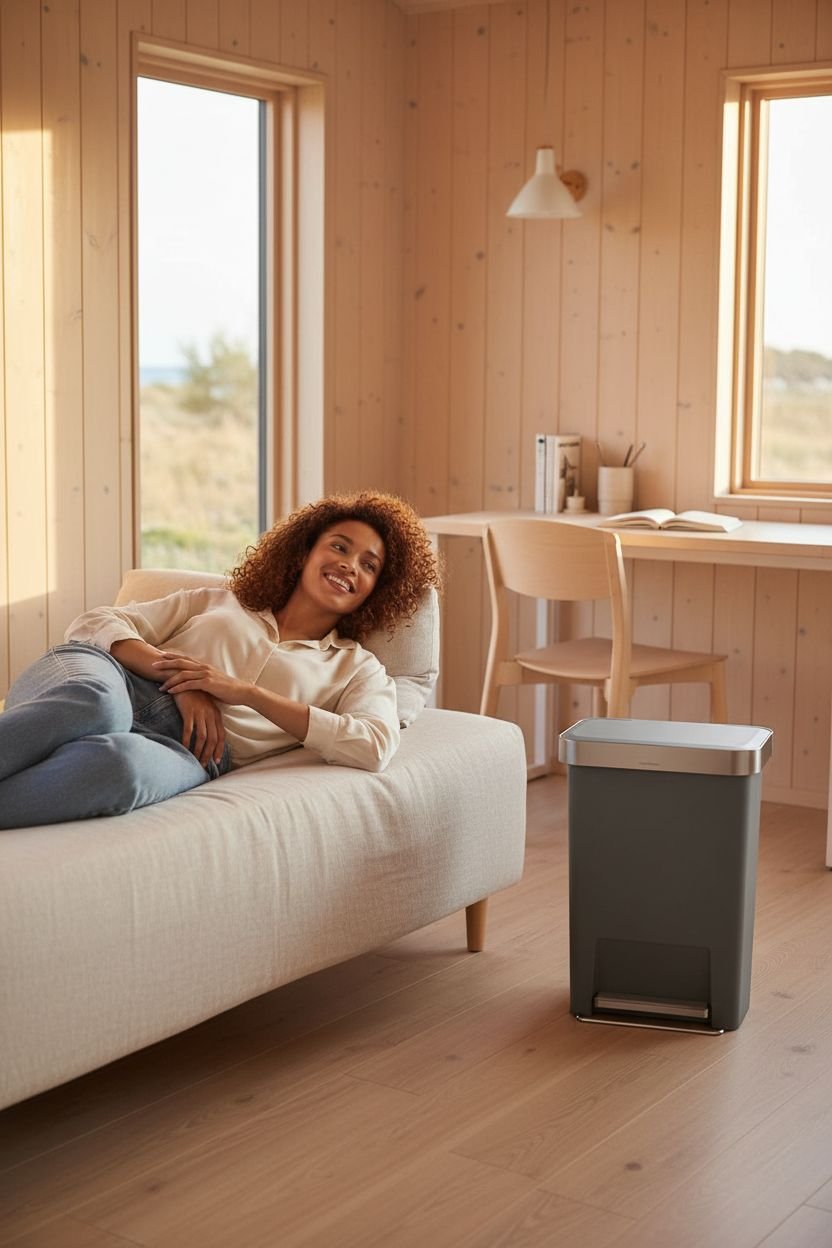
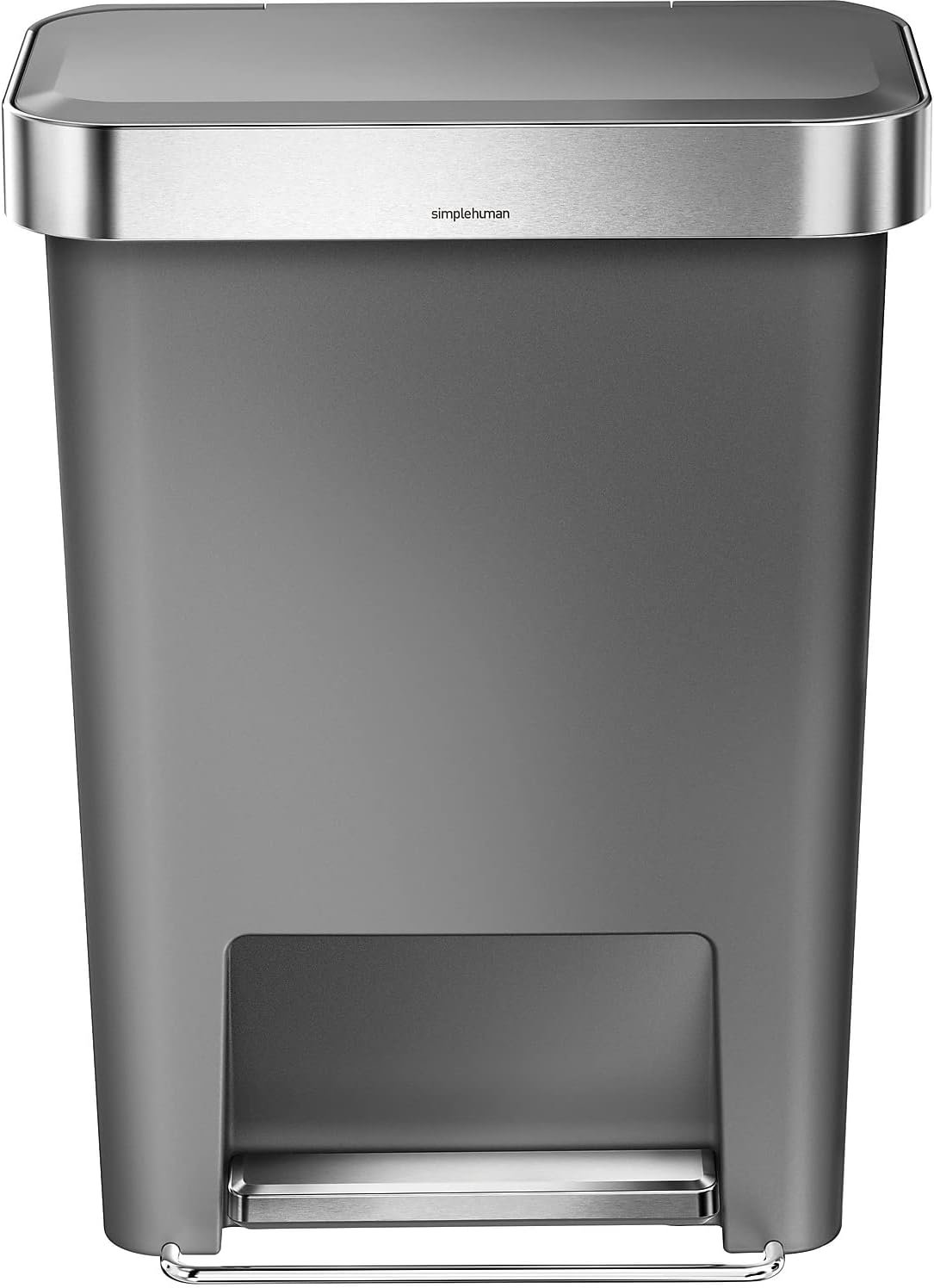
The first thing I noticed when it arrived was the weight. **The simplehuman step trash can is genuinely solid**, not in a way that makes it difficult to manage, but in a way that reads immediately as a different category of object from what most of us have been using. It sits flush against my base cabinets without wobbling, without skidding when I hit the pedal, without any of the small indignities I had accepted as normal. The grey plastic is a particular shade, closer to warm slate than cold silver, and it photographs darker than it reads in person. In natural morning light it almost disappears into the kitchen in the best possible way.
“A trash can that does nothing wrong is, quietly, one of the most useful things in any kitchen.”
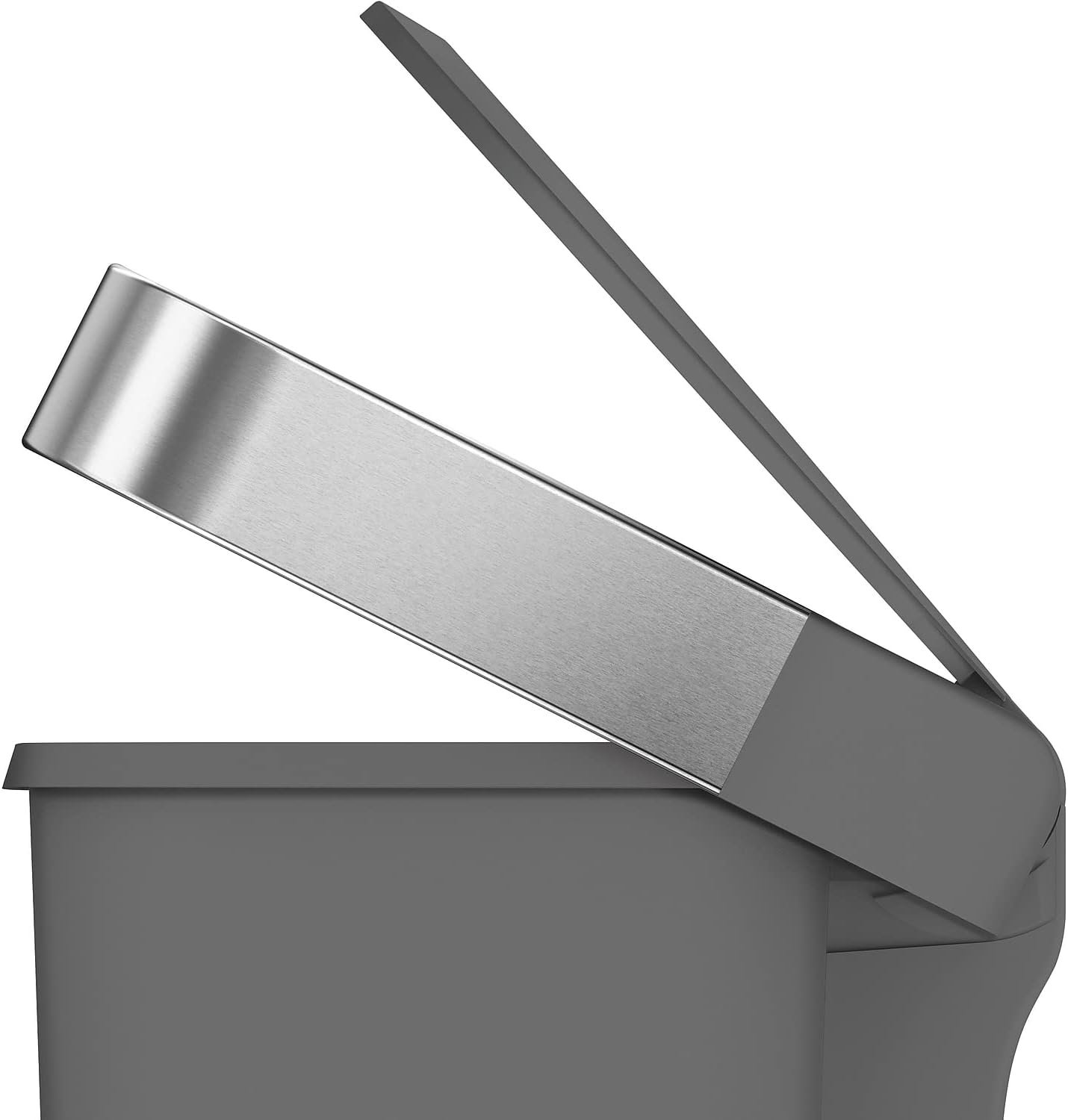
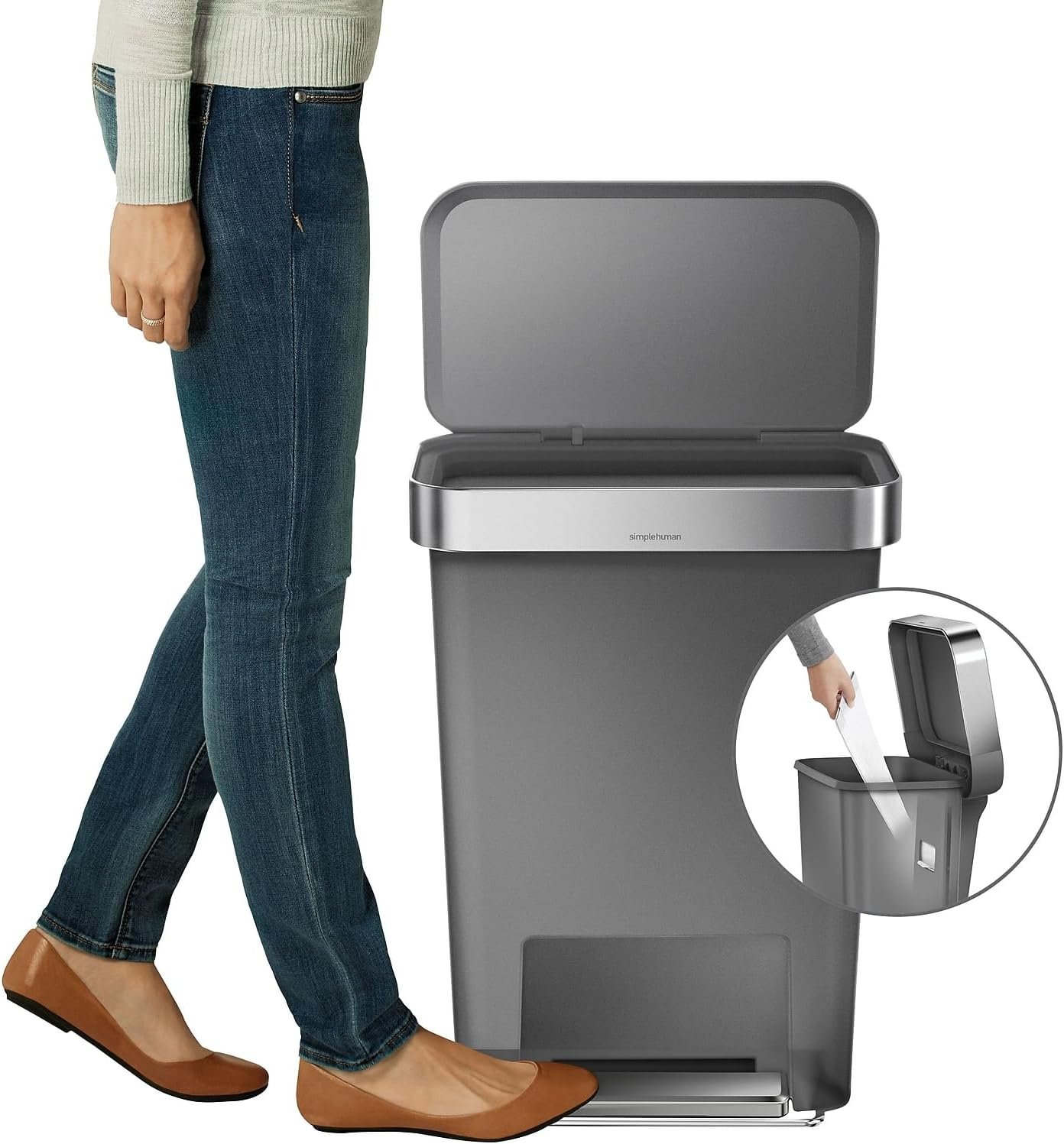
The soft-close lid is the detail that earns the most conversation, and I want to be honest about what that means in practice. It does not whisper shut the way, say, a Japanese hotel room door does. It closes with intention, a firm but padded deceleration that lands somewhere between a sigh and a click. Whether that qualifies as silent depends on how sensitive your household is. For most people, it will more than suffice. I will also say that the fingerprint-resistant surface holds up better than I expected, though it is not entirely fingerprint-proof around the pedal hinge where hands occasionally brush. House Beautiful’s kitchen editors have written extensively about how much surface finish matters in small kitchens, and they are right.
The Vignettes I Actually Built Around It
Vignette 1: Wednesday Morning, Coffee Going Cold
My kitchen is galley-style and narrow, so every object either earns its footprint or gets reconsidered. On a Wednesday morning with low autumn light coming through the window above the sink, the simplehuman can sits at the end of the counter run and looks like it was always there. I have a wooden cutting board propped against the backsplash nearby, a small ceramic dish for odds and ends, a single potted herb on the sill. **The trash can reads as furniture-adjacent rather than utilitarian**, which sounds like a small thing until you realize how much visual noise the wrong trash can creates in a small kitchen. I hit the pedal while still holding my coffee mug and the lid opens cleanly, no negotiation. That feeling, repeated a hundred times a week, adds up to something.
Vignette 2: Hosting for the First Time Since Renting
I had six people over for dinner in early spring and the kitchen was, as it always is during a dinner party, its own separate ecosystem. Someone was always in it. Refilling a water glass, looking for the corkscrew, hovering near the stove asking if they could help. **The step trash can held twelve gallons of dinner party debris** without complaint, and because it sits flush and low-profile, no one tripped over it or knocked it with a hip the way people always do with round cans placed at counter corners. One friend asked what brand it was while she was tying the liner closed. That, to me, is the signal that a utilitarian object has done something right.
Vignette 3: A Rainy Sunday, Nobody Coming Over
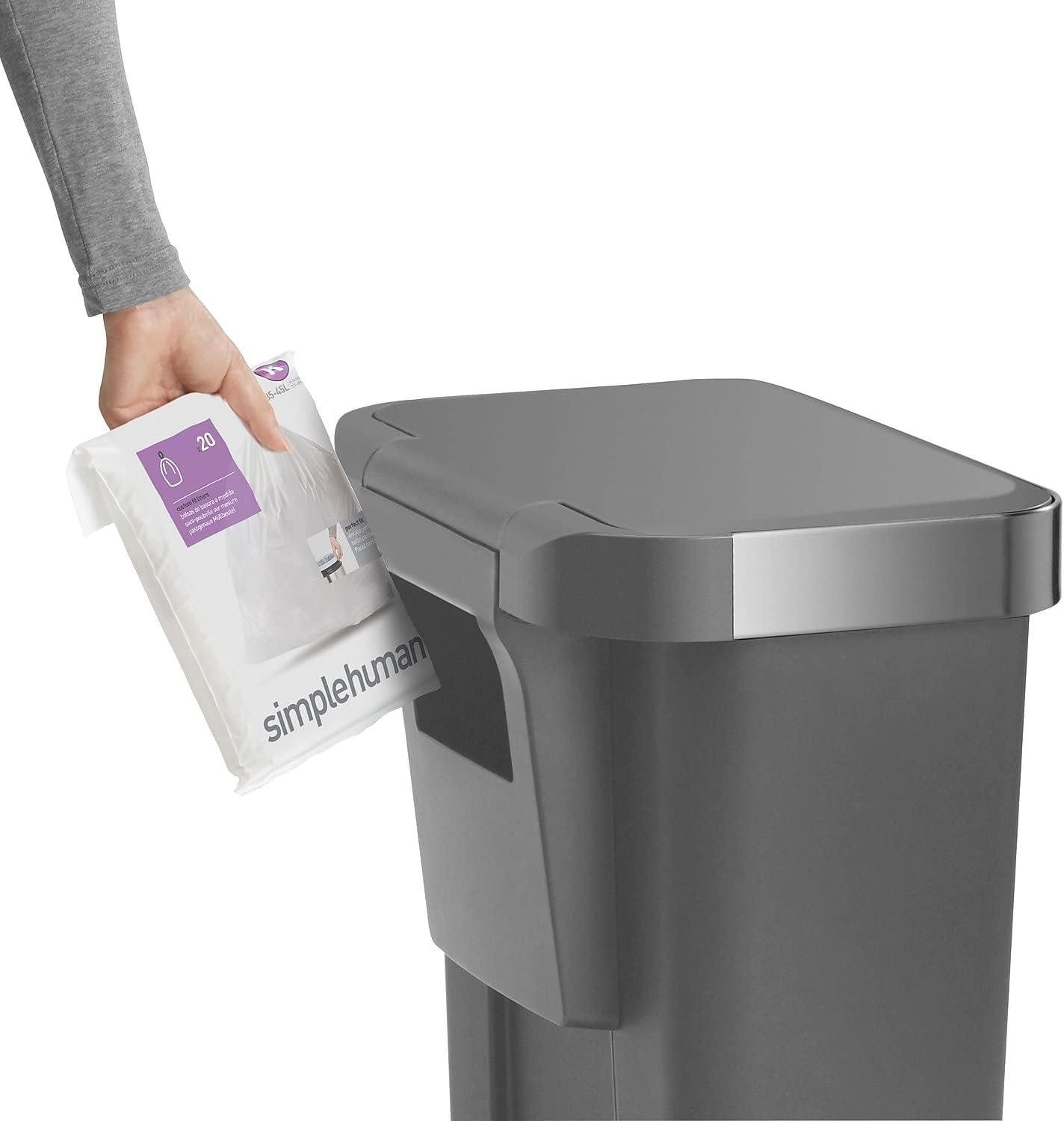
The best test of any object in your home is the version of you that is entirely alone and entirely unperforming. On a grey afternoon with rain against the window and a podcast I had heard before playing in the background, I cleaned the kitchen in that slow, methodical way you only do when there’s nowhere to be. The simplehuman can accepted the sweepings, the coffee grounds, the accumulated evidence of an ordinary week without ceremony. The liner, which fits the proprietary simplehuman liner bags as well as standard garbage bags, stayed in place at the rim. The lid closed every time without a word. For a kitchen and dining space that runs on small routines, that consistency is more than enough.
What Other People Are Saying
With more than four thousand reviews and a 4.6 average rating, the simplehuman rectangular step can has enough of a track record to read against. The patterns that emerge are consistent: reviewers cite the soft-close mechanism and lid durability most frequently, and the fingerprint-resistant surface gets particular credit from people with stainless steel kitchens who were tired of constant wiping. The liner pocket, a small built-in channel inside the can that holds the liner in place, shows up repeatedly as a feature people didn’t expect to care about and now cannot live without.
The few criticisms that appear with any regularity involve the proprietary liner sizing and, occasionally, the pedal tension on units received after a certain point. Neither reads as a pattern significant enough to change my recommendation, but they are worth noting if you have strong feelings about using your own bags.
Who Should Skip It
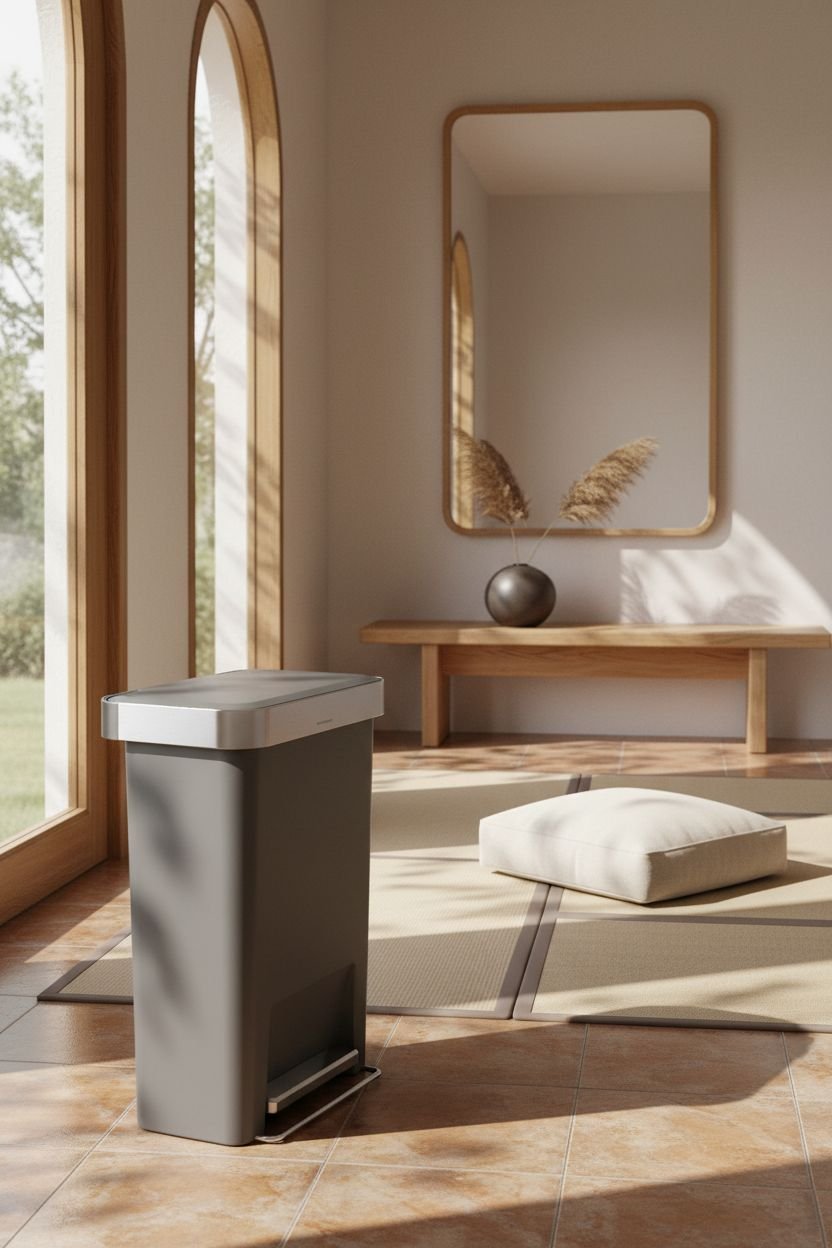
If your kitchen is styled around warm, organic, maximalist materials, including rattan, raw wood, handmade ceramics, and tactile textiles, the grey plastic finish may feel at odds with everything around it. This is a minimalist, industrial-adjacent object and it reads as such. It does not apologize for being a trash can, but it does present itself as a sleek one, and slick grey plastic has a specific aesthetic that will not suit every kitchen. If you are also committed to using non-brand-specific liner bags in an irregular array of sizes, the proprietary liner system may create friction. And if you are working in a very small kitchen where even a standard rectangular footprint is too much, consider the brand’s slim-profile models, which Dwell has covered in the context of micro-kitchen layouts. This particular 12-gallon version is best suited to kitchens with a bit of room to breathe.
What It Replaces in My Space
What I had before was a round plastic step can in a milky white that had never quite matched anything, developed a crack along the pedal housing within eight months, and had a lid that closed with a hollow pop I had learned to anticipate and dread. **It was the visual equivalent of a placeholder**, the kind of object you buy meaning to replace and then don’t for three years because the inconvenience of replacing it is slightly less than the inconvenience of living with it. The simplehuman can does not feel like a placeholder. It feels like a decision. That is not a small thing in a kitchen you spend real time in, and if you are looking for our editor’s full list of considered kitchen picks, this one belongs on it.
I also want to say plainly: replacing a trash can is not exciting. There is no version of this that becomes a dinner party story. But the absence of a bad trash can, repeated over months, becomes a kind of low-grade relief that accumulates into genuine satisfaction with the room you cook in. Check out our other picks in kitchen mugs and glassware and kitchen dish towels if you are doing a broader kitchen refresh and want everything in the same considered register.
FAQ
What size liner fits the simplehuman 45 Liter / 12 Gallon step can?
The can is designed to work with simplehuman’s own Code Q liners, but standard 13-gallon kitchen bags also fit reasonably well. The liner pocket inside the can is sized to the brand’s proprietary bags, so if you use a different liner, you may need to fold the top over the rim manually.
Is the grey plastic durable over time?
Based on the review record and my own use, the grey plastic composite holds up well to daily kitchen conditions. It does not yellow or degrade noticeably, and the hinge mechanism on the soft-close lid appears to be the most durable part of the design.
Where should I place this trash can in a kitchen?
The rectangular footprint is designed to sit flush against a wall or base cabinet, which makes it especially well-suited to galley kitchens or any layout where conserving floor space matters. Position it near your main prep zone for the most natural daily use.
Is this piece worth the investment given the brand’s reputation?
**The finish, mechanism quality, and material durability read well above what you’d expect in this tier.** For what you’re paying, the soft-close lid alone justifies the decision for anyone who has spent any time with lesser alternatives.
How does the soft-close lid hold up after months of use?
Reviewers consistently report that the mechanism remains smooth after extended daily use, which aligns with simplehuman’s engineering reputation. The tension does not appear to weaken the way spring-loaded lids on cheaper cans typically do.
The Verdict
I have been using this trash can for several months now and I have thought about it almost zero times in a conscious way, which is the clearest possible endorsement I can give an object that lives in a working kitchen. It opens when I need it, closes without complaint, holds a full week of cooking residue without structural drama, and sits against my cabinet in a way that contributes to the visual calm of the room rather than interrupting it. There is no version of my kitchen that it looks wrong in. The slow-living case for owning fewer, better things has never been made more convincingly to me than by an object this functional and this quiet. If you are rethinking your kitchen in a broader way and want to start with something that will actually affect the way the room feels daily, this is a reasonable and considered place to begin. And if you are looking for a simplehuman rectangular step can review that tells you whether the soft-close feature is real or just marketing: it’s real, and it matters more than you think it will.
The simplehuman 45 Liter step trash can is the best kitchen trash can for anyone who cooks regularly and wants their kitchen to work as well as it looks.
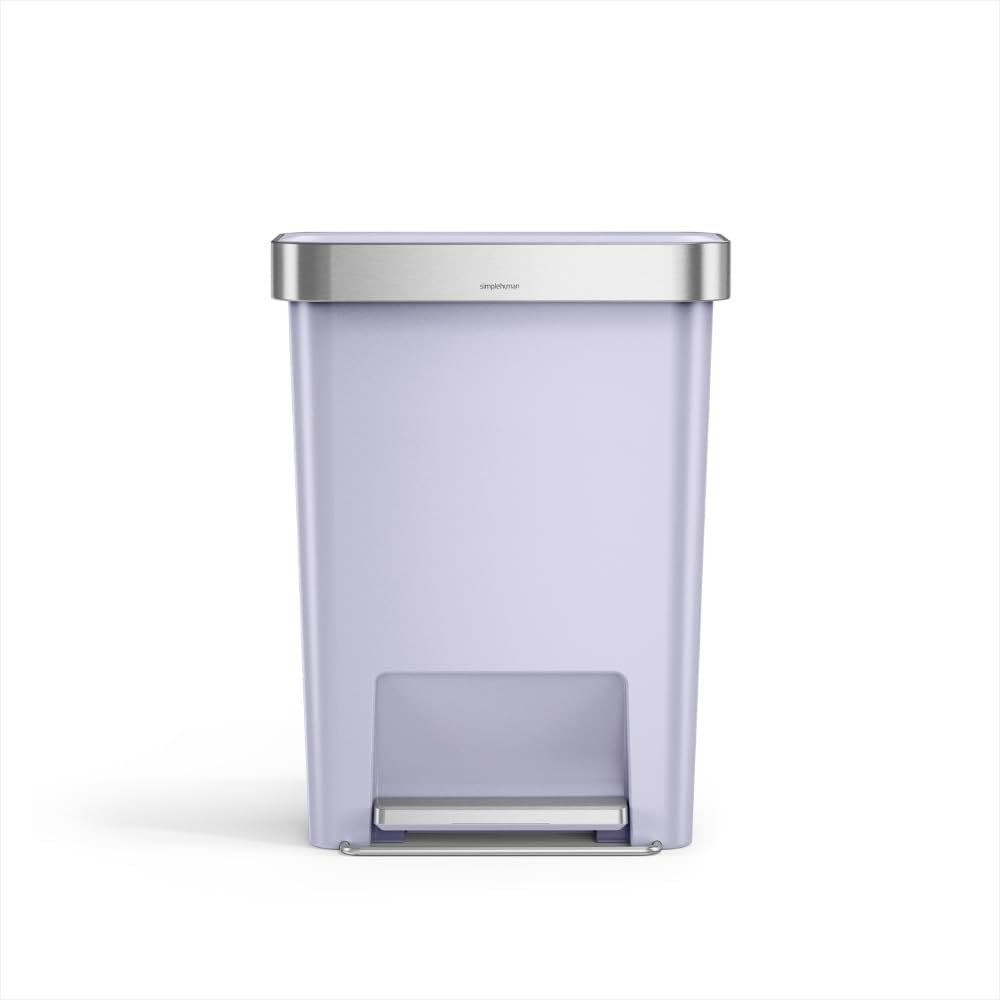
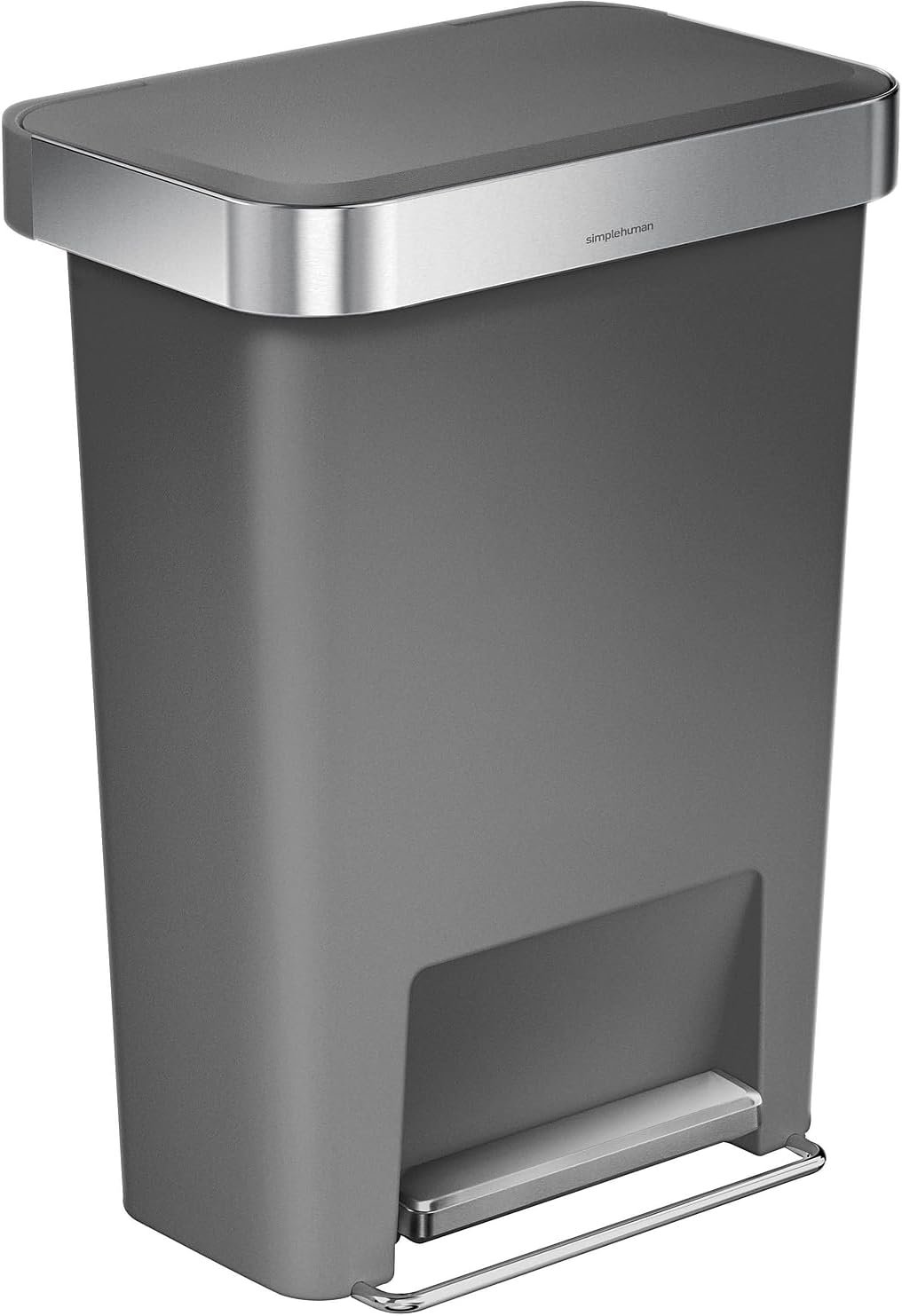
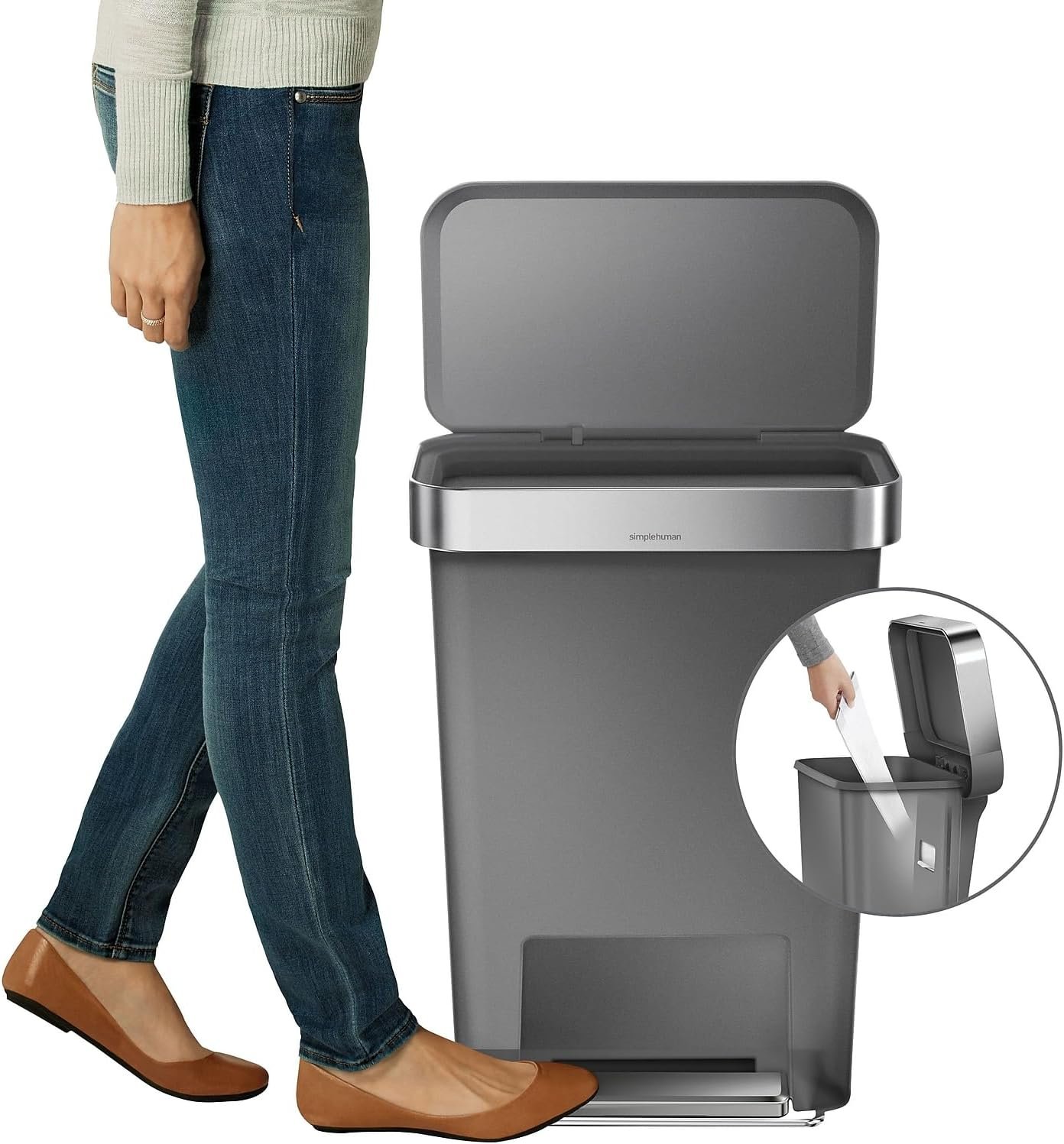
Every Angle
The piece as photographed for Amazon — front, side, back, detail.
As an Amazon Associate I earn from qualifying purchases.