Stainless Steel Step Trash Can for Kitchen: Honest Review
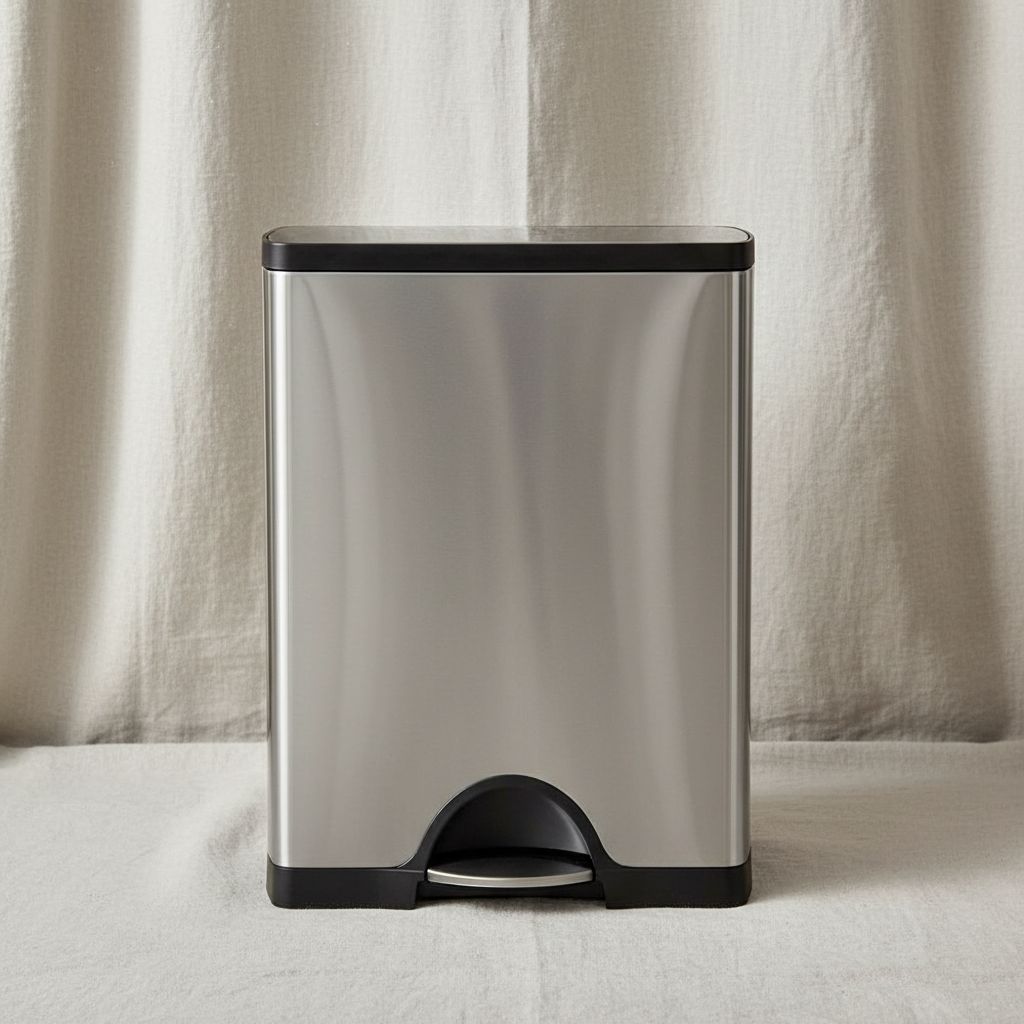
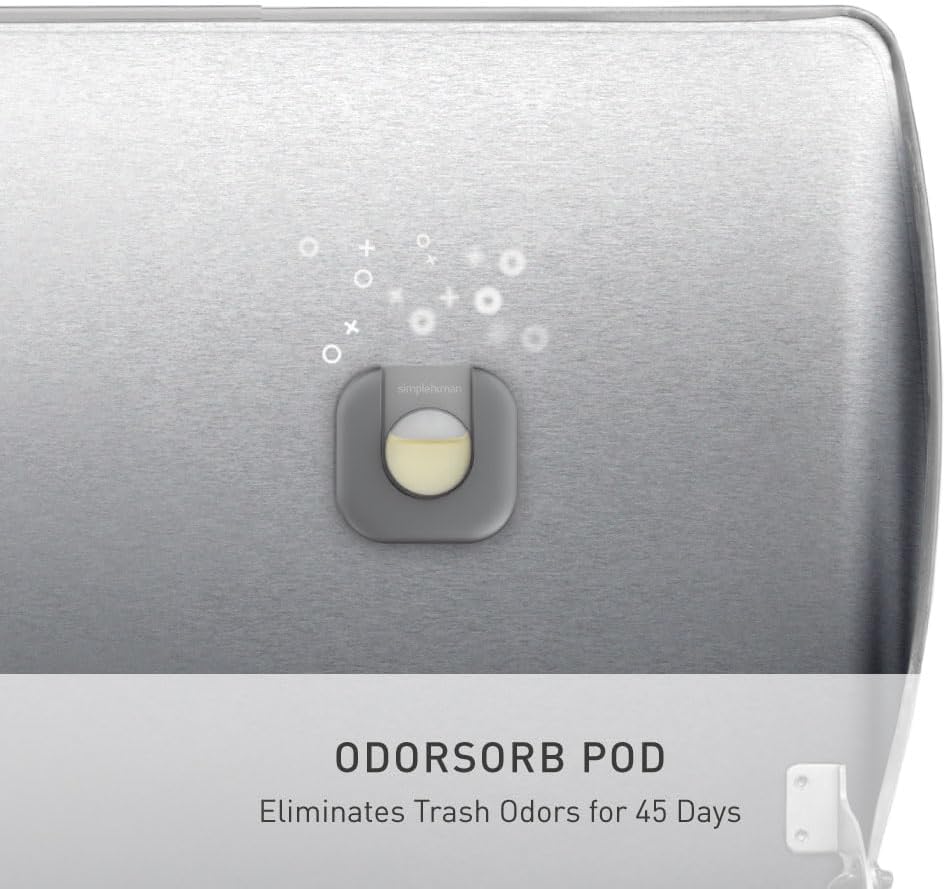
The trash can you never think about until you hate yours is, it turns out, the one object that quietly sets the tone for your entire kitchen.
It was a Sunday morning in late October, the kind where the light comes in low and honey-colored through the kitchen window, when I finally admitted I had a trash can problem. I was standing barefoot on the tile, coffee in hand, watching my partner wrestle the lid open with an elbow because both of his hands were full of vegetable peels. The lid complained. It always complained. The whole thing wobbled slightly, a little off-balance, a little defeated, the way cheap kitchen objects eventually reveal themselves. **Something had to change.** I’d been ignoring the situation for two years, the way you ignore a flickering bulb or a cabinet hinge that’s slightly loose, but that morning I finally looked at it directly and decided I was done.
The First Time I Saw It
I came across the simplehuman 50 Liter / 13.0 Gallon Rectangular Kitchen Step Trash Can in Brushed Stainless Steel the way most of us discover the things that actually end up staying in our homes: not through a careful curated search, but through a quiet Tuesday rabbit hole that started somewhere else entirely. I was reading a kitchen organization deep-dive when a comment thread sent me sideways into a forum about, of all things, the best trash cans for serious home cooks. People had opinions. Strong ones. The simplehuman name kept surfacing with the kind of quiet, consistent insistence that makes you stop and pay attention.
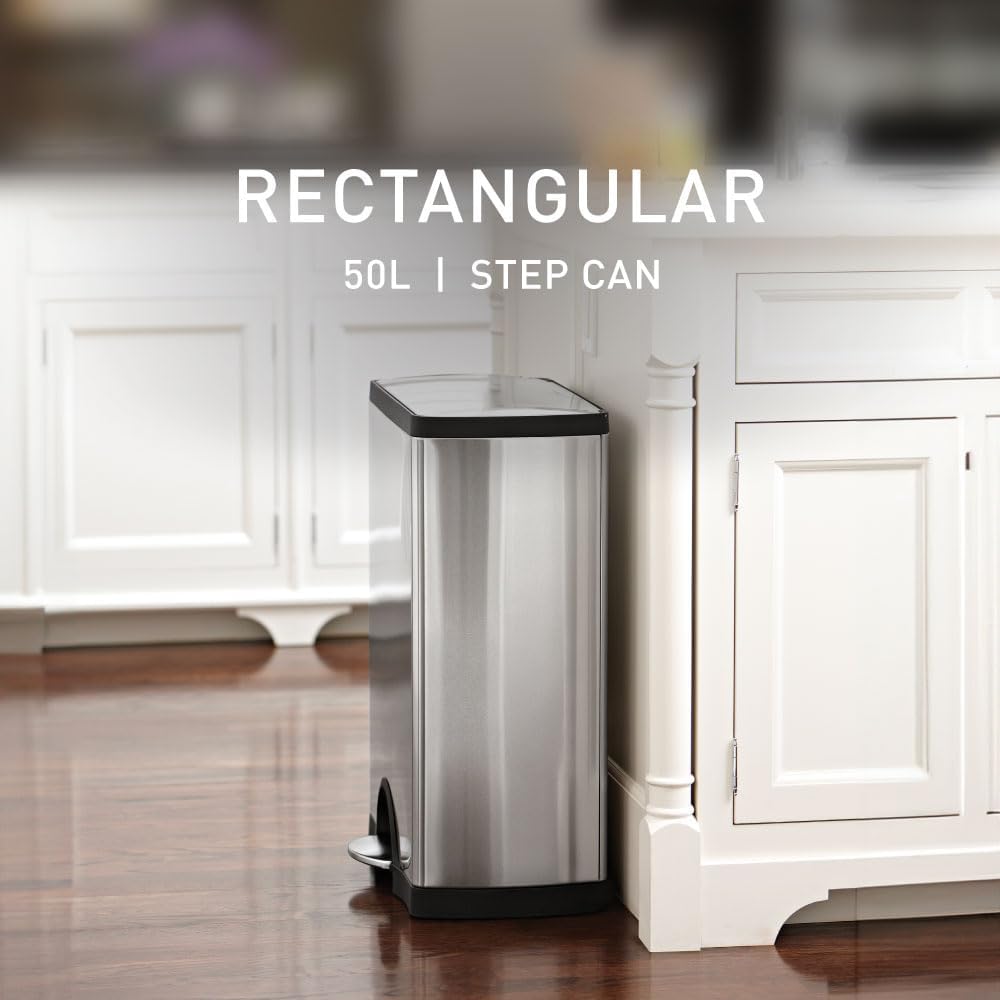
What stopped the scroll for me was the profile. That long, clean rectangle in brushed stainless steel, sitting flush against a cabinet run like it had always been there. I kept thinking: I need to see that in person.
How It Actually Lives in the Room
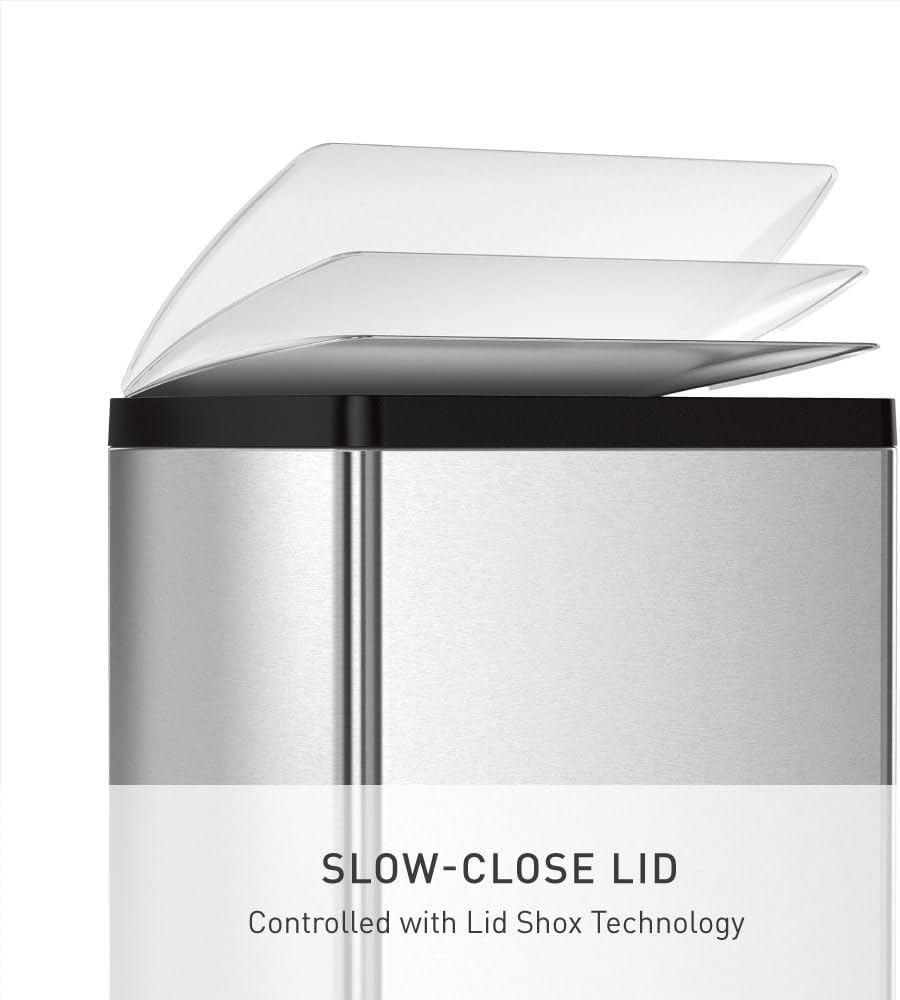
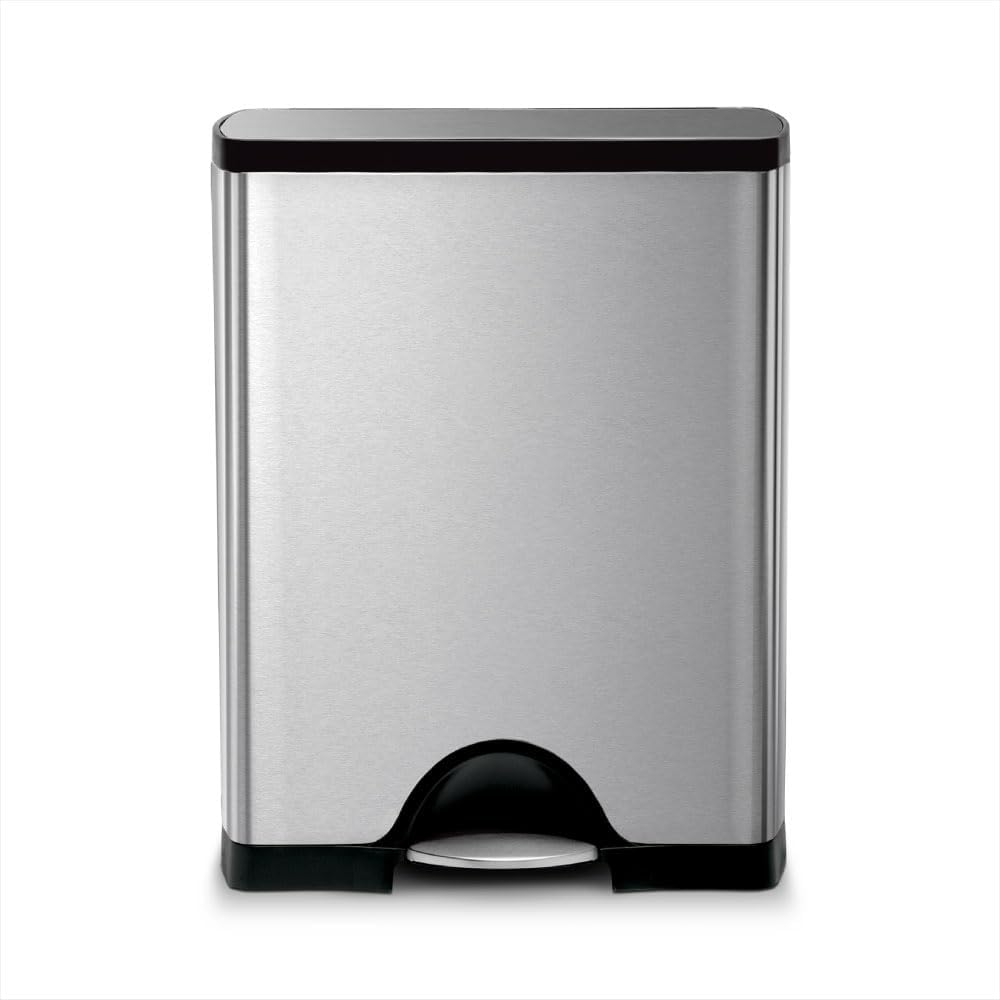
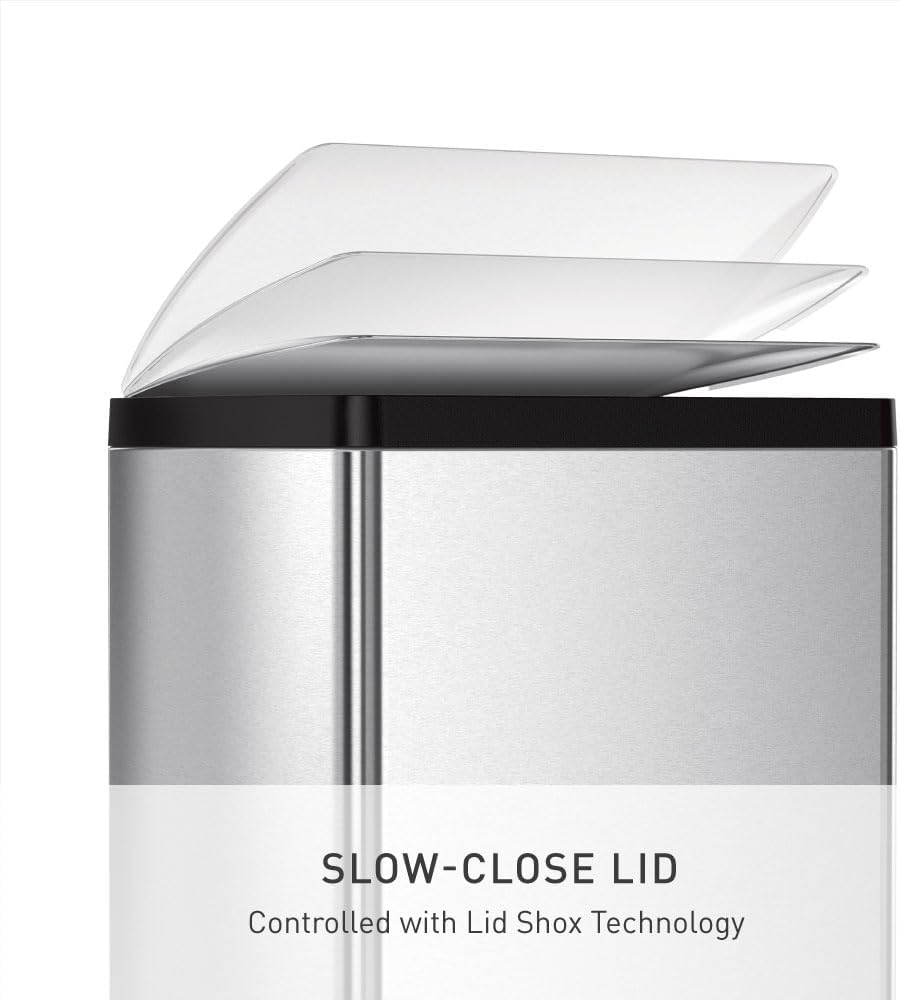
In person, the brushed stainless steel finish is the first thing you notice, and it’s doing more work than it gets credit for. It’s not shiny in that aggressive, fingerprint-magnet way. It has a matte warmth to it, a softness that reads more like a professional appliance than a utility object. The rectangular silhouette is narrow enough to tuck beside a kitchen island without demanding floor space it hasn’t earned. When the lid closes, it closes with a sound that is, and I am being completely sincere here, one of the more satisfying sounds in my kitchen right now. A low, controlled exhale. No rattling. No drama.
“The lid closes with the kind of quiet confidence you didn’t know you needed from a trash can until you heard it.”
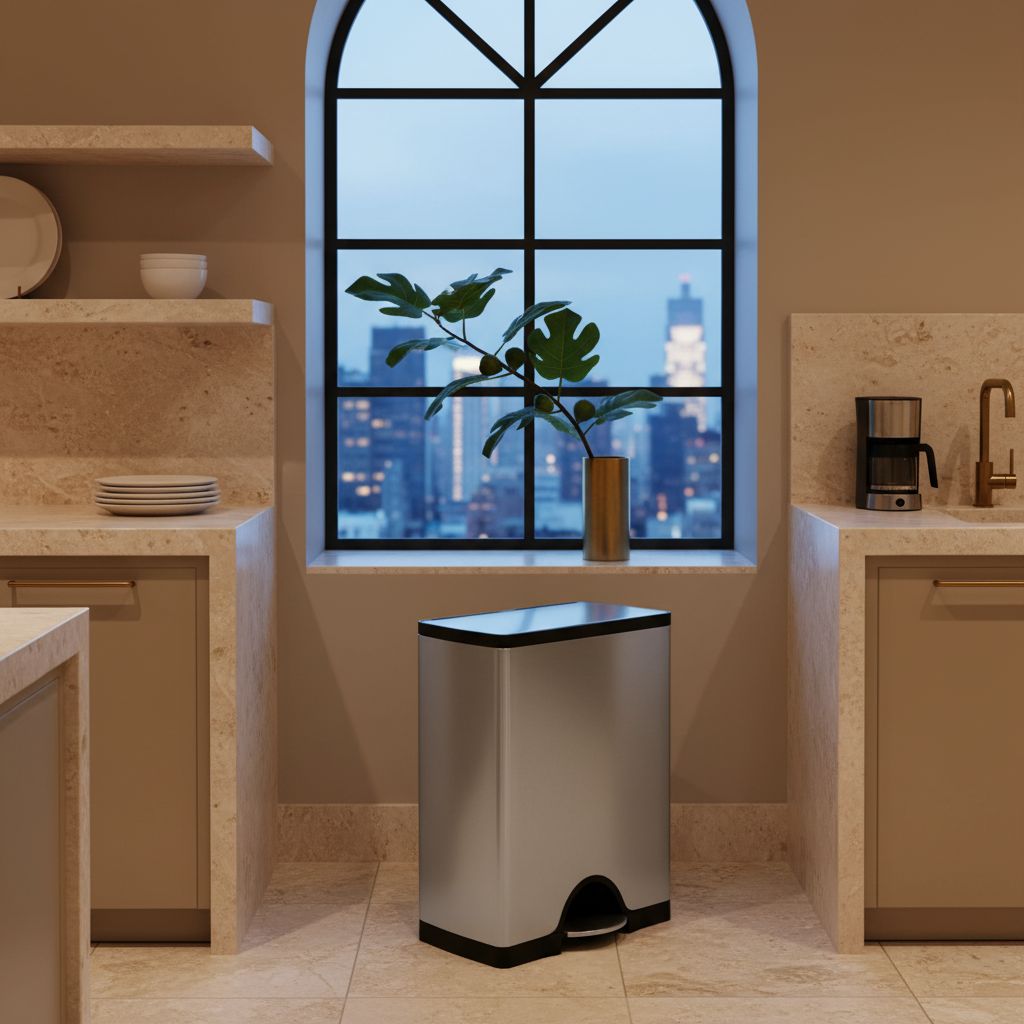
That said, this is a big can. **The 50-liter capacity reads large** in a galley kitchen or a smaller apartment setup, and if your under-counter clearance is tight, measure twice before you commit. It works beautifully in an open kitchen-dining layout where it has room to breathe. For context on how well-considered utilitarian design fits into a modern home, Dwell’s ongoing coverage of functional modern spaces has always been useful to me, and the simplehuman fits squarely into that philosophy: nothing decorative, everything intentional.
The Vignettes I Actually Built Around It
Vignette 1: Sunday Morning, Coffee and the Cutting Board
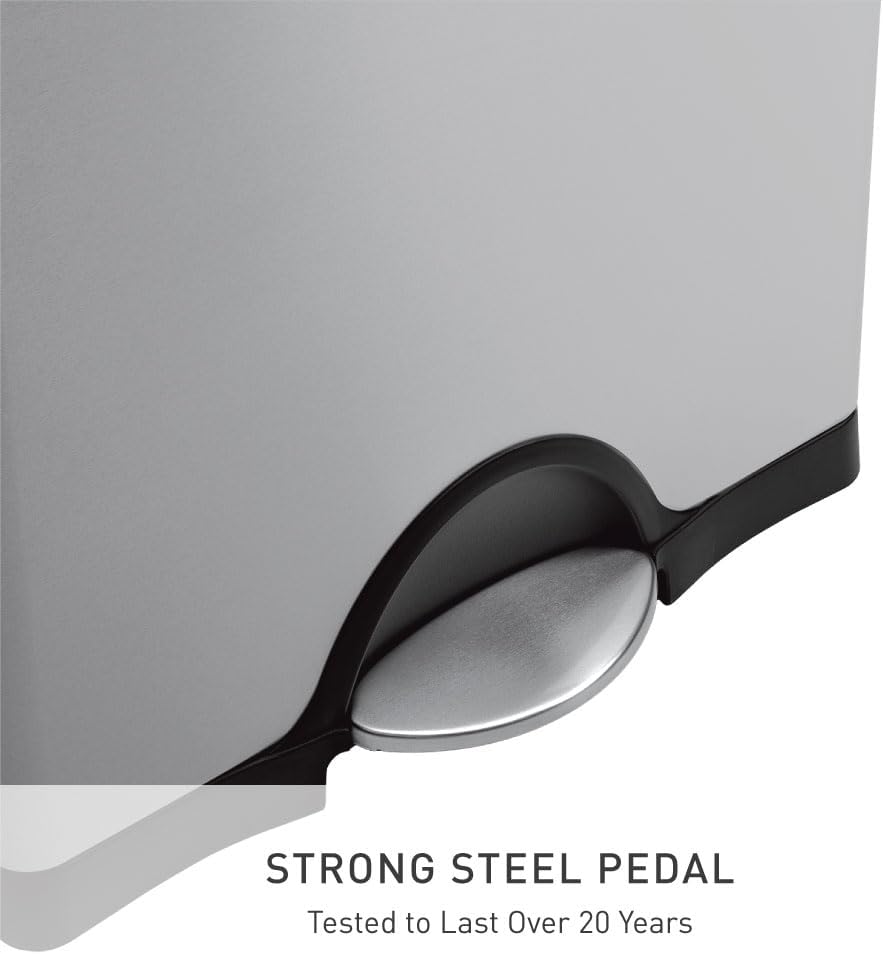
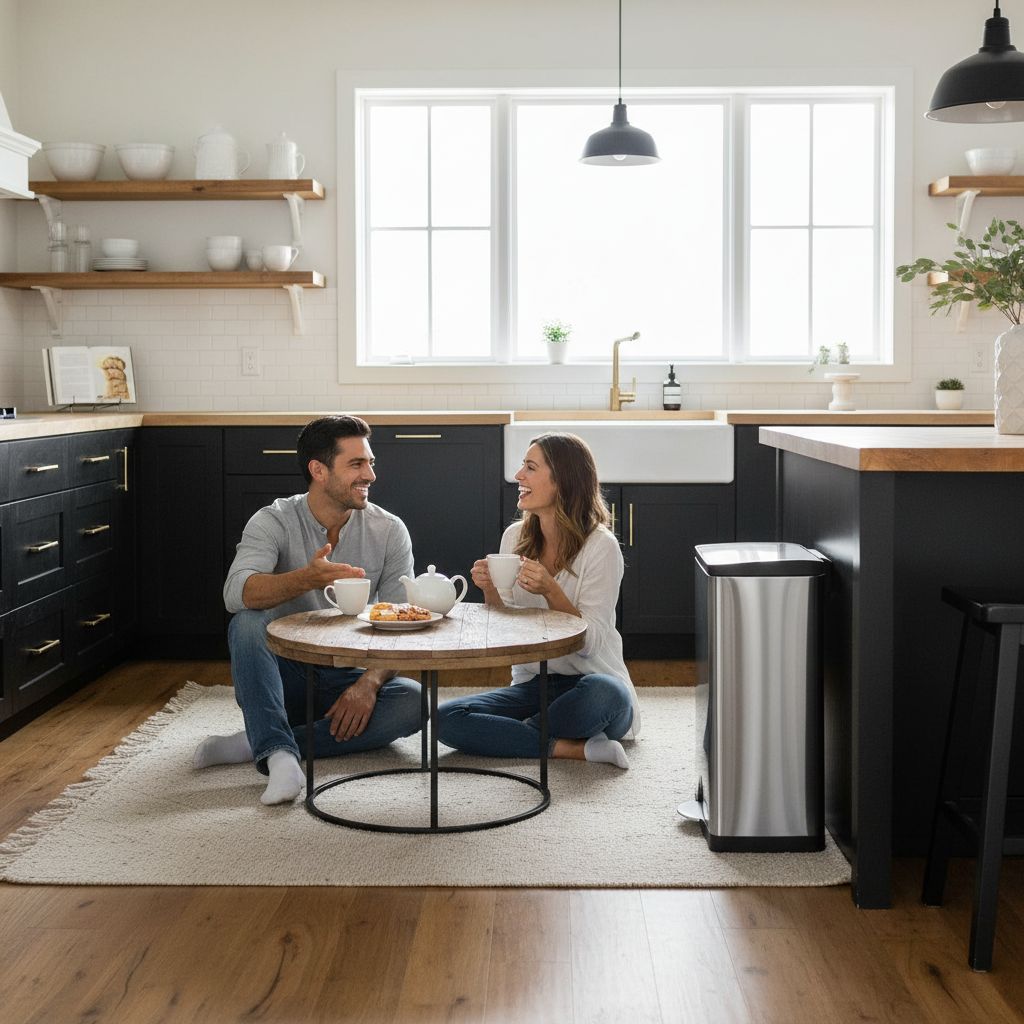
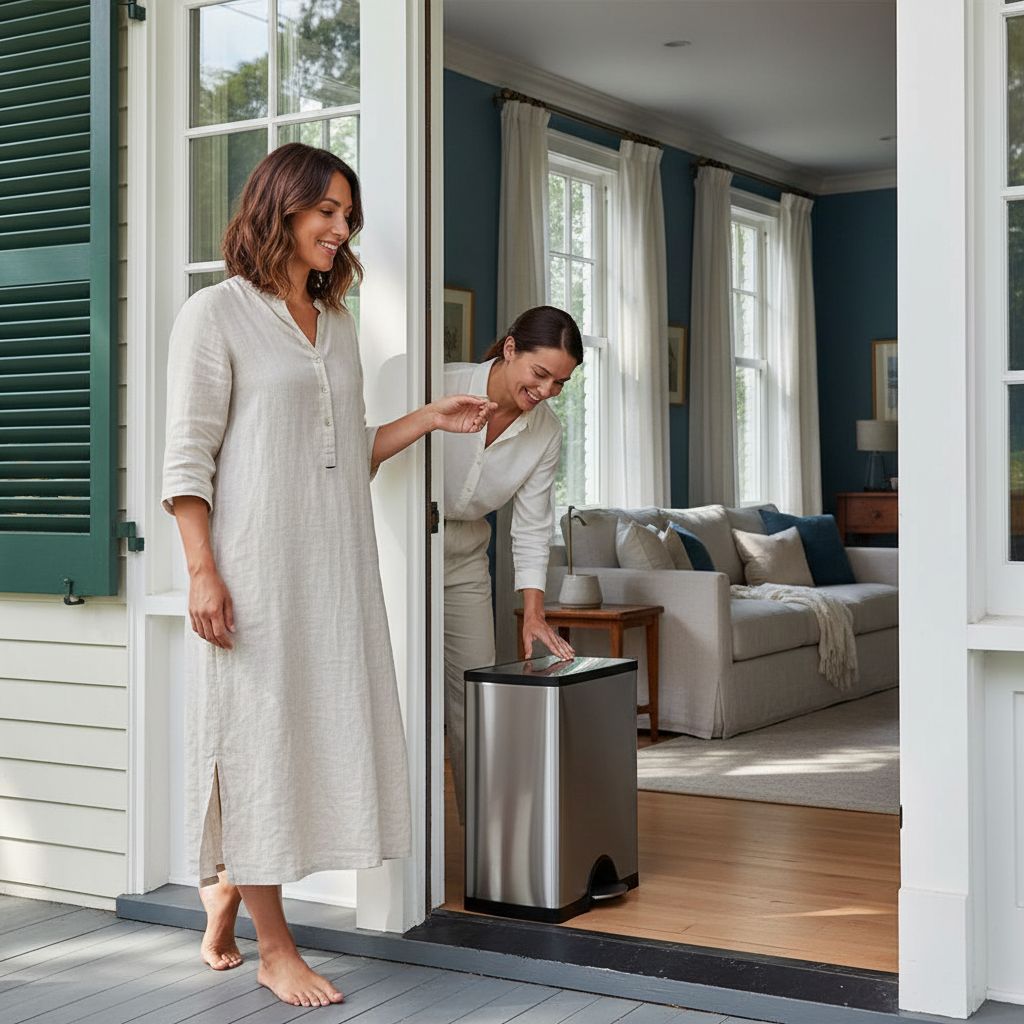
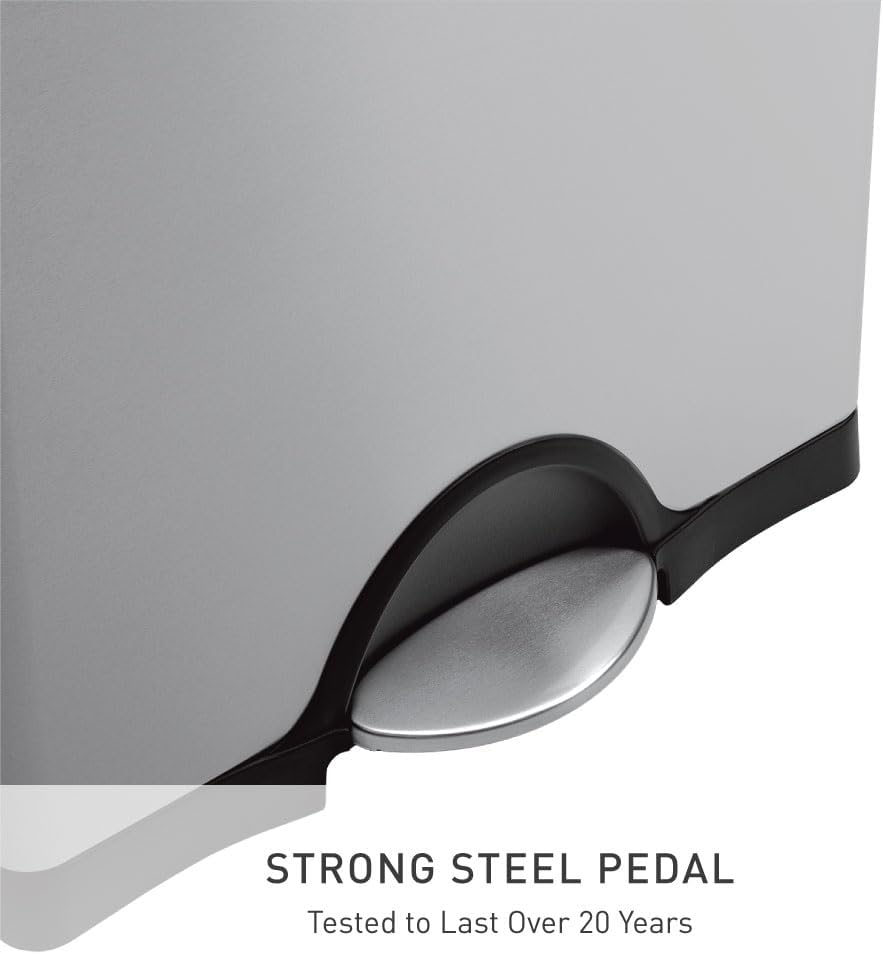
Sunday mornings are my cooking mornings. There is a routine: the NPR app playing quietly, a cutting board the size of a small country, and whatever vegetables are about to become something. The step pedal on this can means my hands never leave the task. I press down, the lid rises cleanly, I drop the scraps, the lid settles back without a sound. It sounds like a small thing. Over the course of a two-hour cooking session, it is not a small thing at all. **The foot pedal mechanism is deceptively simple**, a single bar across the bottom that requires almost no force, and it has never once failed to catch. The can sits beside my counter run, its steel reflecting the morning light in a way that looks, honestly, like it belongs in a proper kitchen.
Vignette 2: The First Dinner Party of the Season
I had eight people over in November, the first proper dinner party I’d hosted since redoing the kitchen layout. The trash situation at a dinner party is always quietly chaotic: the wine bottle that needs somewhere to go, the paper towels, the cheese rinds, the general accumulation of an evening well-spent. What surprised me was how often the can got used by guests without anyone saying a word about it. One friend noticed it while clearing plates and said simply, **”Oh, this is a good one.”** That’s the compliment a kitchen object should get: not a lengthy discussion about design, just immediate, intuitive recognition that something is better than it needs to be. I’ve found that if you’re building out a thoughtful kitchen and dining space, the objects that work hardest are often the ones that get noticed least.
Vignette 3: A Rainy Wednesday Night, Alone
The quieter test is the ordinary Tuesday, or in this case, a Wednesday night when it rained the whole evening and I made soup from whatever was left in the refrigerator. No guests. No particular occasion. Just me, the overhead light on low, and the slow business of cooking for one. The **brushed stainless steel kitchen step trash can** sat in its corner, functional and unbothered. There’s something reassuring about a well-made utility object on an unremarkable night. It asks nothing of you. It does its job without requiring your attention, and that, I’d argue, is the highest standard for anything in a working kitchen.
What Other People Are Saying
With nearly fifteen thousand ratings sitting at an average of 4.7 out of 5, the pattern in the review data is consistent and telling. The words that surface again and again are “sturdy,” “quiet,” and “worth it.” The pedal mechanism draws specific praise from people who cook frequently and value hands-free operation. The most common criticism is simply the footprint, which in smaller kitchens can feel like a significant commitment. A handful of reviewers note that the liner bags require a specific size, which means you’ll want to stock up on simplehuman’s own bag rolls or carefully match dimensions before assuming any liner will fit.
What strikes me about a consensus this large and this consistent is the absence of dramatic disappointment. For a utilitarian object used dozens of times daily, that is its own kind of endorsement.

Who Should Skip It
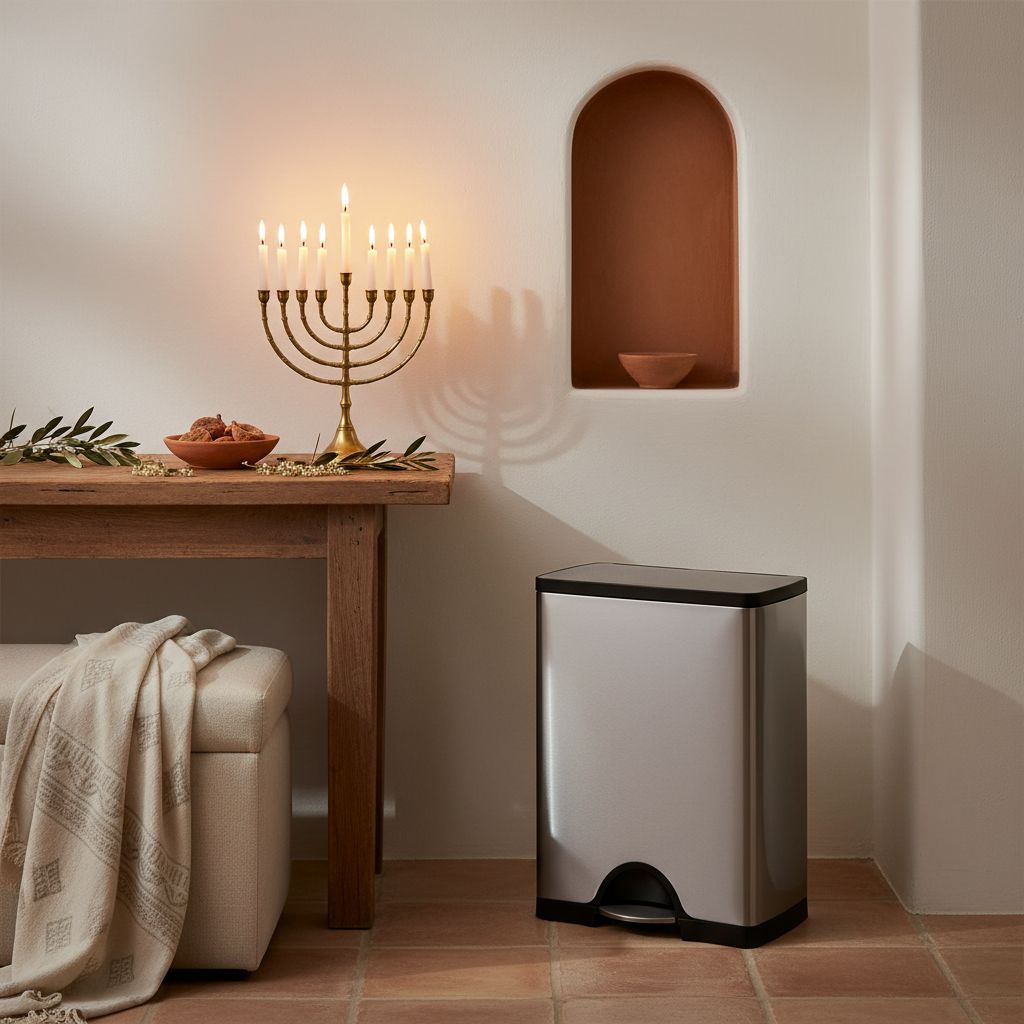
If your kitchen is genuinely small, as in a studio apartment or a narrow galley with limited floor real estate, the 50-liter rectangular form factor may simply take up more space than it returns in convenience. A smaller round step can, or even an under-sink pull-out, would serve better in that context. This can is also not the right fit if your aesthetic leans toward warm, organic, or cottagecore. **Its clean industrial lines are very specifically modern minimalist**, and placed in a kitchen full of natural wood, terracotta, and vintage ceramics, it will read slightly out of place. If you’re looking for something with more warmth, our editor’s top decor picks cover a range of styles across price points. And if you simply don’t cook frequently enough to justify the full-size footprint, this will feel like more can than you need.
What It Replaces in My Space
What I had before was a touchless sensor can that sounded like a small mechanical creature every time it opened, which was charming for approximately one week. Before that, a basic black plastic step can with a lid that had developed a slight crack along one hinge. The **simplehuman step can replaced both the noise and the embarrassment** of showing guests a trash can I’d been meaning to replace since the previous administration. The specific thing I noticed most in the first week was how much easier it became to keep the area around it clean. The stainless wipes in seconds. The liner stays hidden. If you’re rebuilding a kitchen workspace from the ground up and thinking about countertop and surface styling, the trash situation is the part most people address last. I’d argue you should do it first.
FAQ
What size liner bags does this trash can take?
The 50-liter capacity is designed to fit simplehuman’s size K liner bags, though any liner that fits a 13-gallon can with a rectangular shape should work. Check the dimensions before buying third-party bags, as round liners will bunch unevenly.
Does the brushed stainless steel show fingerprints?
Less than you’d expect. The brushed texture diffuses fingerprints significantly compared to a polished finish, though you’ll still see smudges in strong direct light. A quick wipe with a dry microfiber cloth handles it in seconds.
Where should this can be positioned in a kitchen?
Beside a prep counter or kitchen island works best, ideally close enough that you can operate the pedal without moving your feet while cooking. It should sit flush against a wall or cabinet run for the most streamlined appearance.
Is this piece worth the investment?
Given the level of finish, the build quality, and the mechanical precision of the step mechanism, the value reads considerably above what you’d expect at this price point. This is a daily-use object that is built to last, and the construction reflects that.
Is assembly required, and what about returns?
Assembly is minimal, essentially unboxing and attaching the pedal bar, which takes under five minutes. simplehuman has a solid customer service reputation, and most major retailers carrying this piece offer standard return windows if something arrives damaged.
The Verdict
I imagine the version of my kitchen six months from now, and the simplehuman is still there, in its corner, doing its job without complaint. Dinner parties come and go. The Sunday morning cooking sessions continue. The foot pedal keeps working, the lid keeps closing quietly, and the brushed steel keeps looking like it belongs. This is not the kind of object you fall in love with. It is the kind you come to depend on without noticing, until the day something makes you pause and realize that your kitchen just works better than it used to. If you’re also rethinking what’s on your counters and shelves, our kitchen mugs and glassware picks and a look at kitchen dish towel styling are worth a read alongside this one, because the simplehuman fits a broader shift toward a kitchen that is considered in every corner. For anyone who cooks regularly, hosts occasionally, or simply wants a kitchen that feels pulled-together rather than provisional, this is the best kitchen step trash can for a modern home. And for those building or refreshing a kitchen space from scratch, it belongs on your shortlist alongside every other decision you’re making about the room. **The simplehuman 50-liter rectangular trash can is, quietly and completely, the right choice.**
Every Angle
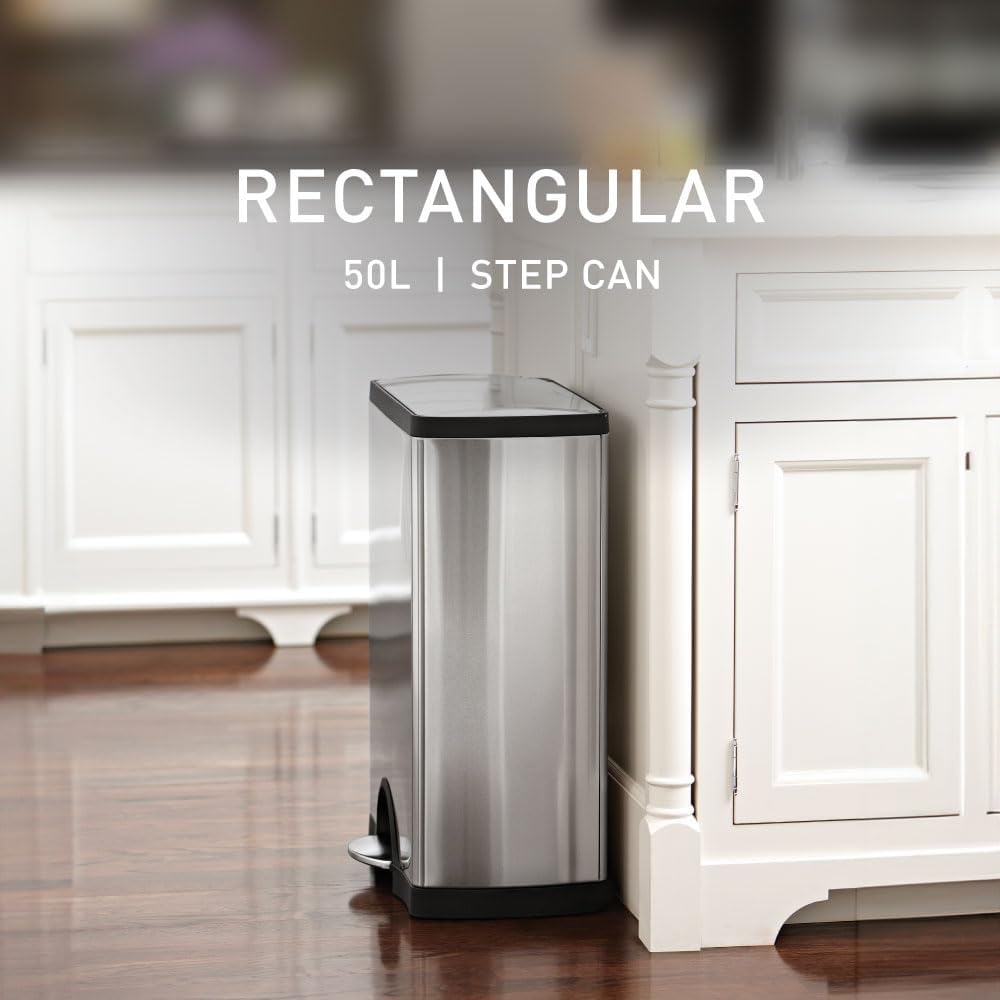
The piece as photographed for Amazon — front, side, back, detail.
As an Amazon Associate I earn from qualifying purchases.