6FT Faux Olive Tree for Home Office: Honest Review
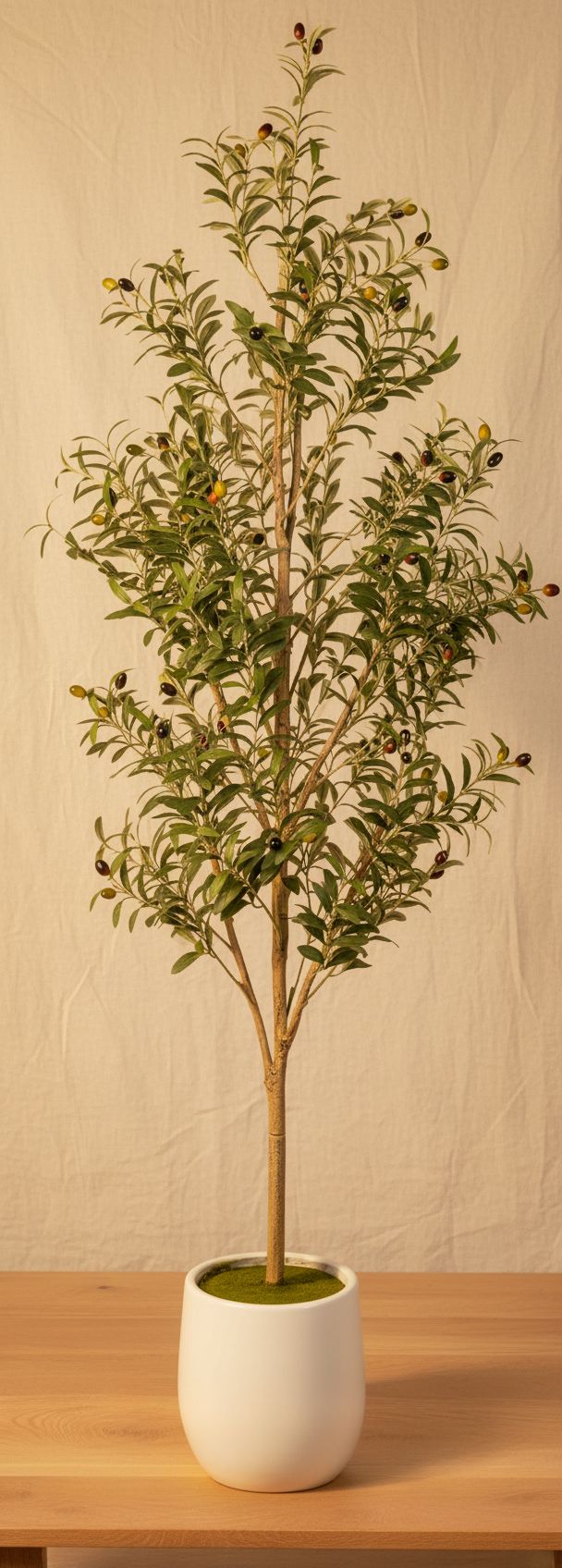
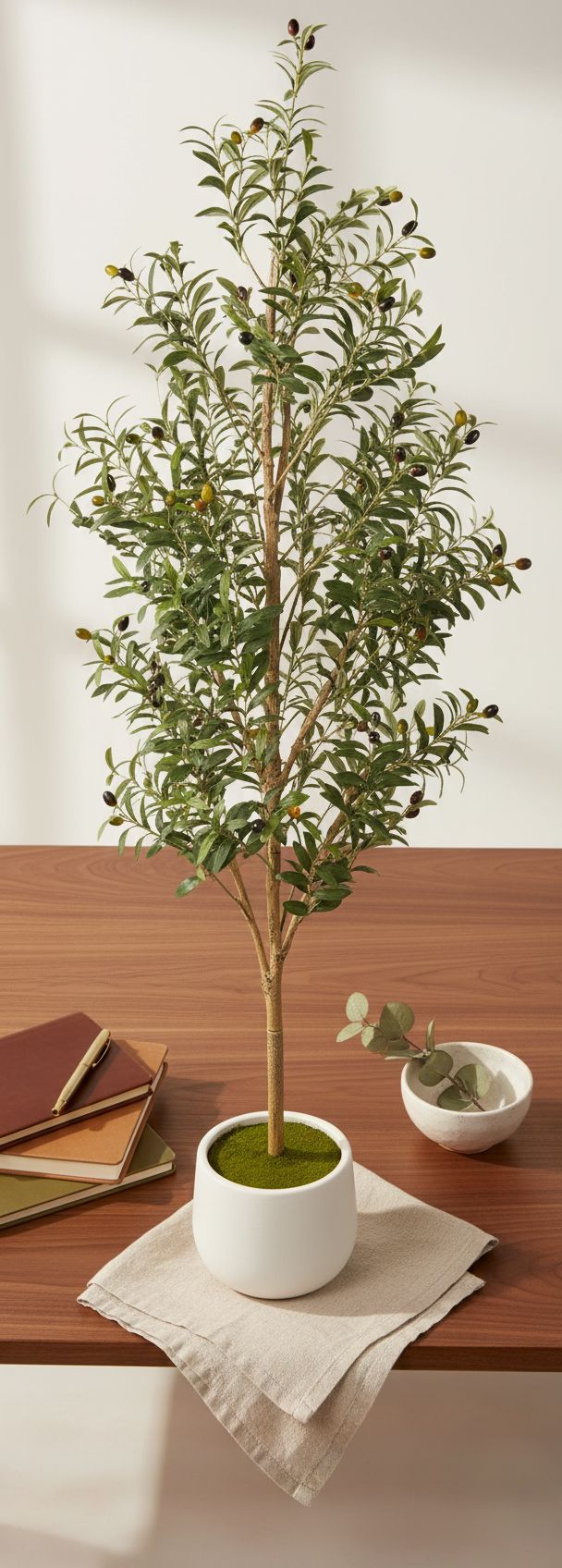
The Artizone 6FT Artificial Olive Tree arrived on a gray Thursday morning, and by Friday I had completely rearranged my home office around it.
There is a particular kind of light that fills a home office in the late afternoon, the kind that slants low and catches every piece of dust and every wrong decision you’ve made decorating that corner. I had been staring at my own wrong decision, a very sad, very fake fiddle-leaf fig that had developed a lean suggesting structural fatigue, for the better part of eight months. Then the Artizone Artificial Olive Tree with White Pot showed up in a cardboard box taller than my dog, and something in the room shifted. Not metaphorically. The whole energy of the corner changed. The afternoon light hit the branching structure, the clusters of tiny faux fruit caught the glow, and I stood there in my socks on a Thursday thinking: this is what that corner has been waiting for.
The First Time I Saw It
I was deep in a late-night scroll through Apartment Therapy’s plant styling inspiration, looking for something that would work in the corner of my home office without requiring me to remember to water it. I have two thriving real plants and approximately four dead ones, so I have reached a level of self-awareness about this. The Artizone faux olive tree kept appearing in styled images, and each time I almost scrolled past, something about the trunk stopped me. It didn’t look like a prop.
The branching pattern had the kind of asymmetry that real trees develop over years. I ordered it mostly on instinct, which is honestly how the best home office decor decisions get made.
How It Actually Lives in the Room
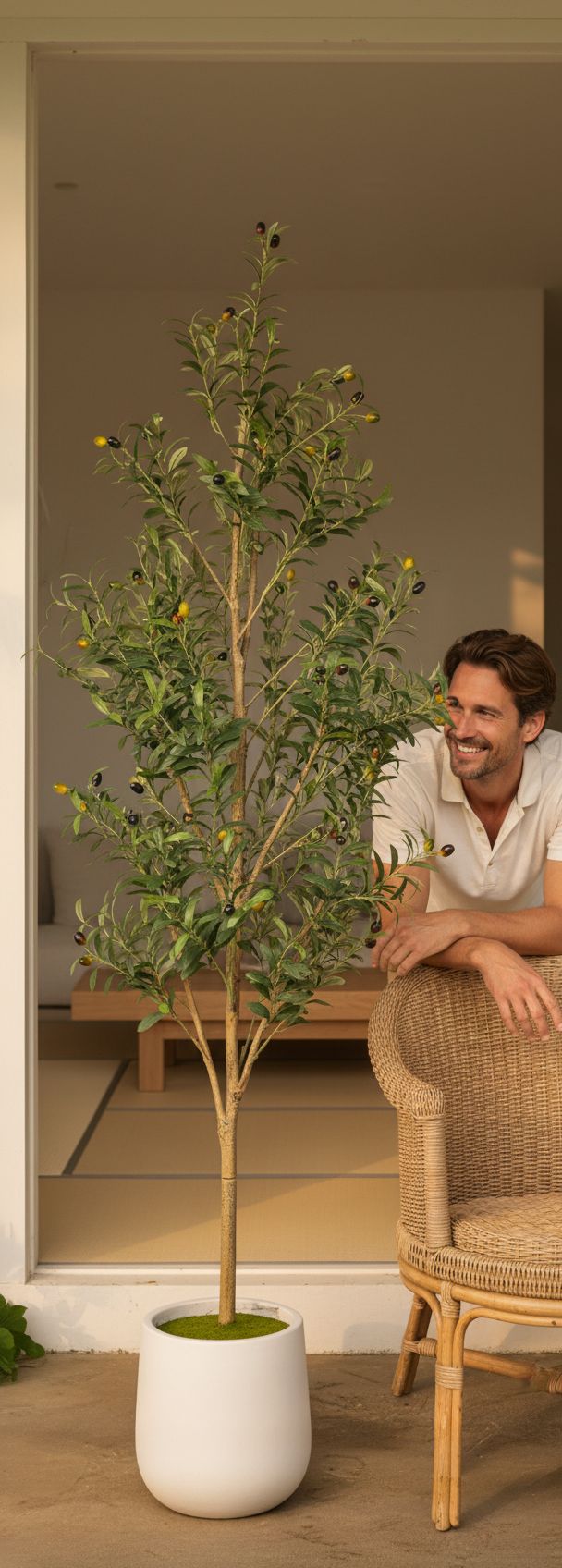
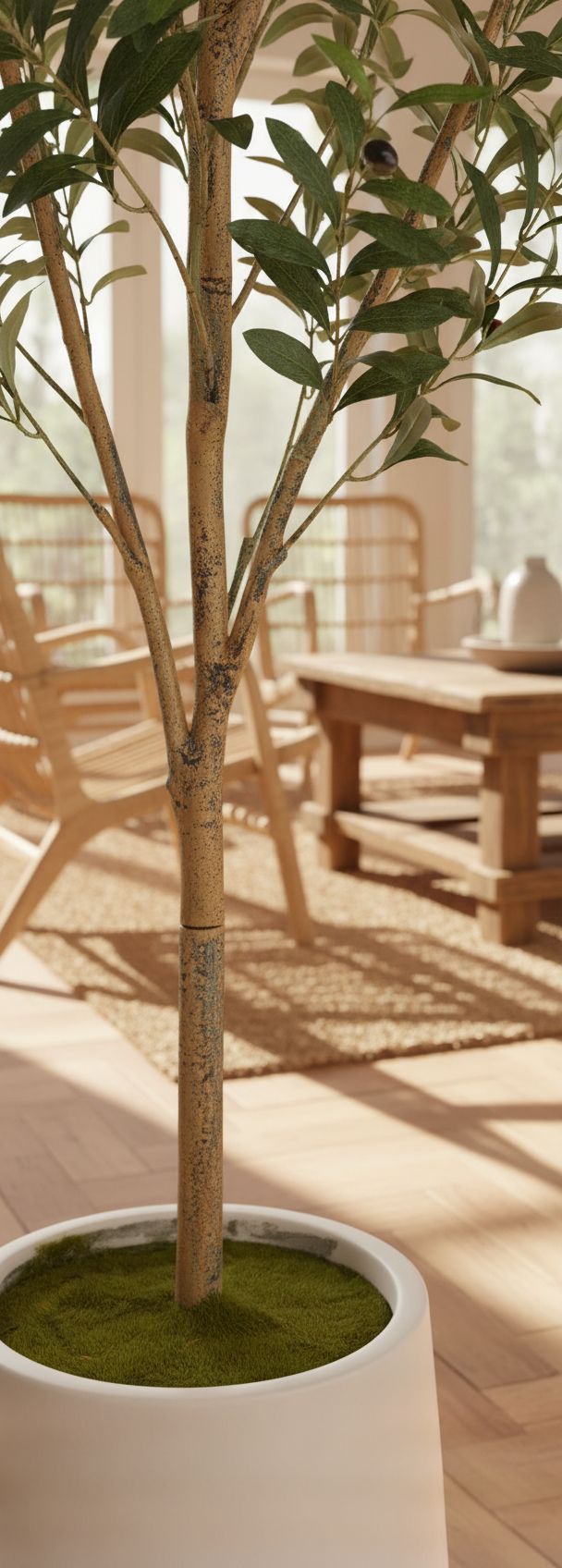
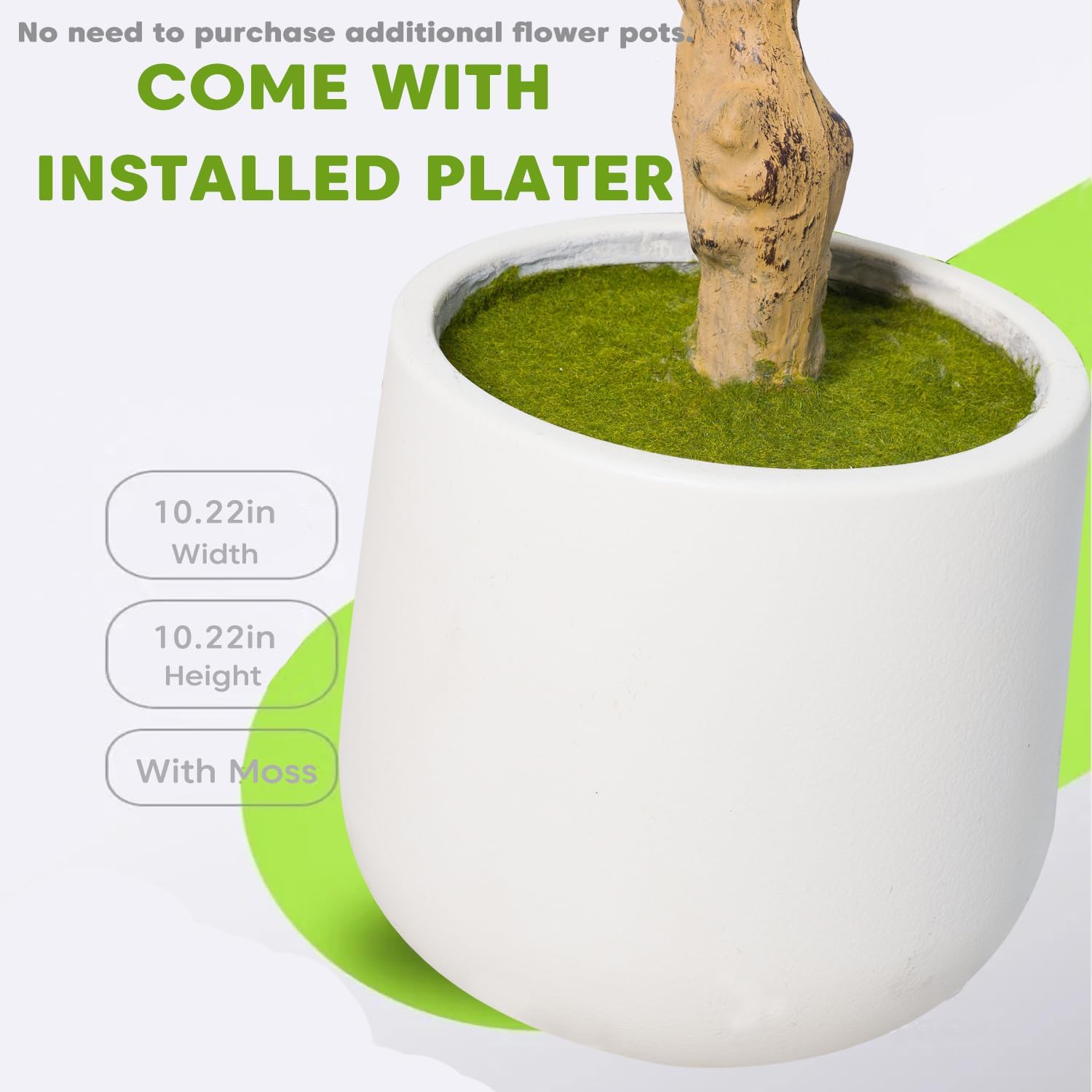
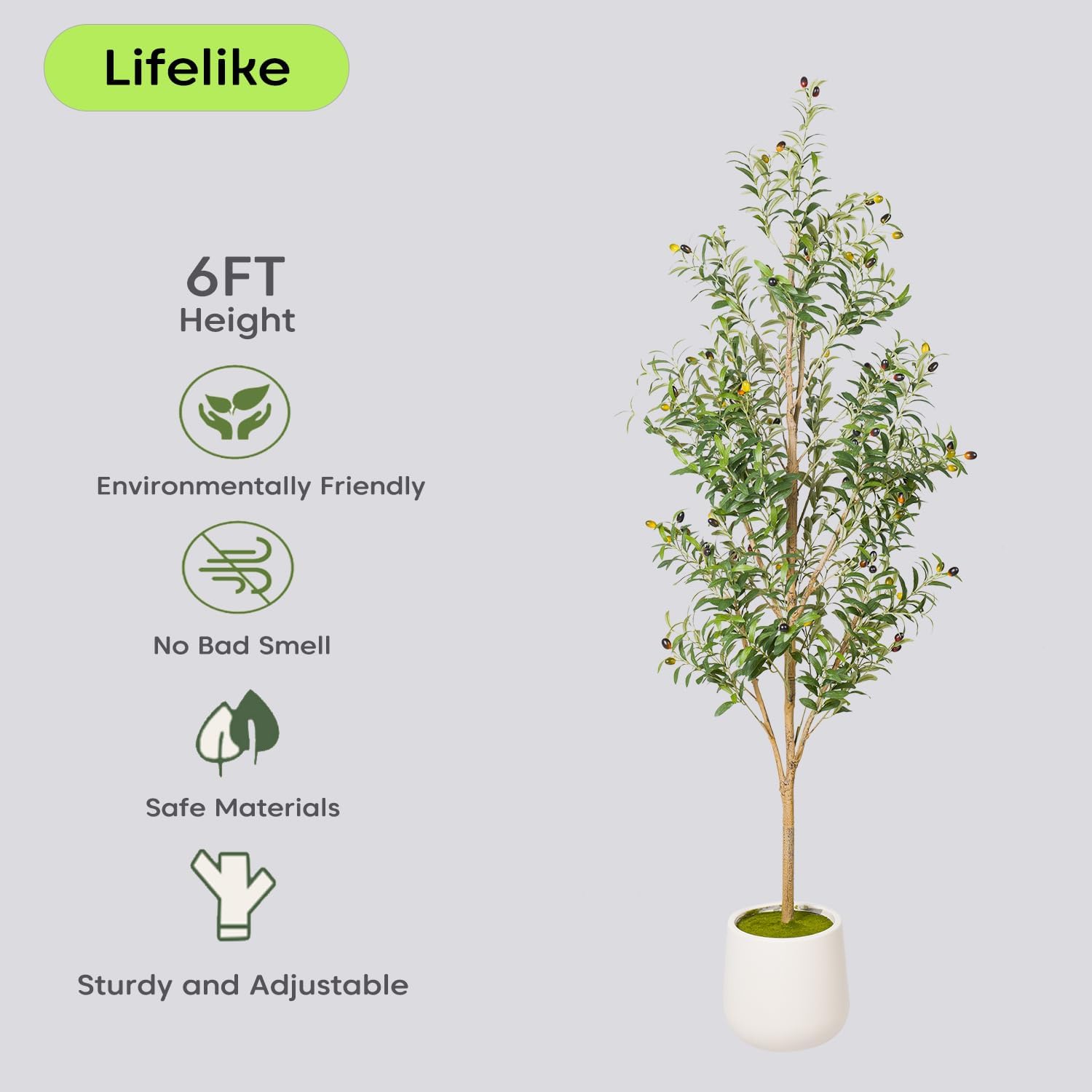
At six feet, this is a statement plant, full stop. It reads large in person in a way that photographs don’t quite capture, which is a feature, not a flaw, because most artificial plants err toward the timid. The trunk has a realistic texture that I keep wanting to describe as “weathered” because it genuinely looks like something that has spent years in a Tuscan courtyard. The polyethylene leaves have a slight waxy variation in color, some deeper green, some silvery-pale, that keeps the canopy from looking uniform and therefore fake. The white ceramic pot grounds the whole thing without competing, and it’s heavy enough that the tree doesn’t tip when you brush past it.
“An artificial tree that makes guests do a second take is doing exactly the right job.”
That said, I’ll tell you the honest thing: up very close, in direct sunlight, you can identify this as artificial. The leaves don’t have the translucent quality of real foliage when backlit by a window. According to Architectural Digest’s guides on interior plant styling, the trick with large faux botanicals is placement relative to light sources, and that holds here. Position it where it receives ambient light rather than harsh direct sun, and the realism holds up beautifully. From any conversational distance, it is entirely convincing.
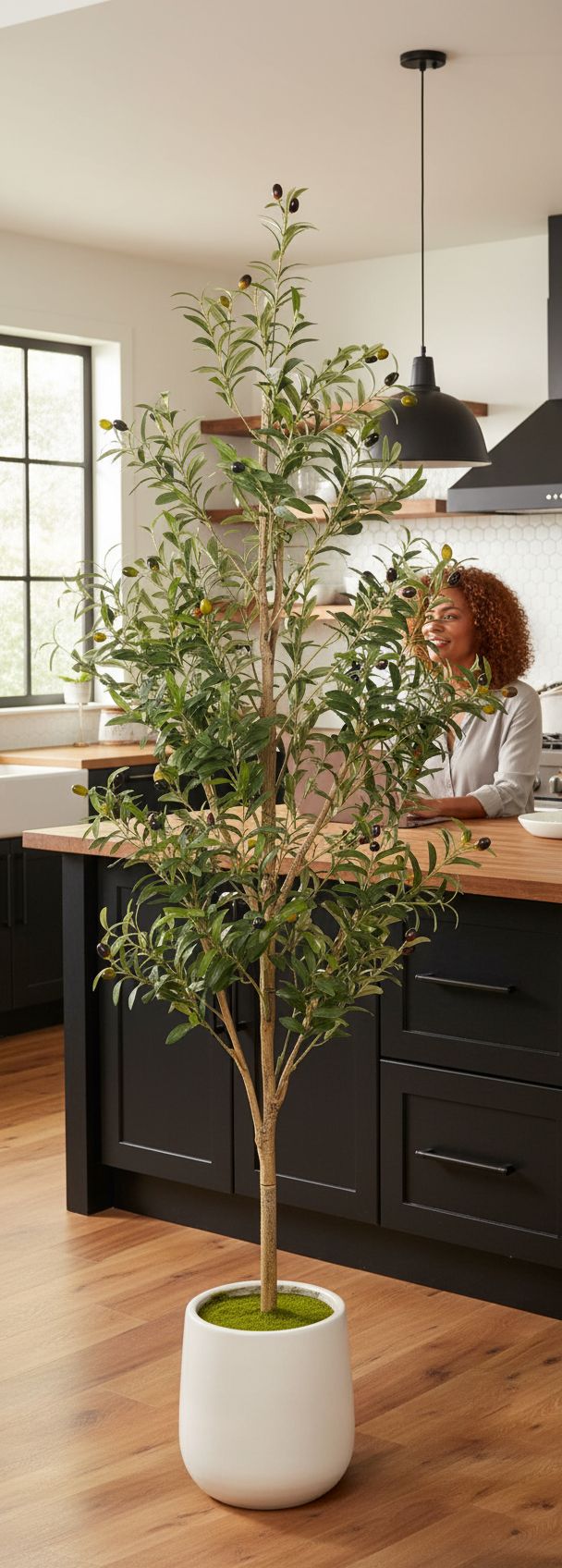
The Vignettes I Actually Built Around It
Vignette 1: Monday Morning, Desk Settled
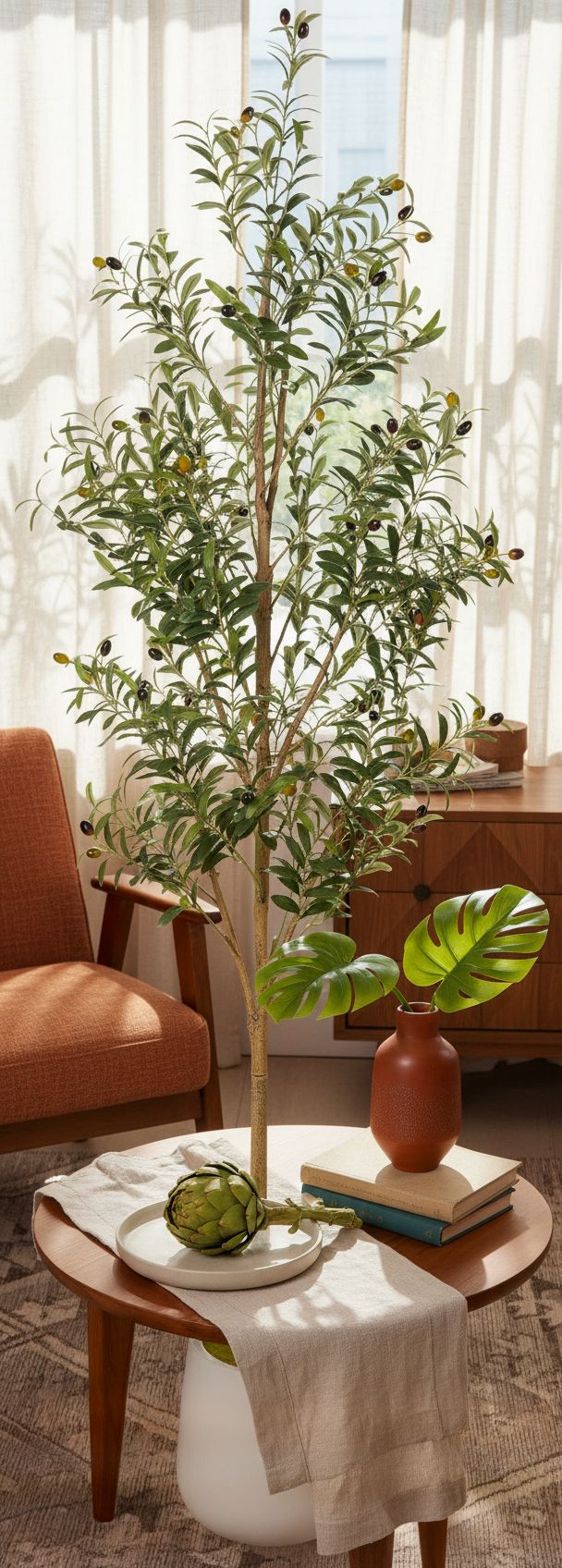
My home office is not a large room. It is a dedicated corner of good intentions and an inherited bookshelf. I placed the Artizone olive tree to the left of my desk, between the bookshelf and the window, and the result was the kind of considered layering that I usually only achieve in my head. A terracotta linen pillow on the reading chair, a small stack of linen-covered books on the shelf, and this six-foot tree with its warm, natural trunk. The morning light made the pale leaves look almost silver. I made coffee and sat at my desk and felt, genuinely, like I worked somewhere intentional. That feeling is underrated and worth pursuing. If you’re building out your home office decor from scratch, a tall plant anchors the room in a way that no art print quite manages.
Vignette 2: Dinner Party, Moved to the Entryway
I carried the tree to the entryway for a dinner party in early spring because I needed the office for coats and bags and the general chaos of eight people arriving at once. What I discovered is that this tree is perhaps even better in an entry. It flanked the door like something out of a Mediterranean villa, which is a dramatic thing to say about a hallway, but it was true. Guests walked in, clocked the tree, and one person asked where I’d bought “the olive tree.” Not “the plant.” The tree. I accepted the compliment graciously and changed the subject. For more ideas on styling statement pieces in transitional spaces, Elle Decor’s entryway styling features are worth bookmarking.
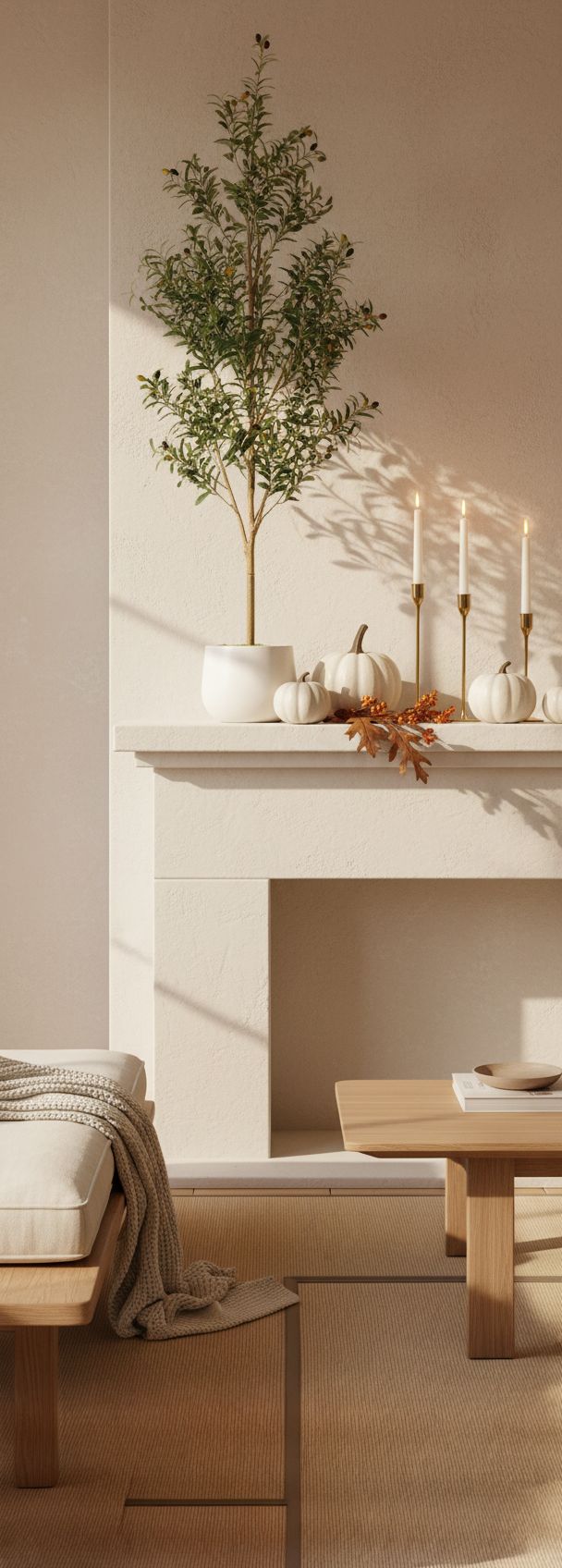
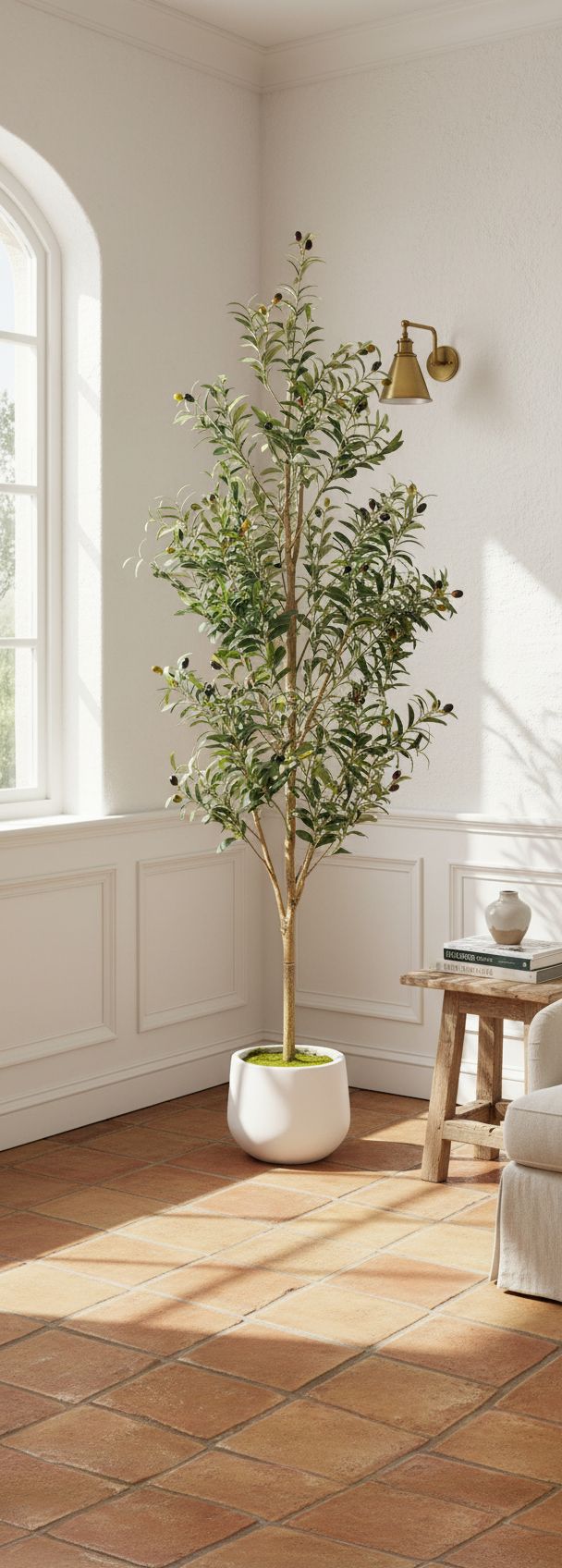
Vignette 3: Rainy November Tuesday, Living Room Corner
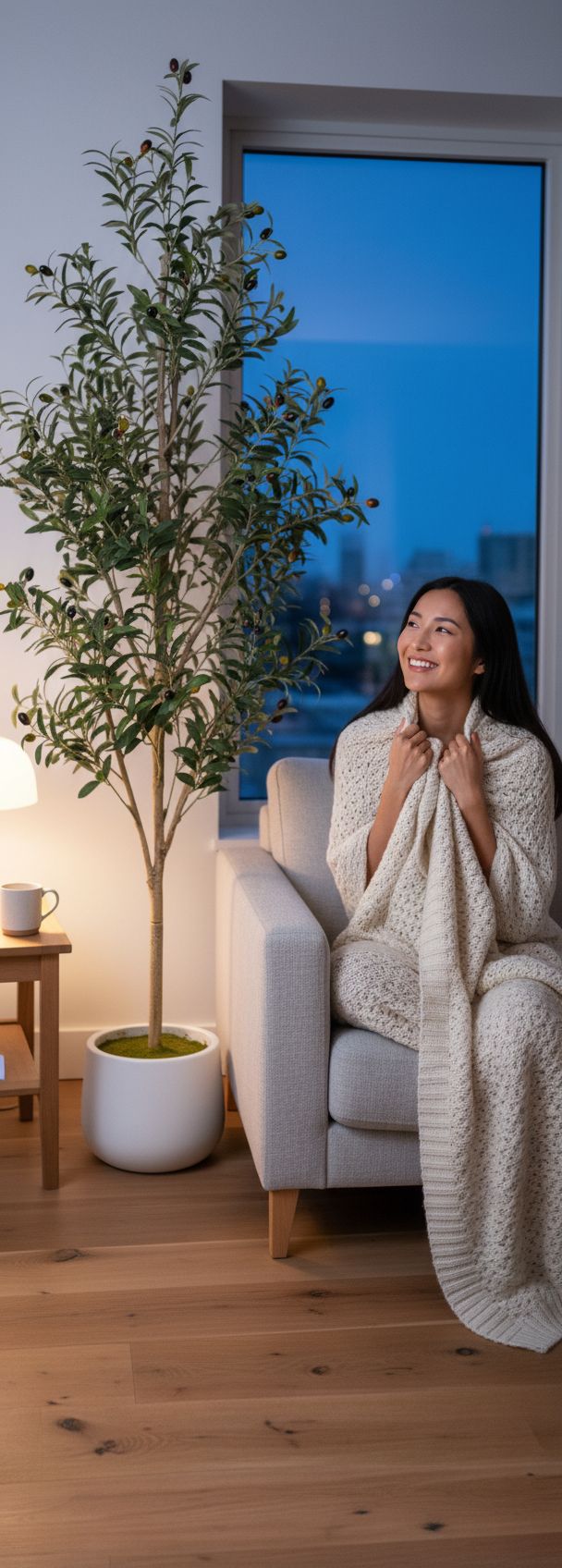
I eventually moved it to the living room for a week to see how it translated, and the answer is: completely. Against a warm white wall, with a rattan floor lamp and a low linen sofa, the olive tree became the quiet anchor of the room. The fruit clusters, which I initially thought were a detail too far, turned out to be exactly right, adding specificity that reads as texture rather than decoration. On a gray November evening with rain hitting the windows and something slow on the record player, the tree made the living room feel full in a way that furniture alone never quite does. It reminded me that every slow-living approach to interior design hinges on bringing the organic world indoors, even when the organic world is made of polyethylene.
What Other People Are Saying
The Artizone faux olive tree for home decor has gathered a notably specific kind of praise across its reviews: people keep mentioning that visitors don’t immediately identify it as artificial. That particular compliment is the highest bar a faux botanical can clear, and the fact that it appears repeatedly in the feedback suggests the realism isn’t a fluke of one good product photo.
The less enthusiastic notes tend to cluster around assembly time and branch shaping, which is consistent with how most quality artificial trees arrive. They are shipped compressed and require a patient half-hour of arranging to reach their full shape. That’s not a flaw so much as an expectation to set correctly. If you go in knowing you’ll need to spend time coaxing the branches into their natural spread, you will not be disappointed. You can also browse our broader editor-curated decor recommendations for pieces that pair well with this kind of tall botanical statement.
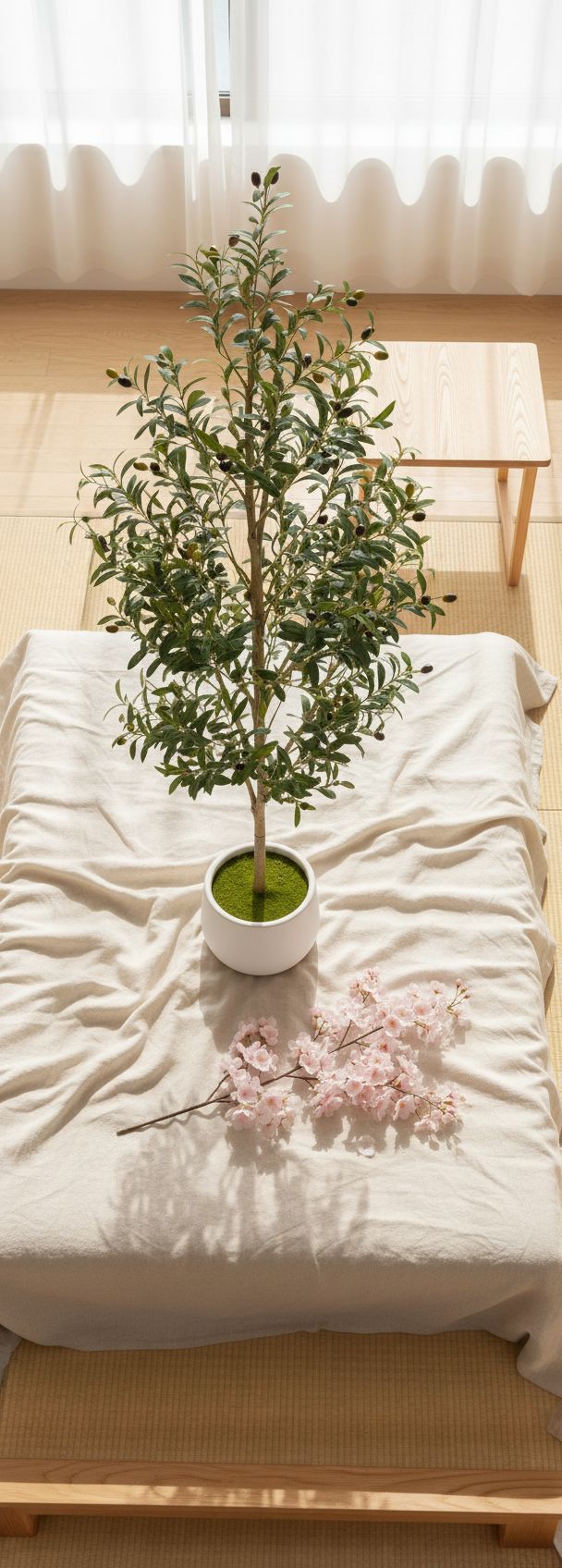
Who Should Skip It
If your space is under about 250 square feet, a six-foot tree is going to read as a set piece rather than a styling choice, and not in a charming way. This tree works in rooms with ceiling height and breathing room. It also may not be the right call if your existing decor is very spare and minimal, the kind of Japanese-influenced negative-space aesthetic where a single ceramic bowl on an empty shelf is the point. The tree is abundant. It has branches and fruit and a full canopy, and it wants to be noticed. If your room is already doing a lot of talking, it will compete rather than contribute. And finally, if you are specifically seeking a living plant for air quality or the ritualistic pleasure of plant care, this is, of course, not that. It is beautiful and it is permanent and it will not photosynthesize. Those are the terms.
What It Replaces in My Space
The sad fiddle-leaf fig I mentioned in the opening has now been retired to a secondary location where it can lean in peace. Before that fig, I had a floor lamp in that corner, which was functional but lifeless, the kind of choice you make when you haven’t yet figured out what a room actually needs. What that corner needed, it turns out, was scale and organic shape, something that interrupted the hard lines of the desk and bookshelf with something curved and natural. The Artizone artificial olive tree answered that need more completely than I expected. Explore our other picks in the office plant pots category and the office desk decor archive if you’re building out the full corner. The tree is the anchor piece. Everything else arranges itself around it.
FAQ
What size room does a 6-foot olive tree actually suit?
Rooms with at least eight-foot ceilings and a footprint of roughly 150 square feet or more will give this tree room to read as intentional rather than overwhelming. It works best when placed against or near a wall rather than in open floor space.
Do the leaves or trunk require any maintenance?
The polyethylene leaves gather dust over time like any surface, and a gentle wipe with a damp cloth every few months keeps the foliage looking fresh. The trunk requires no treatment whatsoever.
Where is the best placement for this tree in a home office?
A corner placement, particularly to one side of a desk or behind a reading chair, gives the tree a backdrop to read against and prevents it from blocking natural light pathways. Avoid positioning it directly in front of a window if you want the realism to hold at closer range.
Is the quality consistent with what you’d expect from a piece at this price point?
Genuinely, yes. The trunk texture and the multi-tonal foliage read above what the tier would typically deliver, and the ceramic pot is solid rather than hollow-feeling. The level of finish on the branch structure in particular suggests more considered production than the price point implies.
Does it require assembly, and how complex is it?
The tree arrives in sections that connect without tools, typically trunk pieces and the pot base, and the main work is branch shaping once assembled. Budget about thirty to forty minutes to bring it to its full, natural-looking spread.
The Verdict
I picture next winter: the office corner with the olive tree settled in, the branches fully shaped now, the fruit clusters catching the afternoon light, a well-chosen desk lamp warm somewhere behind the monitor. The room looks like someone lives and thinks in it, which is the specific atmosphere a home office is always trying to achieve and rarely does without that one right piece. The Artizone Artificial Olive Tree with White Pot is a confident, well-made botanical that earns its space without demanding constant attention. It suits modern farmhouse rooms, Mediterranean-leaning interiors, and anyone who has ever looked at a corner of their home and felt that something tall and alive should be standing there. For a thorough perspective on how naturalistic elements function in contemporary interiors, House Beautiful’s plant-in-interior features echo what I experienced firsthand. For what you’re paying, the value reads comfortably above what the category typically delivers. If you want a large-scale indoor tree that guests will ask about, this is the one to buy.
Every Angle
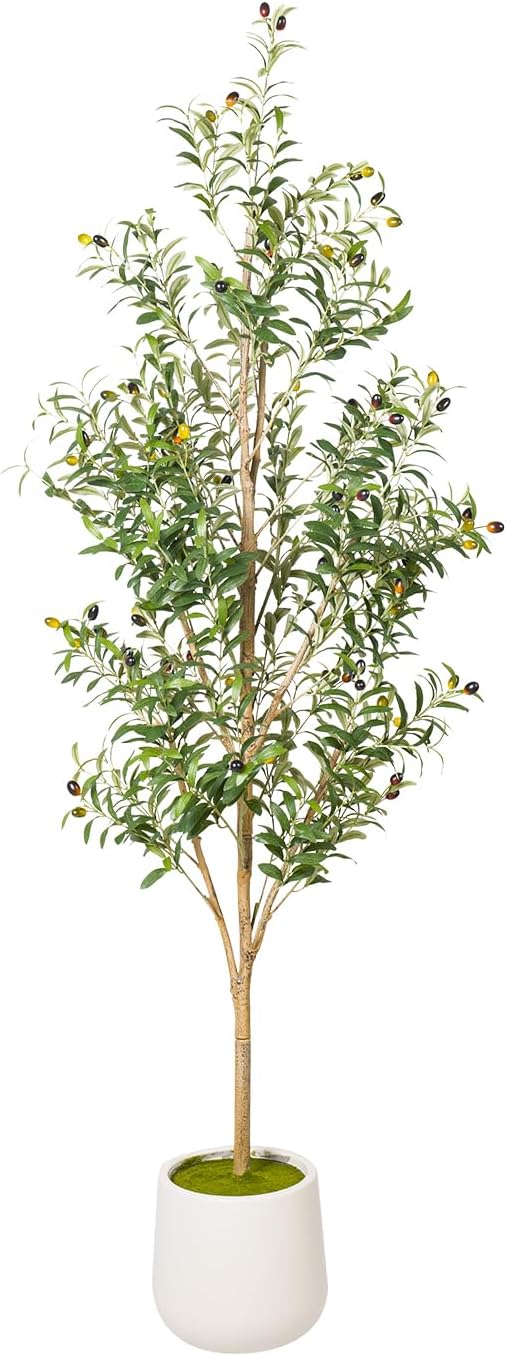
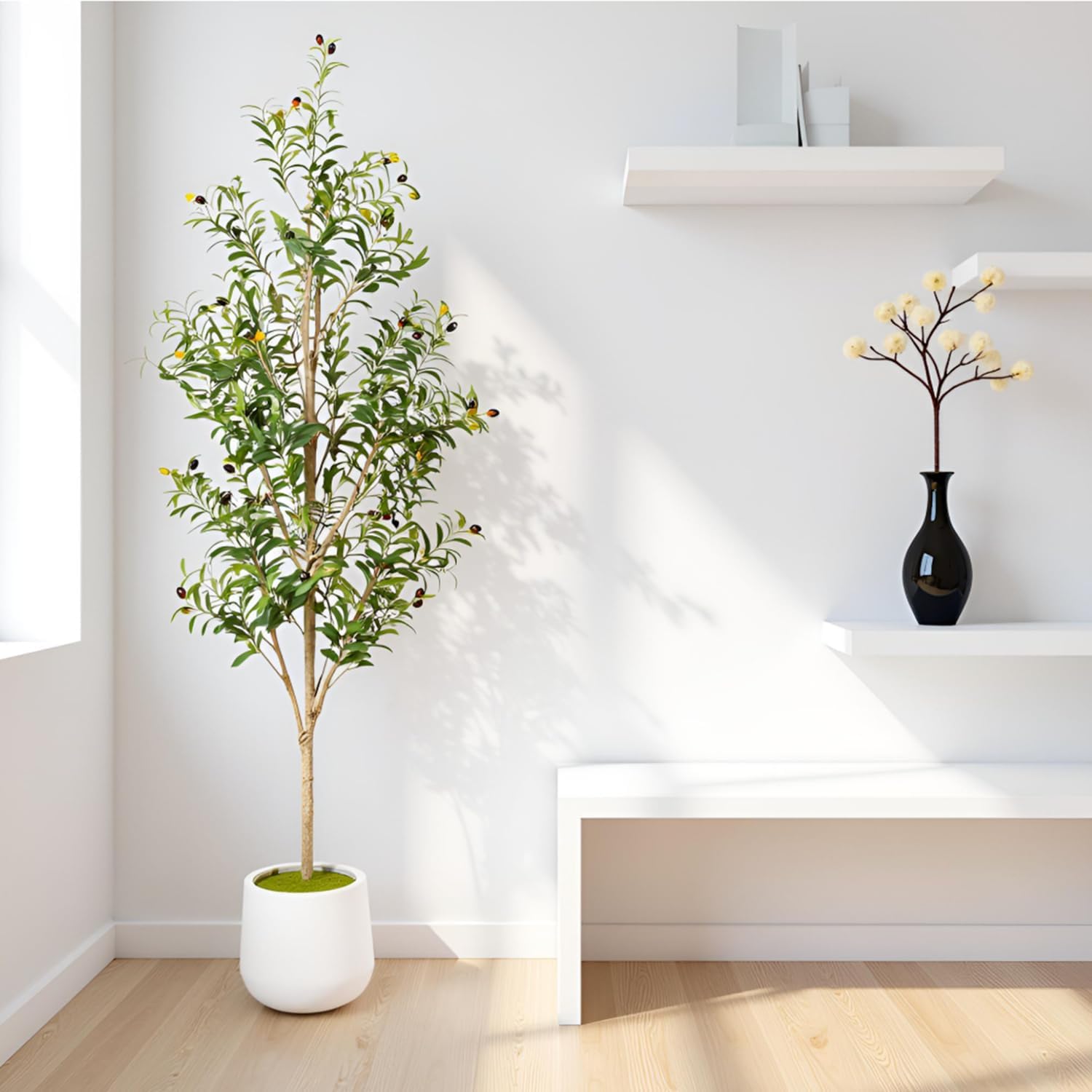
The piece as photographed for Amazon — front, side, back, detail.
As an Amazon Associate I earn from qualifying purchases.