Mid-Century TV Stand for Living Room: Worth It?
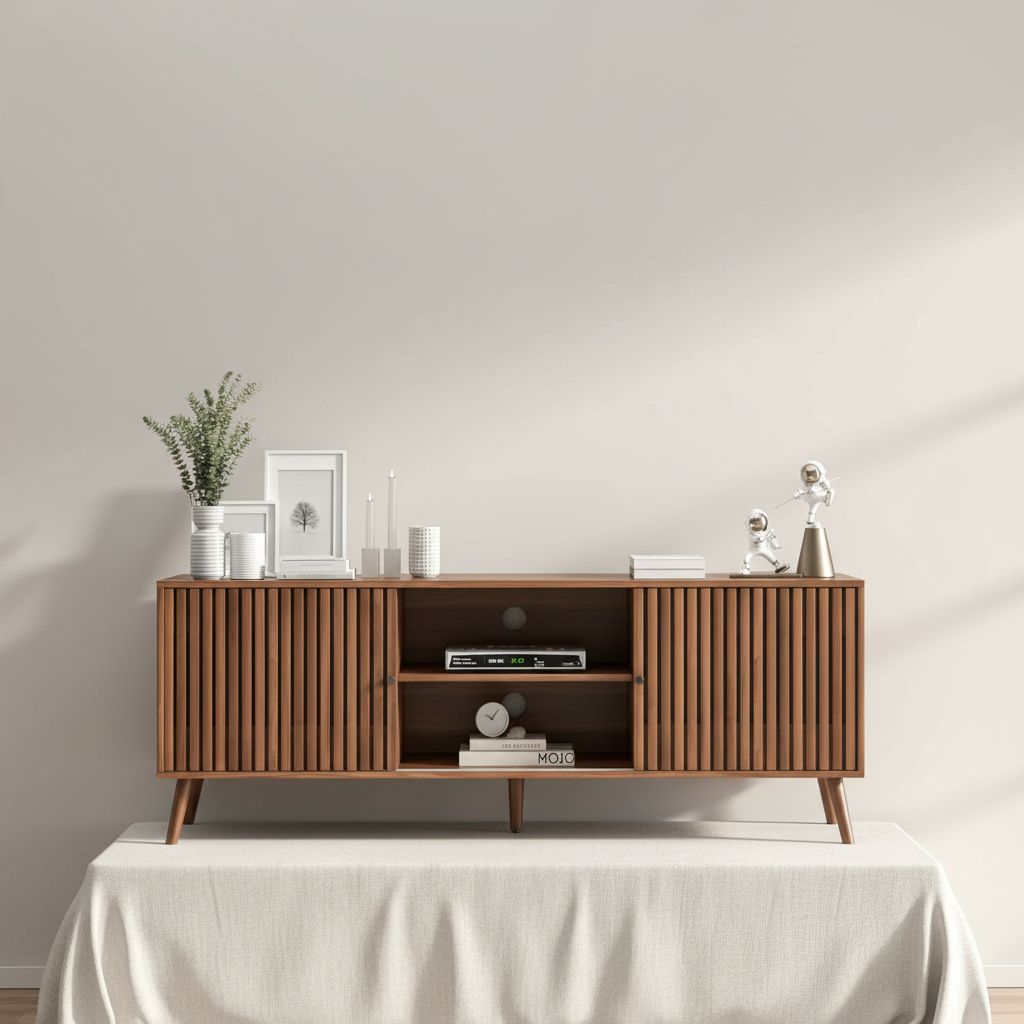
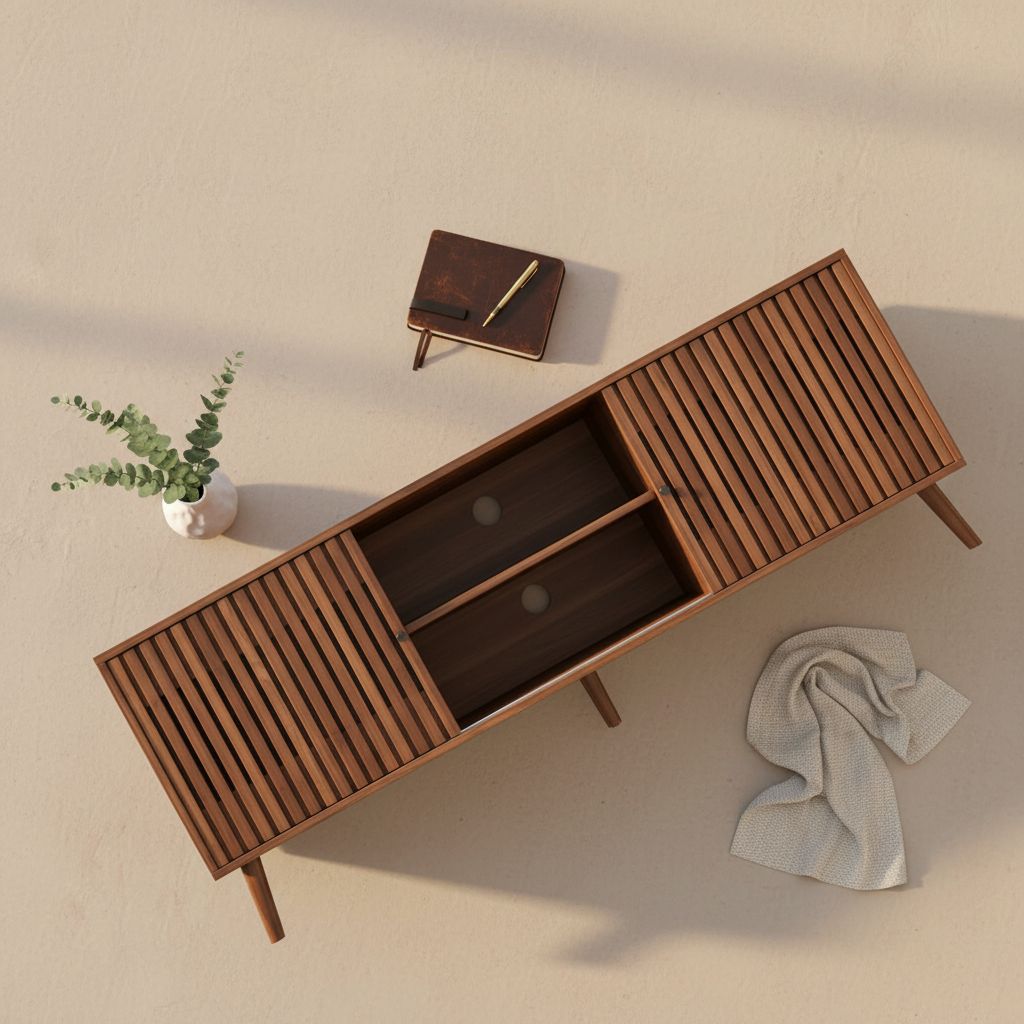
The moment a walnut TV stand with sliding doors stopped my Sunday scroll and made me question every black particle-board console I’d ever settled for in a living room.
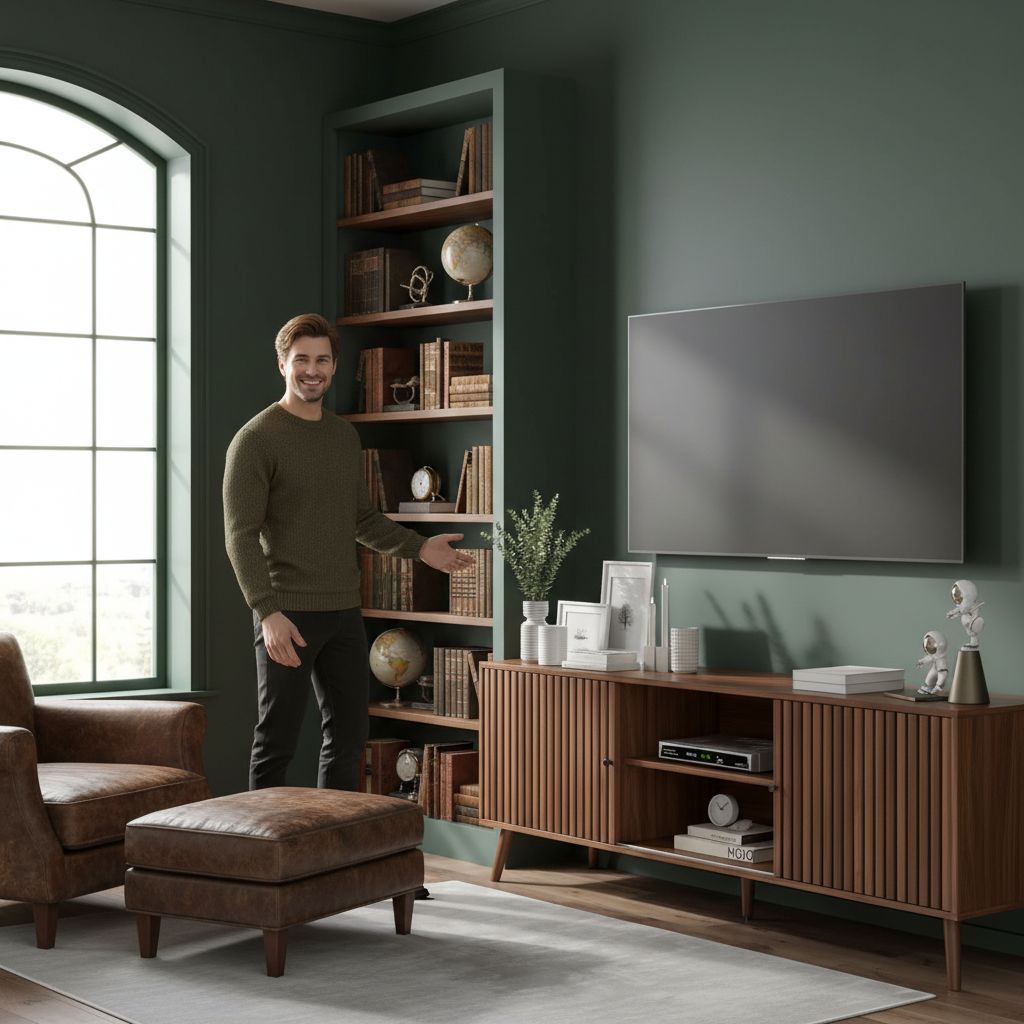
There is a particular quality of light on a Sunday morning in my living room, the kind that comes in low and amber through the east-facing window and lands directly on whatever is sitting against the opposite wall. For years, what it landed on was a forgettable black media console I’d bought in a hurry during a move, the kind with the too-shiny veneer that photographs gray and feels hollow when you knock on it. Last autumn, I swapped it out for the Oubayajia Mid Century Modern TV Stand, and the difference that first Sunday morning, watching the light graze the warm walnut finish and catch the horizontal lines of those sliding doors, was enough to make me sit down on the floor with my coffee and just look at the room for a while. It sounds dramatic. It was not dramatic. It was just the feeling of a living room finally making sense.
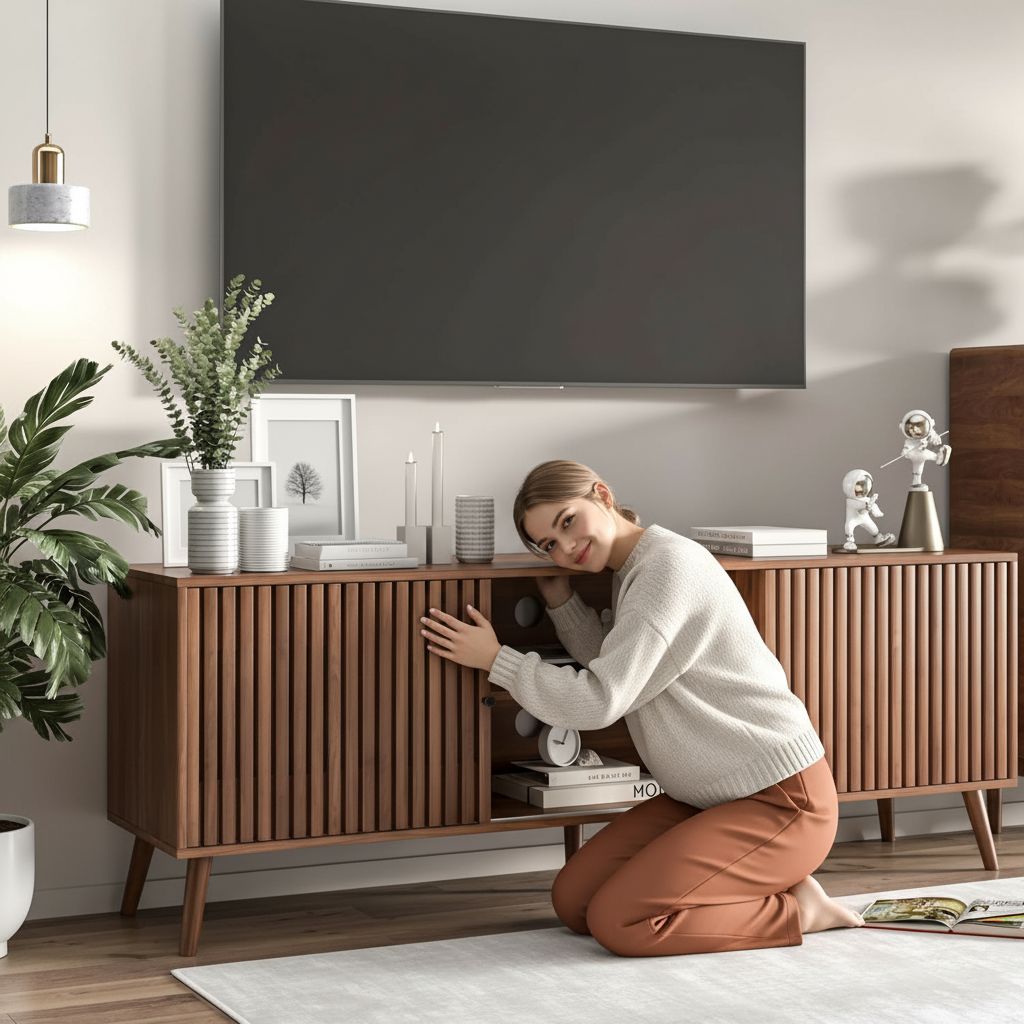
The First Time I Saw It
I found this piece the way I find most things that end up in my home: deep in a late-night scroll that had started with something entirely different. I was ostensibly researching living room furniture ideas for a friend’s apartment reno, when the warm walnut grain and the clean low profile stopped me mid-swipe. It was the sliding doors that did it. Not swinging cabinet doors, not open shelving, but those satisfying flat-track sliders that read as both functional and intentional, the kind of detail that signals someone was paying attention to the design.
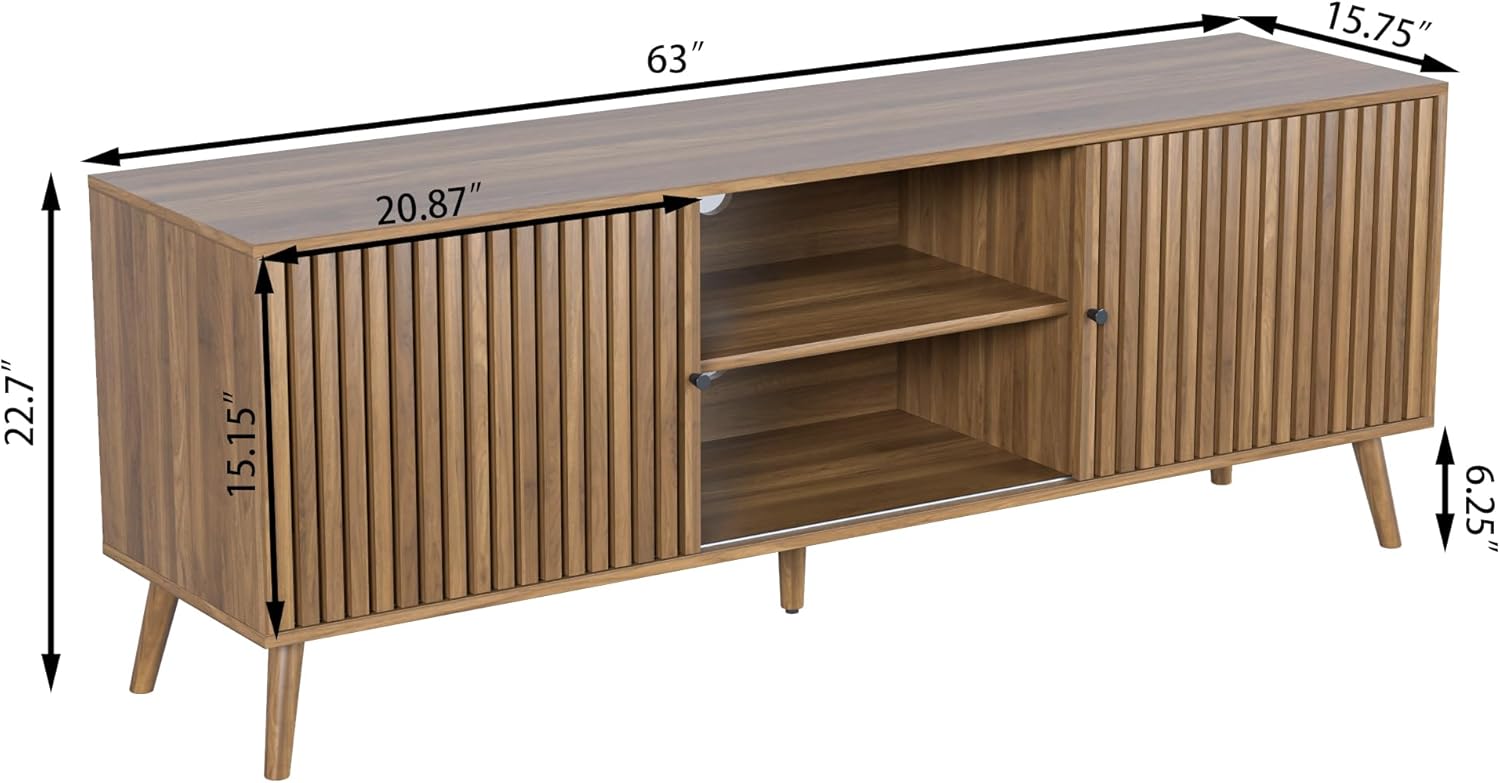
The 63-inch footprint looked generous without being overwhelming in the product photos, and the mid-century proportions, those tapered legs, that horizontal emphasis, felt like they belonged to a piece that cost considerably more. I added it to a saved list and came back to it three separate times before ordering. That return visit behavior, for me, is usually a good sign.
How It Actually Lives in the Room
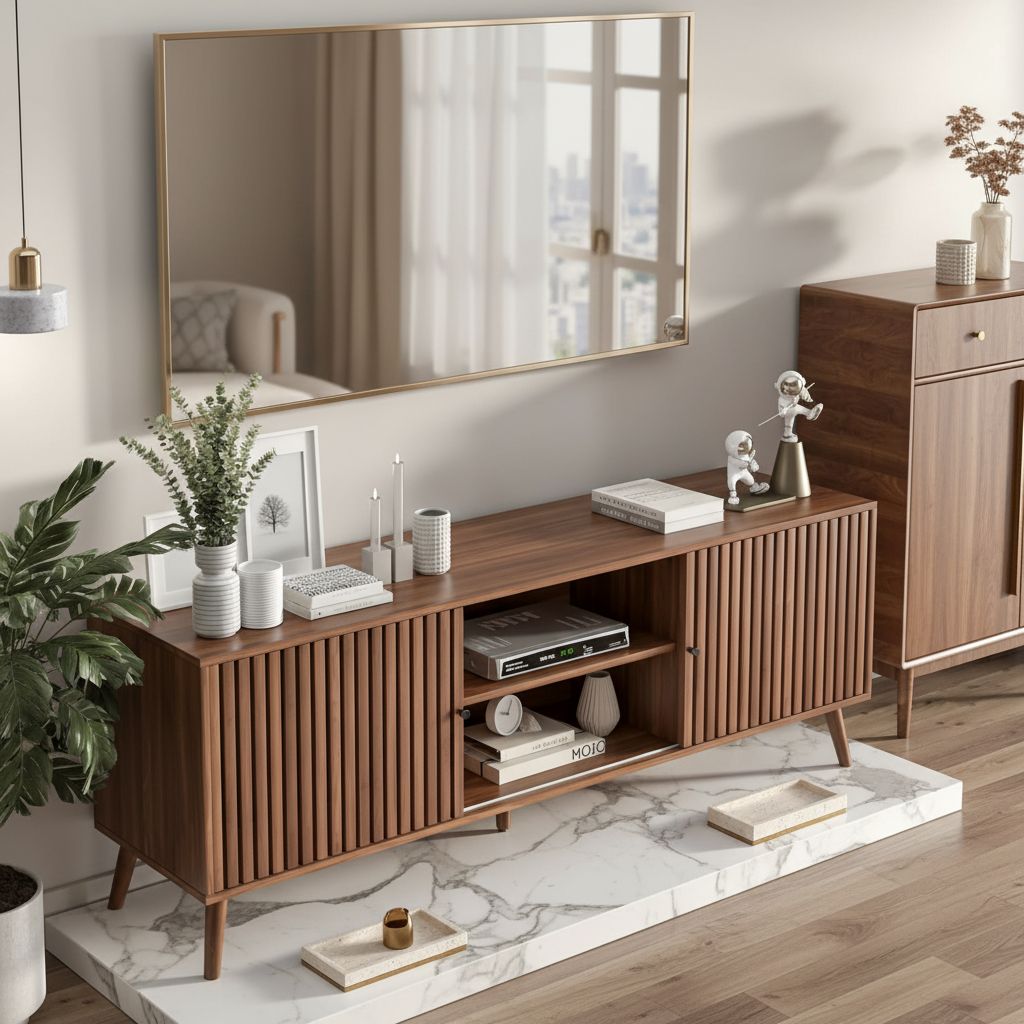
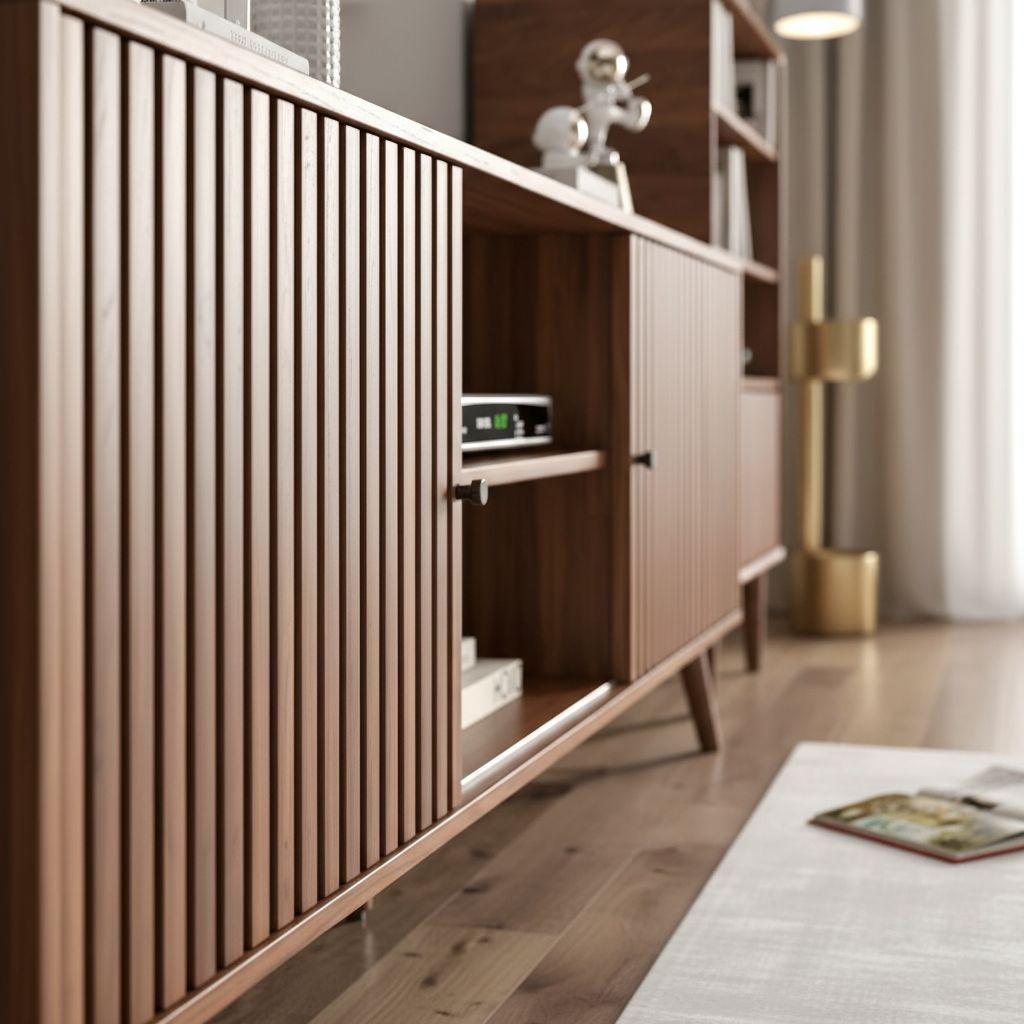
In person, the walnut finish is warmer and more textured than it reads on a screen. There is variation in the grain, nothing dramatic, but enough that the surface has life to it rather than the flat uniformity of a printed laminate. The sliding doors operate on a simple track that glides without catching, and the satisfying thunk of them closing is one of those small sensory details you don’t anticipate enjoying. At 63 inches wide, it comfortably anchors a wall without swallowing it, and the tapered mid-century legs lift the whole piece off the floor just enough to let light pass underneath, which reads as visual breathing room in a smaller living room.
“This is the kind of TV stand that makes you want to rethink every other surface in the room.”
That said, I want to be honest: the material is engineered wood, not solid walnut, and if you tap the side panels you will know it. The finish is convincing enough that it reads as premium from any conversational distance, but this is not heirloom furniture. For those of us styling on a real-life budget rather than an editorial one, that distinction matters less than you might expect, and Apartment Therapy’s ongoing coverage of accessible design has spent years making the case that well-designed pieces at accessible price points are worth taking seriously on their own terms.
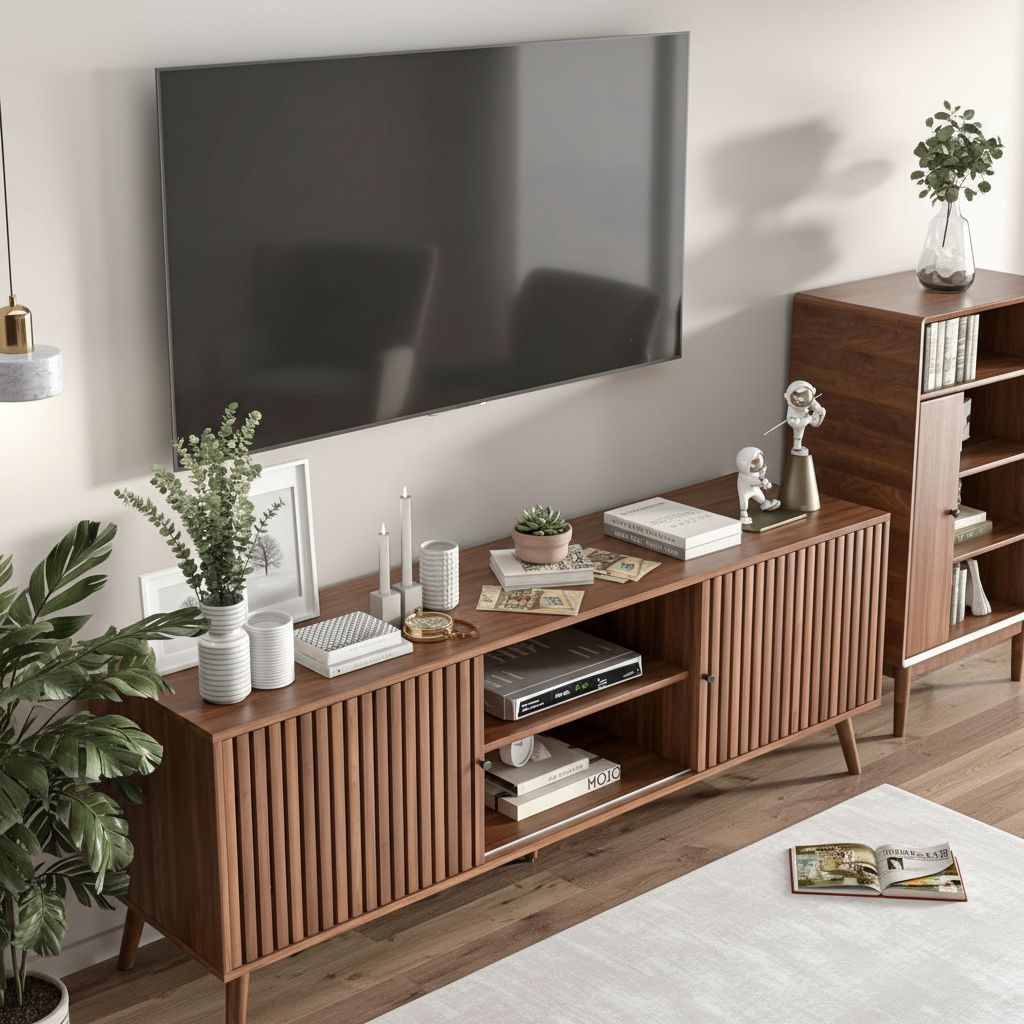
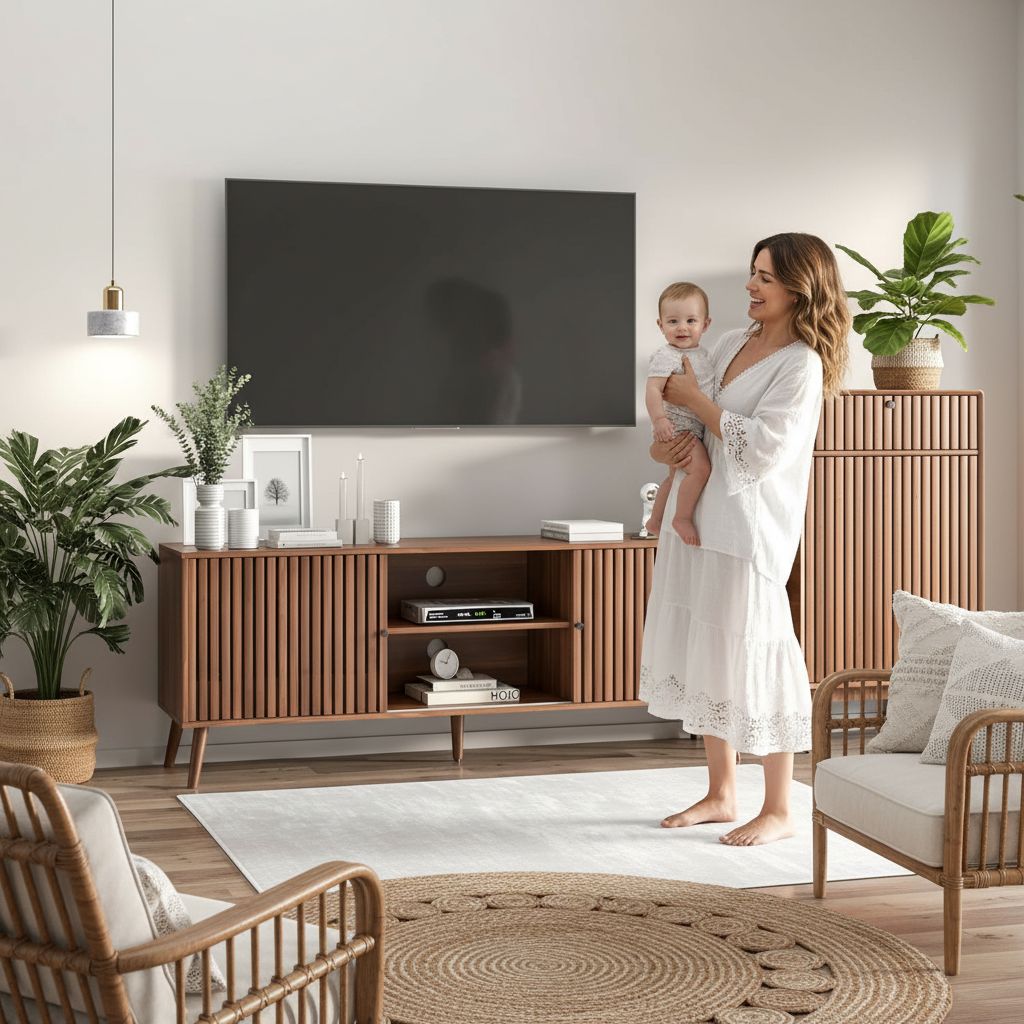
The Vignettes I Actually Built Around It
Vignette 1: Sunday Morning, Coffee and Low Light
The console sits on the north wall between two windows, with a low linen sofa facing it and a cream boucle armchair angled at the corner. On top of the TV stand, I’ve kept things sparse: a small ceramic lamp with a warm-white bulb on the left side, a short stack of art books on the right, and a trailing pothos in a terracotta pot that drapes over one corner like an afterthought that became a composition. The sliding doors are closed on Sunday mornings, hiding the cable box and the tangle of cords that would otherwise read as visual noise. What’s left is just the warm wood grain, the clean horizontal lines, and a room that looks like someone actually considered it. That feeling, unhurried and put-together at once, is difficult to manufacture and easy to lose. This console holds it.
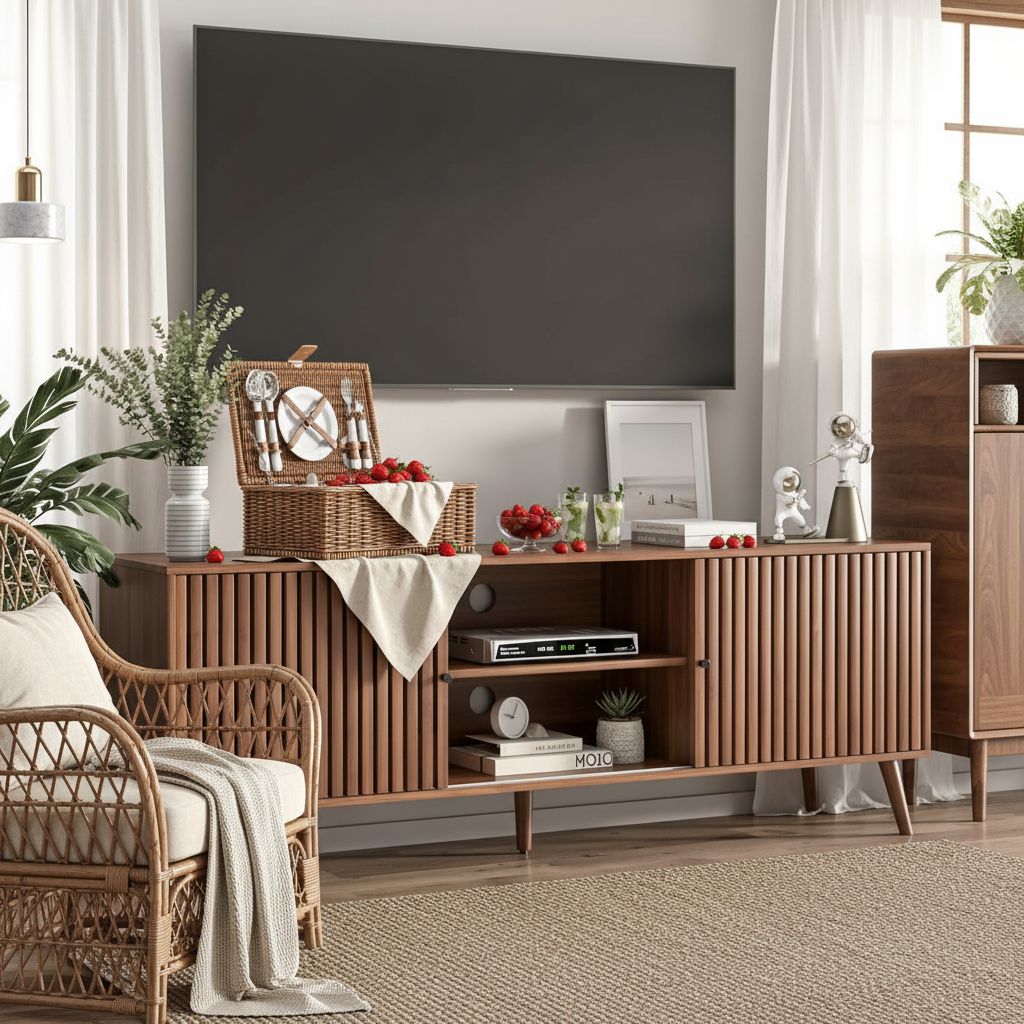
Vignette 2: First Dinner Party of the Season
I host in a space that opens directly from the living room into the kitchen, which means the TV stand is visible from the dining table, candles and all. Before guests arrived, I pulled the sliding doors shut, tucked a small brass candlestick on top alongside a low bundle of dried pampas stems in a dark ceramic vase, and suddenly the media console read less like a TV stand and more like a credenza. Nobody asked about the TV stand specifically, but two people asked about the furniture, meaning the room as a whole, which is the best outcome a single piece can hope for. When you can style around something easily, that is a form of versatility that does not show up in product specs.
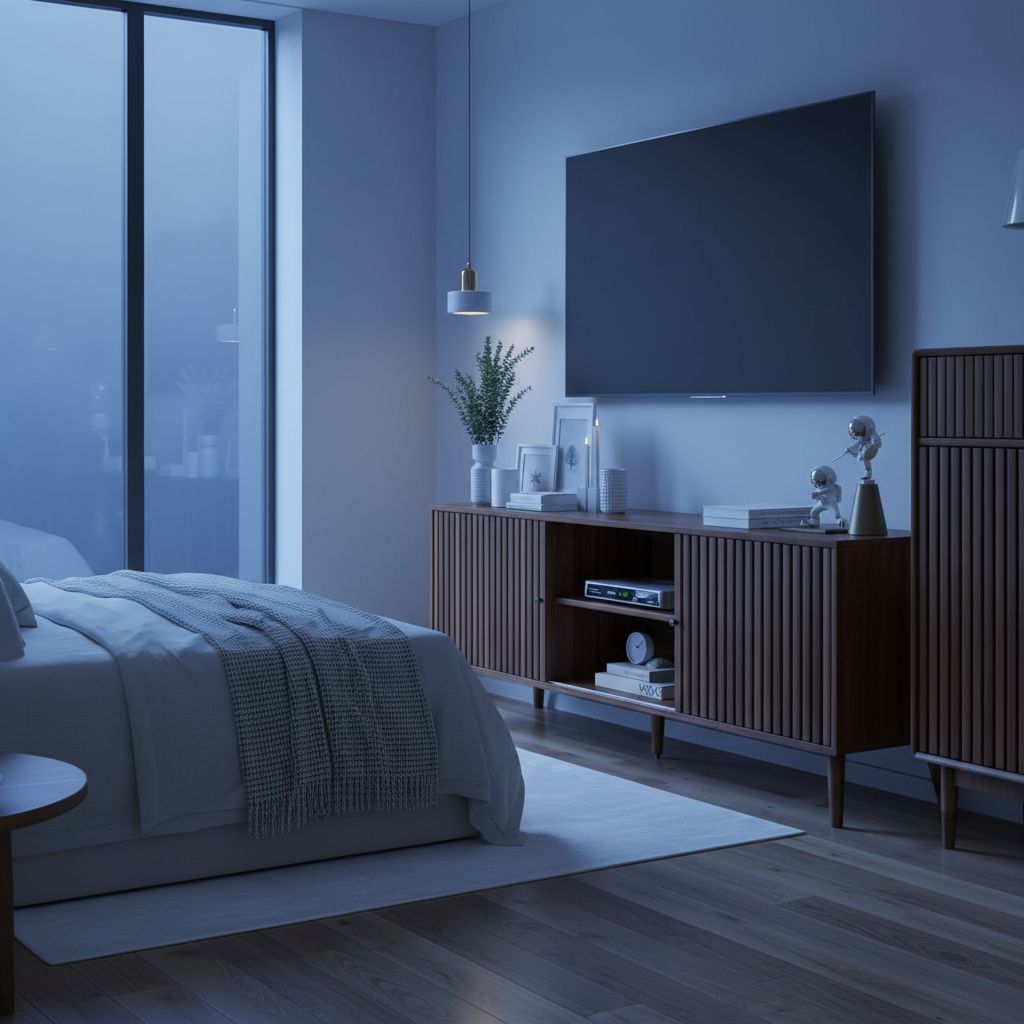
Vignette 3: Quiet Rainy Tuesday Night
This is the scene I think about most when I consider whether a piece of furniture is genuinely good for my life. It’s raining. The lamp is on. I’m watching something low-stakes on the television, a cooking documentary, something slow. The open shelving compartments on the console hold my record player and a small basket of remote controls, and the organization it quietly provides means I’m not hunting for anything, not adjusting anything, not noticing the room at all. I’m just in it. That frictionless quality, where the furniture recedes and the living happens in the foreground, is exactly what a good media console should do and what surprisingly few of them actually manage.
What Other People Are Saying
Across its reviews, the Oubayajia TV stand collects consistent praise for its visual impact relative to what you’re paying, with buyers repeatedly noting that it reads richer and more considered than the price tier suggests. Assembly draws the most mixed commentary, with some reviewers finding the process straightforward and others wishing for clearer instruction diagrams, which is worth knowing before you clear your Saturday afternoon.
The consensus, broadly, is that this is a piece that overperforms aesthetically and delivers genuine storage function, with the caveat that it rewards patient assembly and realistic expectations about engineered wood construction. That tracks with my own experience almost exactly.
Who Should Skip It
If you own large, heavy AV equipment, be precise about your measurements before ordering. The open shelving compartments are designed for streamlined media setups, and a bulky cable box or stacked receiver situation may feel cramped. Similarly, if your living room runs contemporary or ultra-minimalist, the warm walnut finish and the distinctly mid-century silhouette may read as too warm, too retro, or too declarative for a space built on cool grays and matte black accents. This is not a neutral piece pretending to be invisible. It has a point of view, and your room needs to be ready for that conversation. And if you are genuinely committed to solid wood construction and are willing to invest accordingly, there are pieces in that tier that will outlast this one. This console is not competing with heirloom furniture. It is competing with everything else at this price point, and there it wins convincingly.
What It Replaces in My Space
The piece that left to make room for this one was a hollow-core black TV stand I’d had for four years, the kind that came flat-packed and felt like it was one aggressive vacuuming session away from structural instability. It had two shelves, no doors, and the particular quality of looking slightly wrong in every lighting condition. I’d layered living room throw pillows and gallery wall arrangements around it for years trying to distract from it, which is a form of interior design defeat I’m not proud of. What the Oubayajia piece gave me was not just better storage, though the sliding doors and compartments are genuinely useful. It gave me a room where I stopped trying to compensate and started actually styling. That shift, from managing a problem to building on a foundation, changes how the whole space feels to live in.
FAQ
What television size works best with this stand?
The product is rated for televisions up to 70 inches, and the 63-inch width of the console provides a stable visual base for sets in the 55 to 65 inch range. Going much larger may create a top-heavy proportion that works against the low, grounded aesthetic.
How do I care for the walnut finish?
A dry or lightly damp microfiber cloth handles everyday dust and smudges without issue. Avoid harsh chemical cleaners or anything abrasive, and keep the surface away from prolonged direct sunlight to prevent the finish from fading unevenly over time.
How should I style the top of this TV stand?
Keep it low and spare. The piece has strong horizontal energy, so tall or bulky objects on top can fight the proportions. One lamp, one plant, and one or two grounded objects in varied materials tend to read best. Less is genuinely more here.
Is the quality consistent with what you’d expect from a piece at this price point?
The finish, the hardware, and the overall visual execution read above what you’d expect for what you’re paying, particularly the sliding door mechanism and the warmth of the walnut-tone surface. The engineered wood construction is standard for this tier, and as long as you’re calibrating expectations accordingly, the quality feels honest and well-considered for the level of finish delivered.
How involved is assembly, and can one person do it?
Assembly is manageable solo but easier with a second person for the initial frame construction and leg attachment. Budget a full hour or more rather than rushing it, and lay all components out before you begin. The hardware is included and complete.
The Verdict
I picture the console a year from now, still against that north wall, still collecting that amber Sunday light on its warm walnut grain, the pothos a little longer, the record player a little more scratched, the sliding doors still closing with that quiet thunk. The best furniture in a living room is the kind that becomes part of the rhythm of a space rather than a decision you keep second-guessing, and this Oubayajia mid-century modern TV stand has, quietly and without fanfare, become exactly that. For anyone building or rebuilding a living room around a real budget without wanting to sacrifice the considered, slow-living aesthetic that Kinfolk-style interior storytelling has made feel so appealing, this console is a strong answer. It is worth exploring our broader living room coffee and decor edits alongside it, or checking our full editor’s picks for companion pieces that build on the same warm, grounded palette. The value reads well above what you’d expect, the aesthetic is confident without being fussy, and the room it helped me build is one I actually want to spend time in. A mid-century TV stand that earns its wall space and then some.
Every Angle
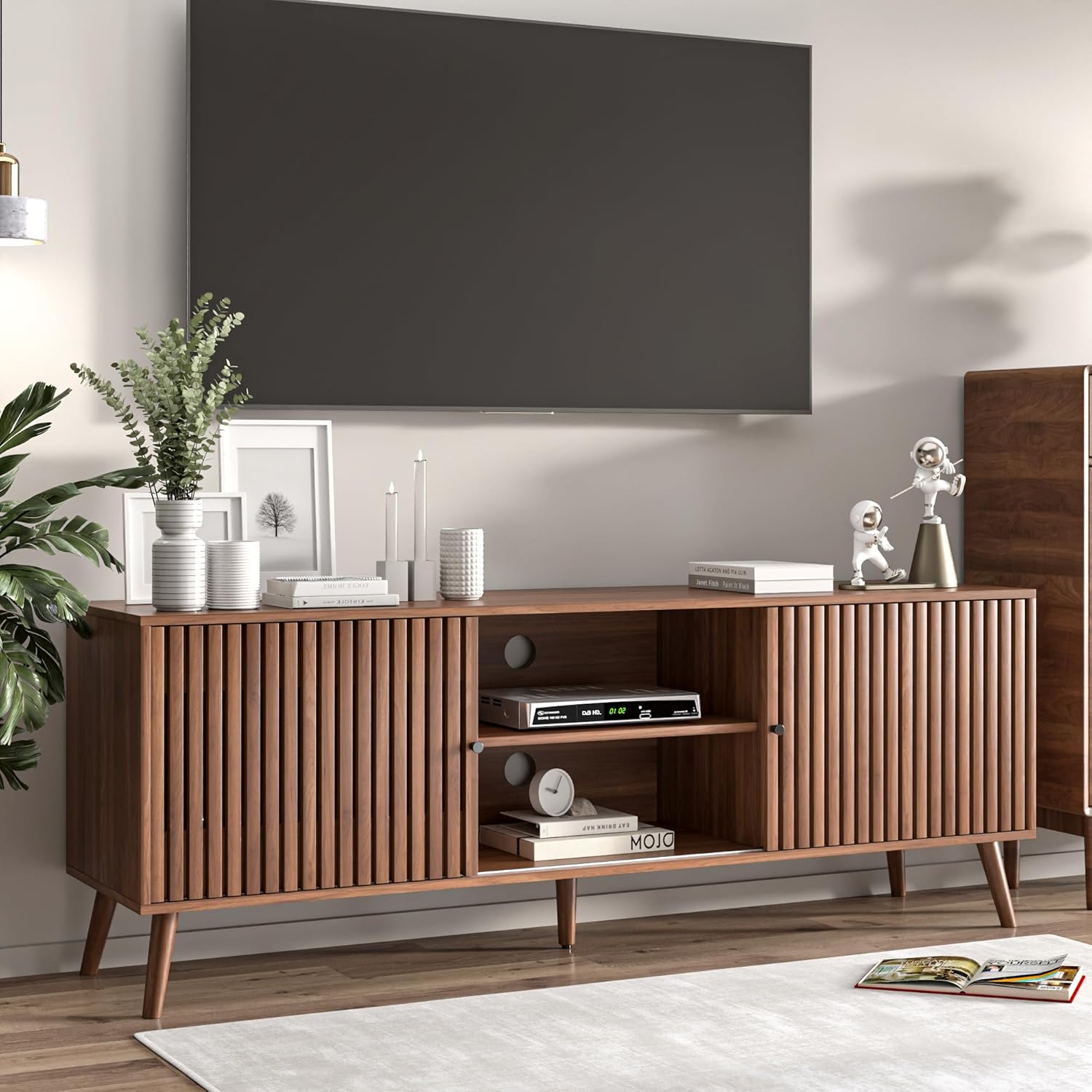
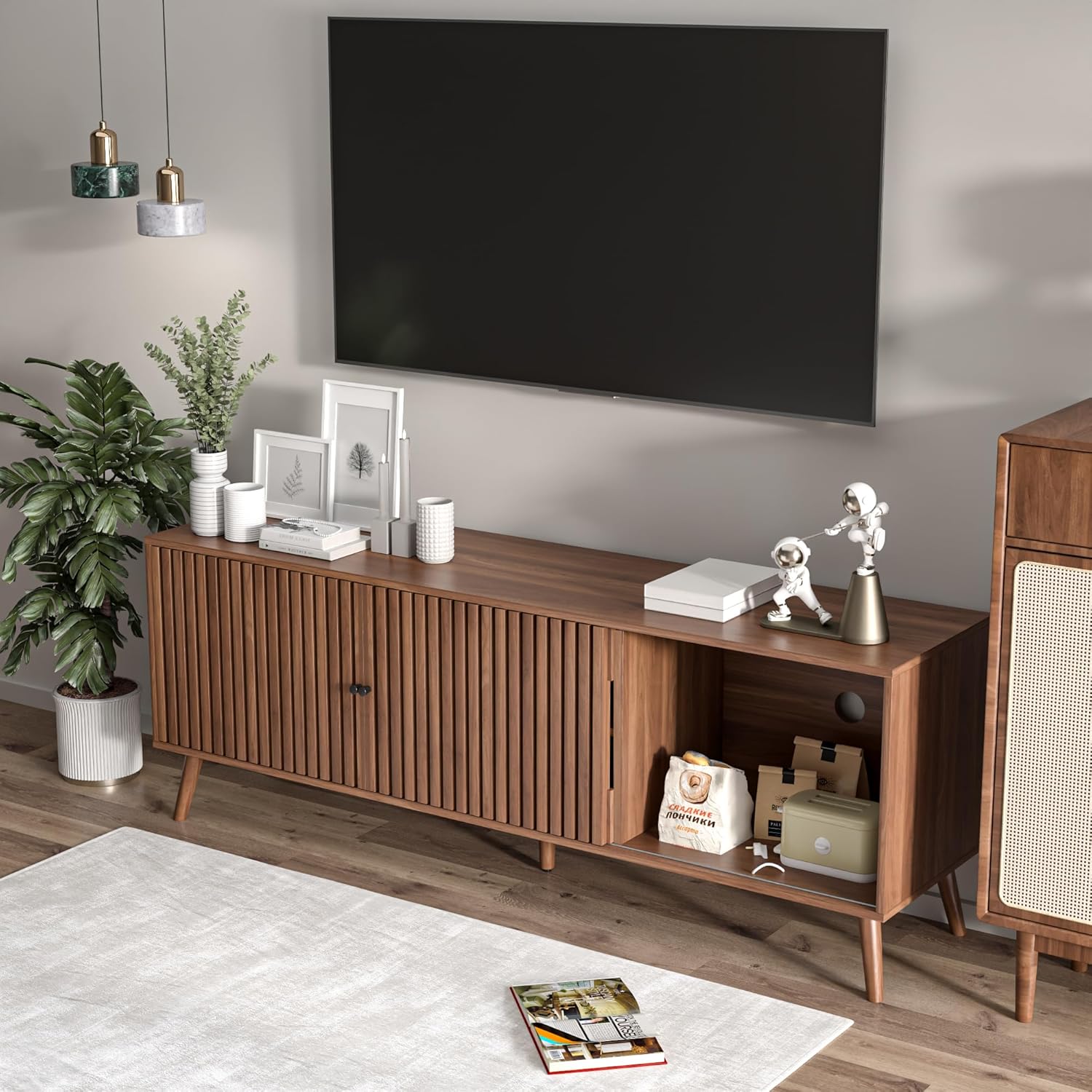
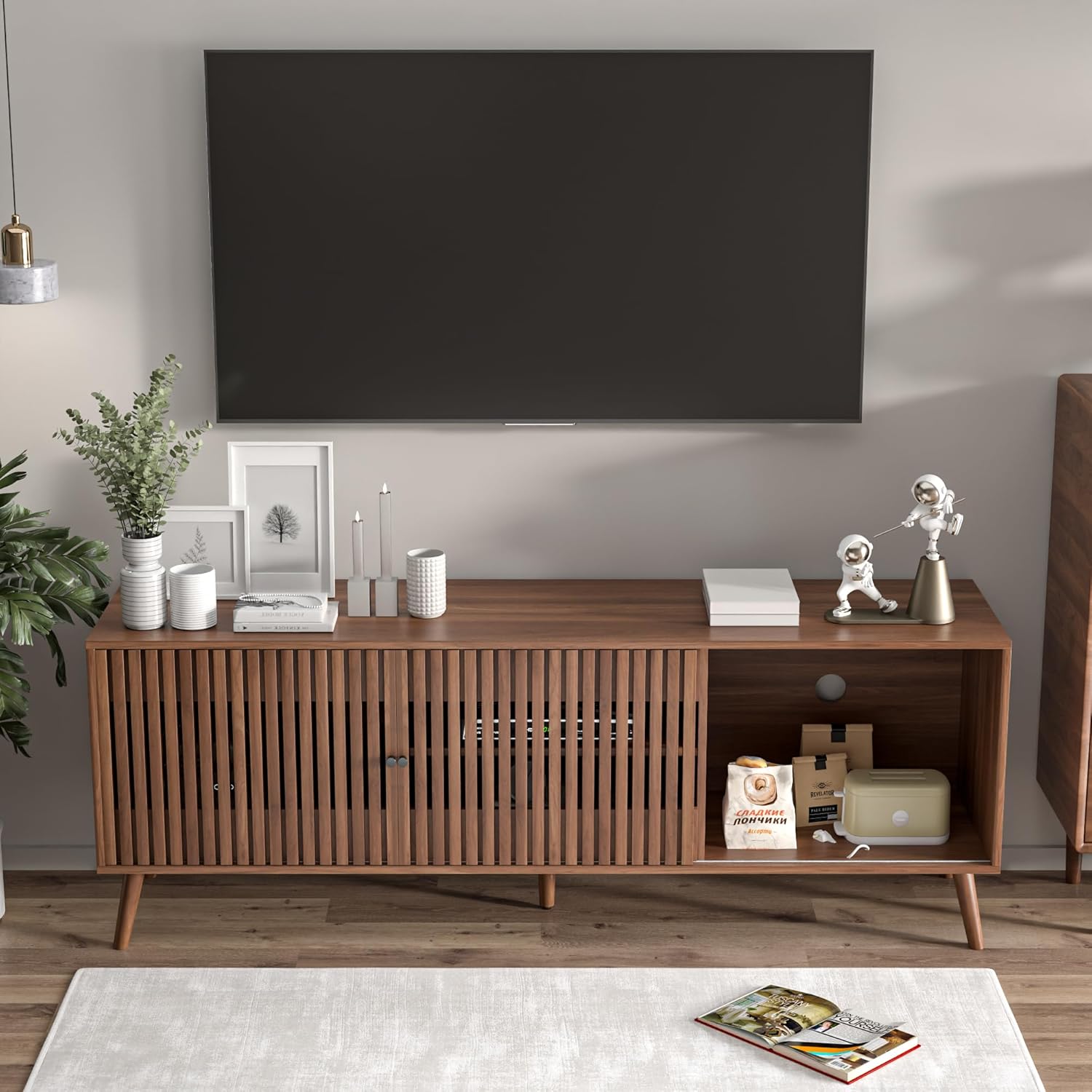
The piece as photographed for Amazon — front, side, back, detail.
As an Amazon Associate I earn from qualifying purchases.