Stainless Steel Dual Trash Bins for Kitchen: Honest Review
The moment I stopped hiding my trash can behind a cabinet door was the moment my kitchen finally started feeling like a place I actually designed on purpose.
It was a Tuesday night in November, the kind where rain hits the kitchen window in sheets and the overhead light feels too bright for the mood. I was making a big pot of soup, the kind that generates an embarrassing amount of vegetable scraps, and I kept pivoting between the compost bowl on the counter and the rattling plastic bin I’d shoved under the sink six months ago and mostly forgotten. The lid didn’t close properly. There was a faint smell. The recycling lived in a paper grocery bag near the back door, which is to say: **my kitchen waste situation was a quiet disaster.** That night, I finally ordered the Lovewind Dual Trash and Recycling Bins for Kitchen, the 2×13 gallon stainless steel combo with soft-close lids, and I have thought about it more than feels reasonable for a garbage can since.
The First Time I Saw It
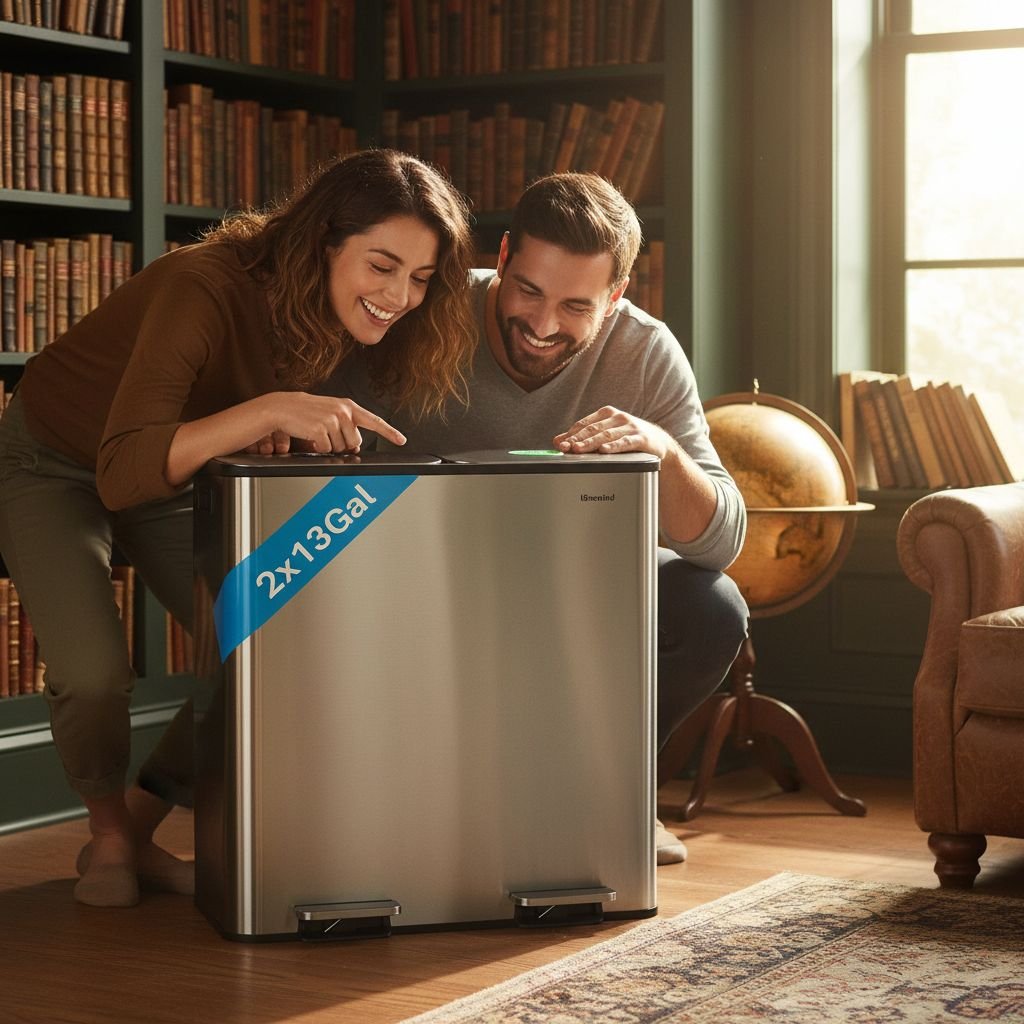
I found it the way I find most things that end up staying in my home for years: I was not looking for it. I was deep in a rabbit hole of kitchen and dining organization ideas, trying to solve a dish storage problem, when the silver silhouette of this two-bin system stopped me mid-scroll. It looked like something that belonged in a Scandinavian design studio. Clean seams. No visible hinges. A brushed stainless steel surface that somehow managed to look serious without looking cold.
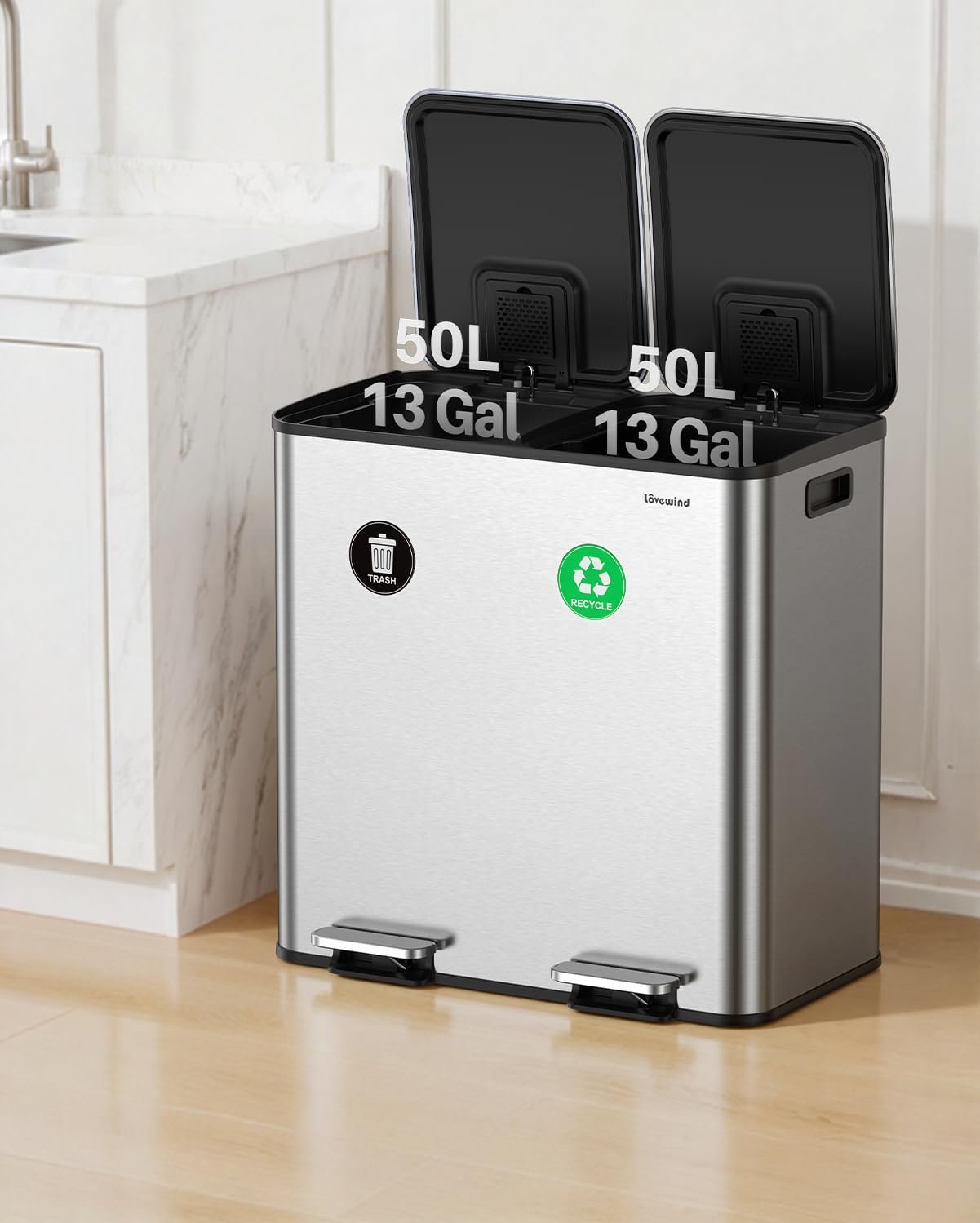
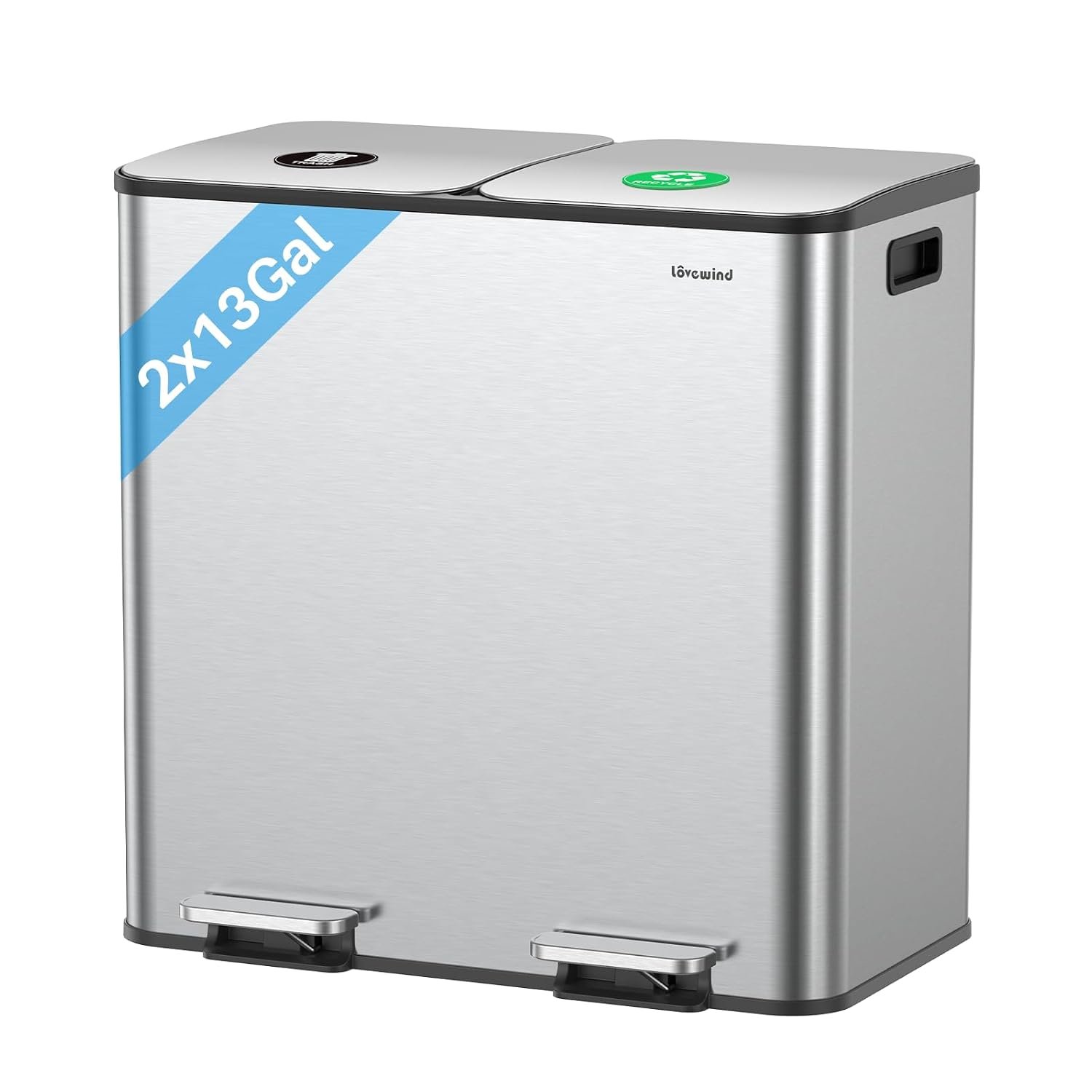
I read the specs twice because the capacity seemed too large for what I expected. Two compartments, each holding 13 gallons, sitting side by side in one unified housing. It was the kind of product that made me want to reorganize my entire relationship with kitchen waste, which is a very particular kind of optimism.
How It Actually Lives in the Room
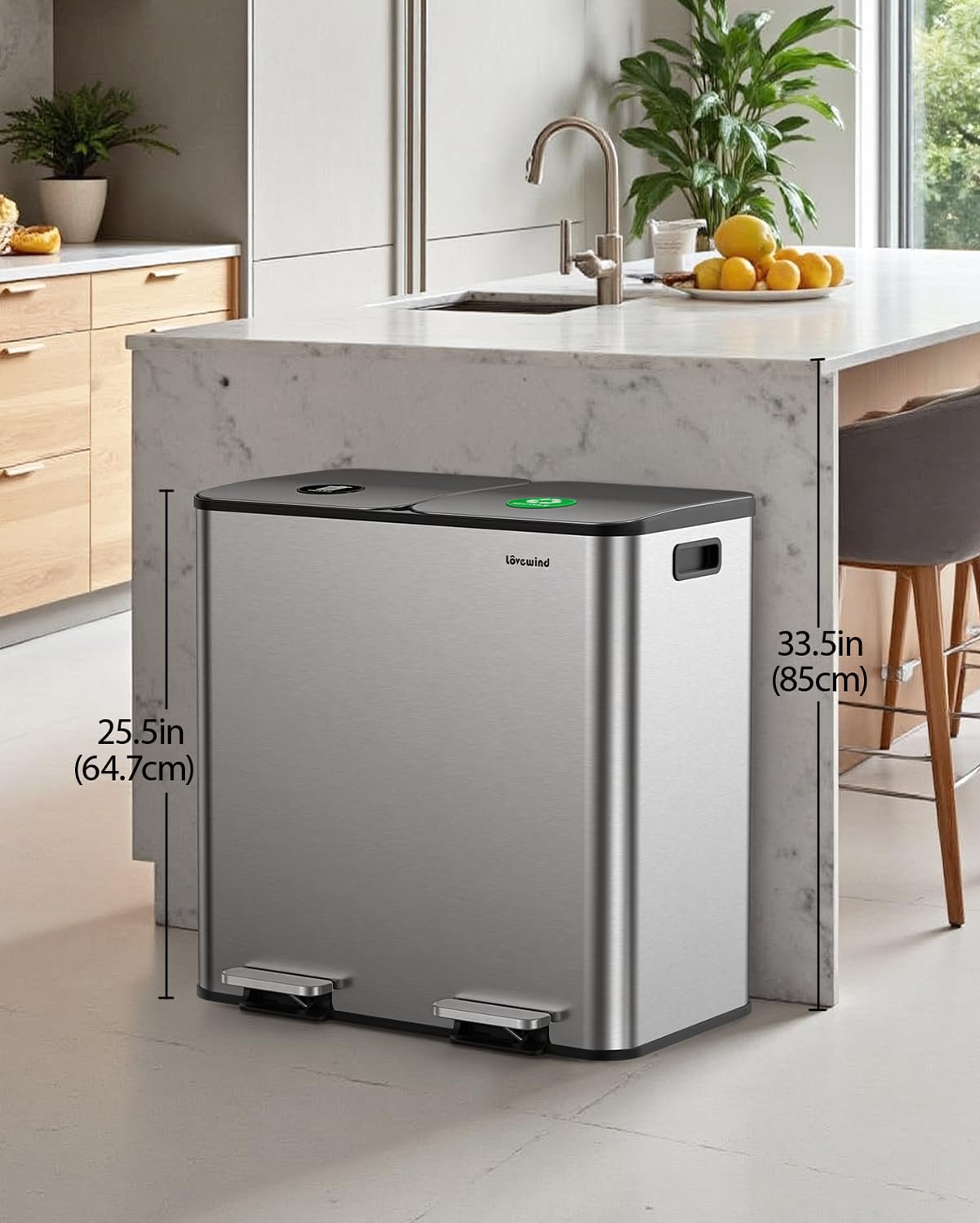
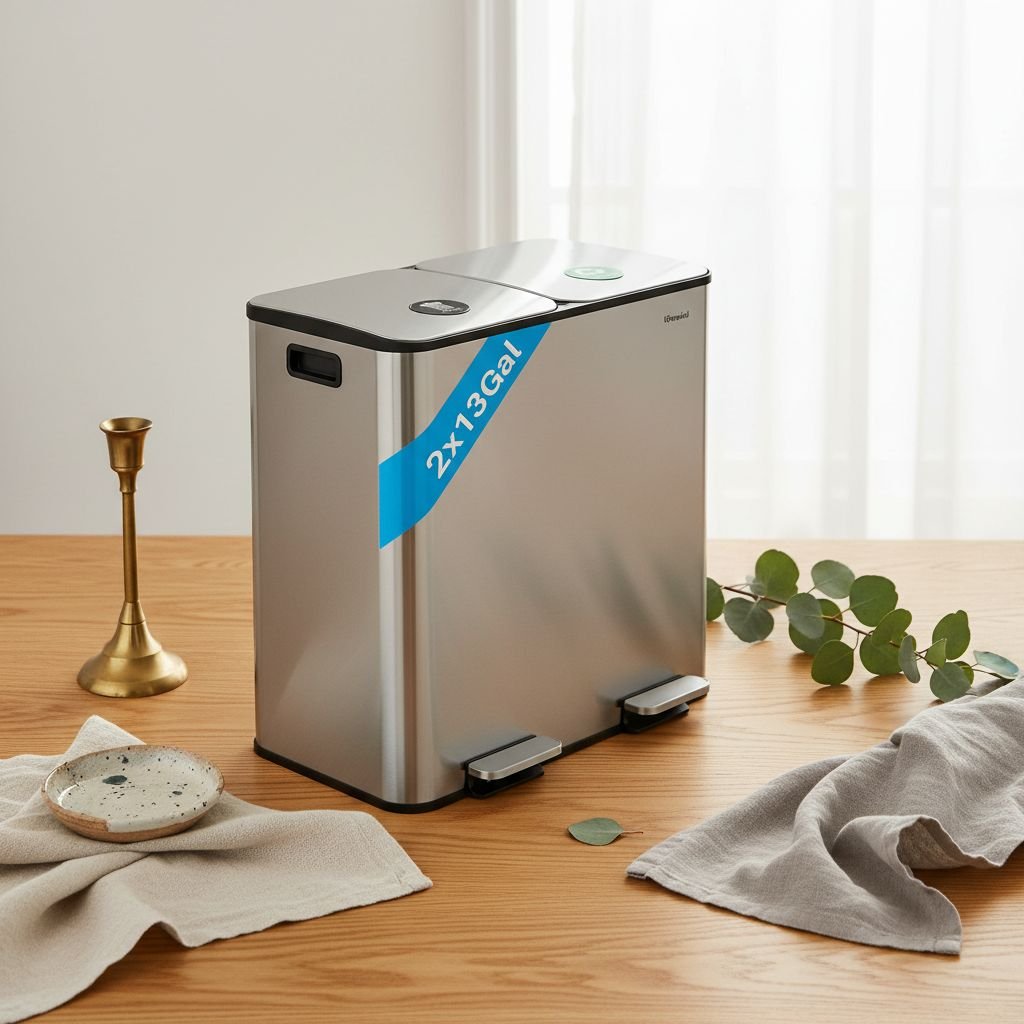
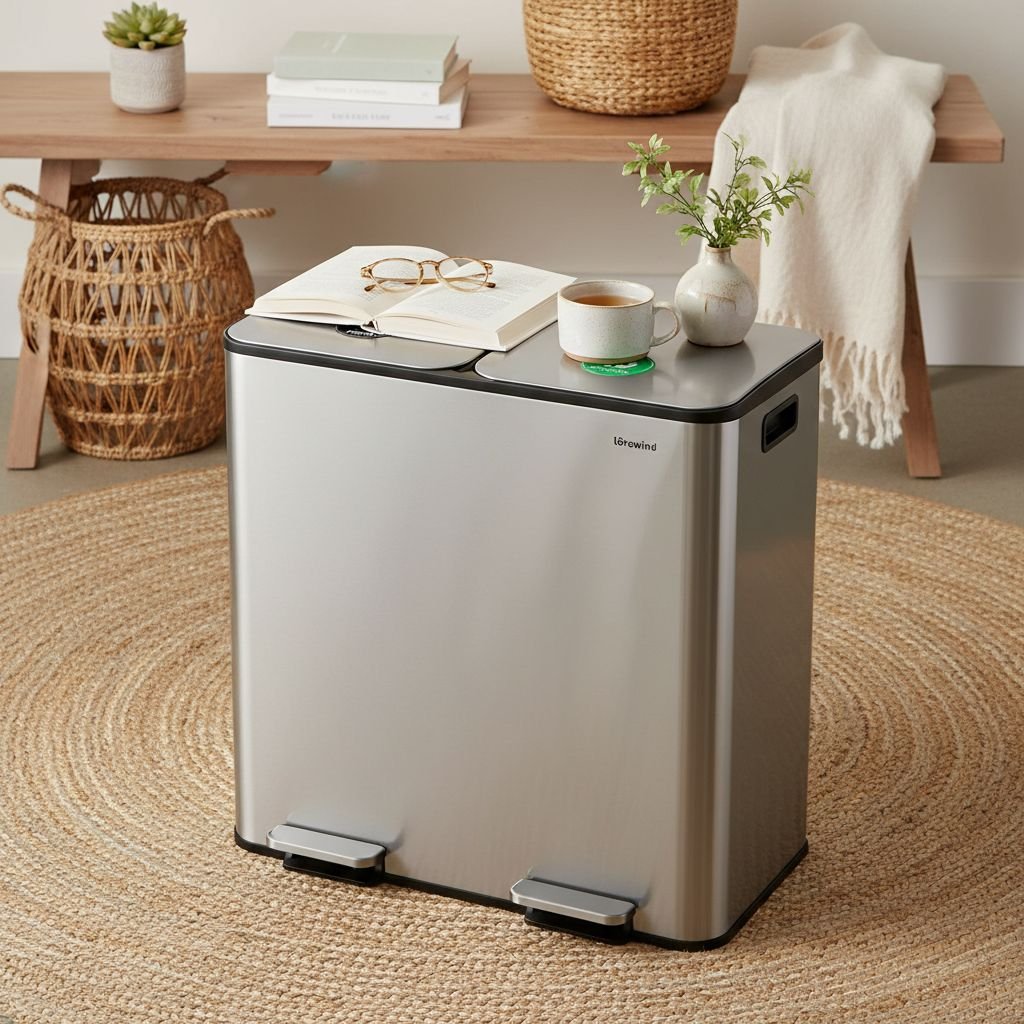
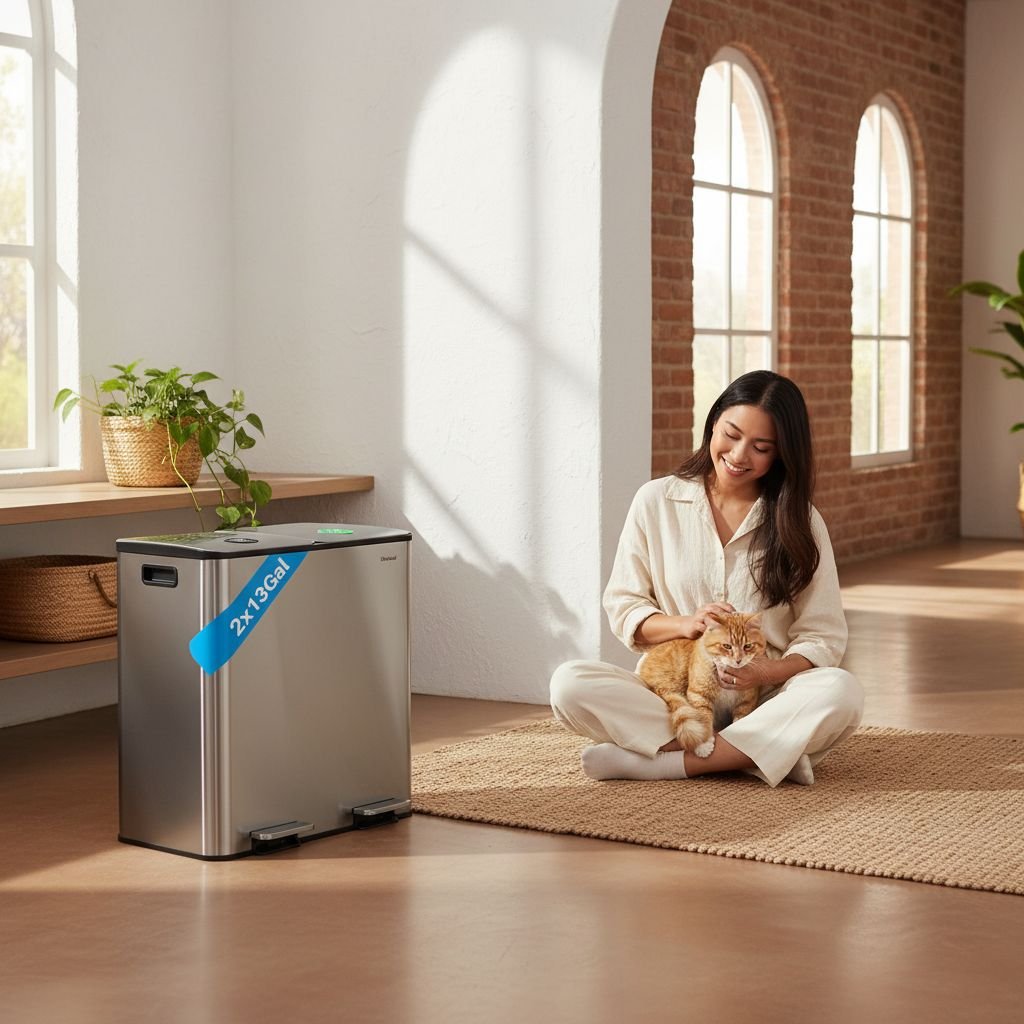
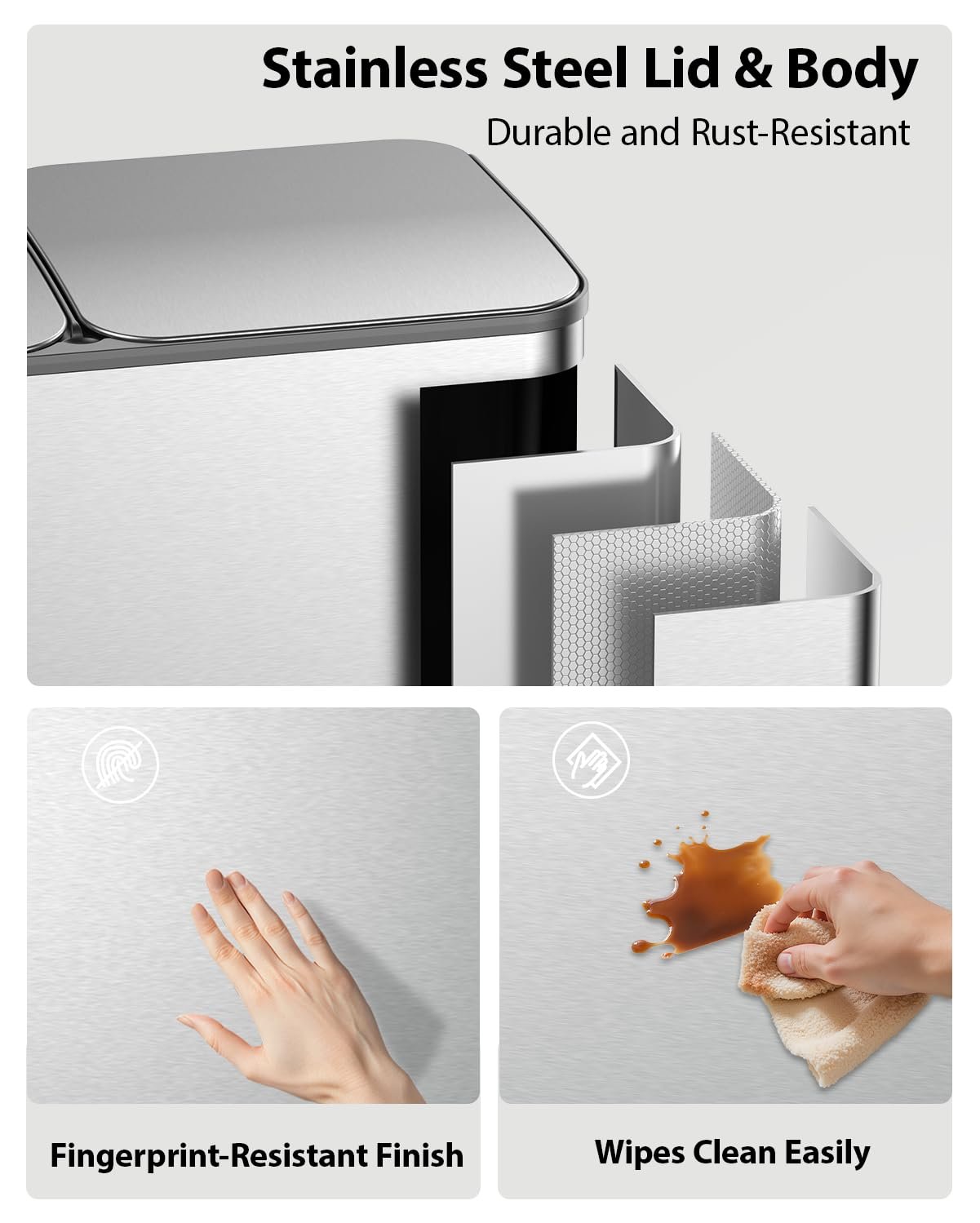
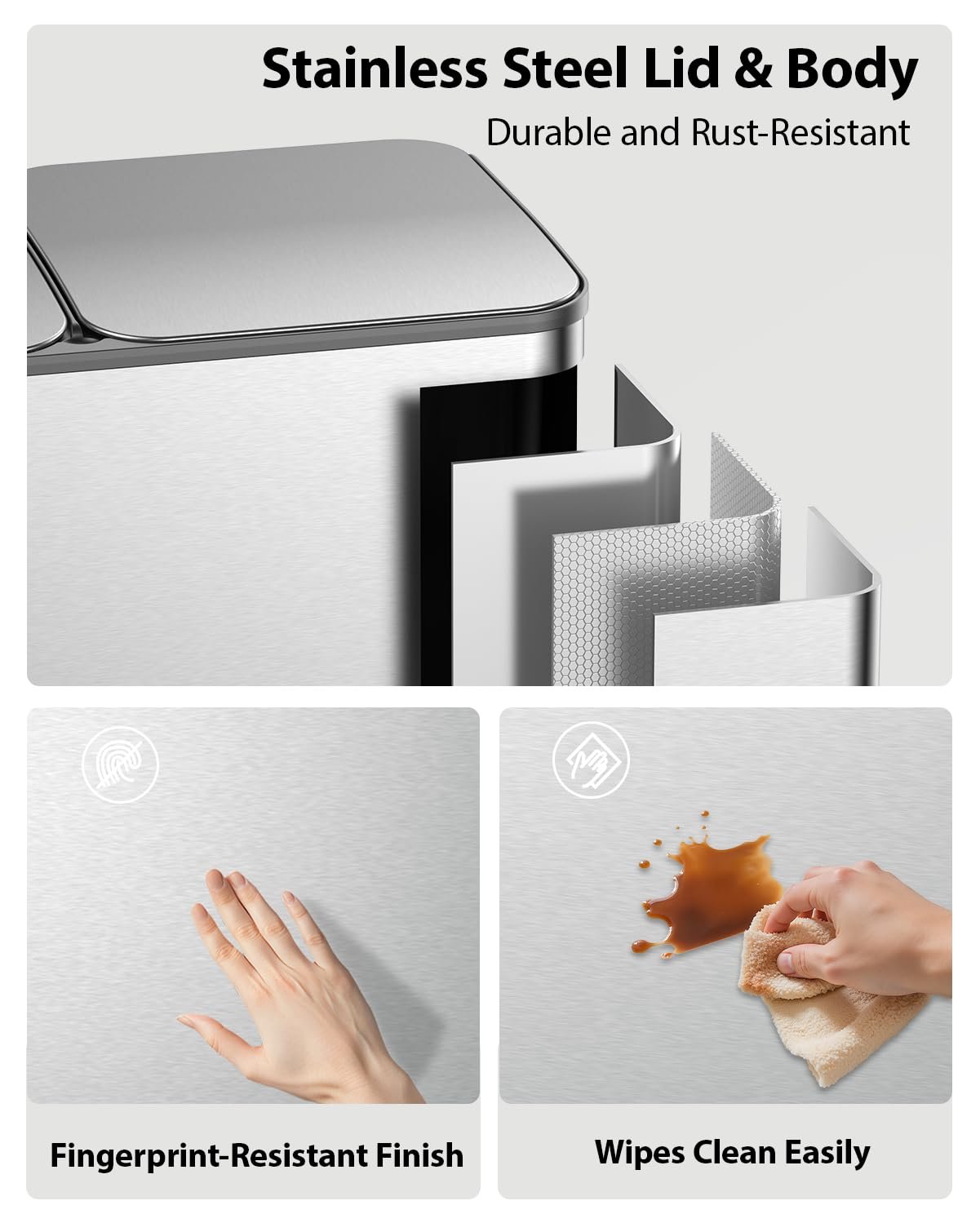
In person, the Lovewind dual trash and recycling bin combo is bigger than most people will expect, and that is mostly a good thing. It commands a corner of the kitchen the way a good appliance does: with quiet confidence. The stainless steel exterior catches the morning light coming through my east-facing kitchen window and holds it in a way that matte plastic never could. When I run my hand across the surface, it feels cool and solid, with no flex or give. The seam down the center, where the two compartments meet, is tight enough that the whole unit reads as one cohesive piece from across the room.
“The soft-close lid is the detail that will make you reconsider every trash can you have ever owned.”
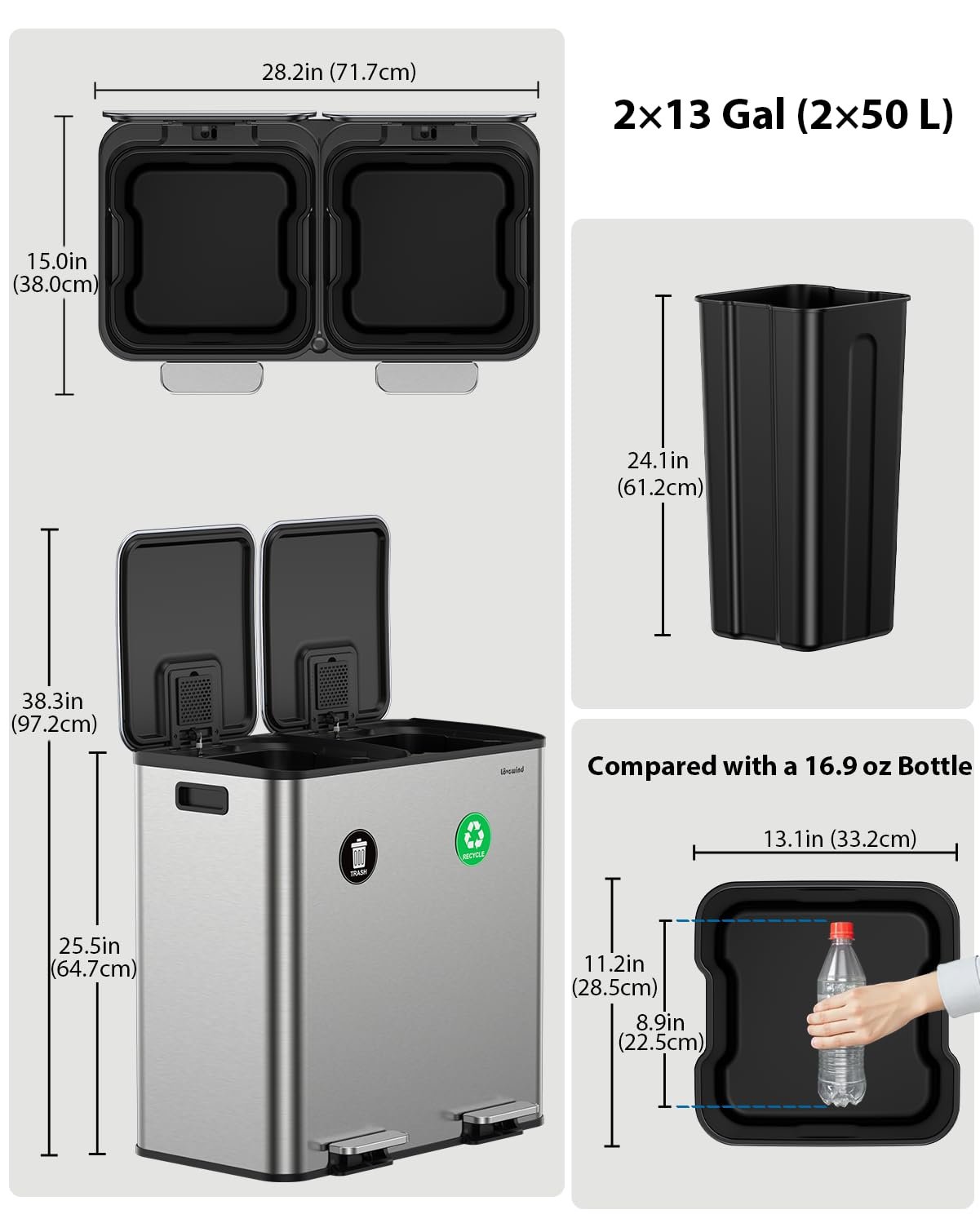
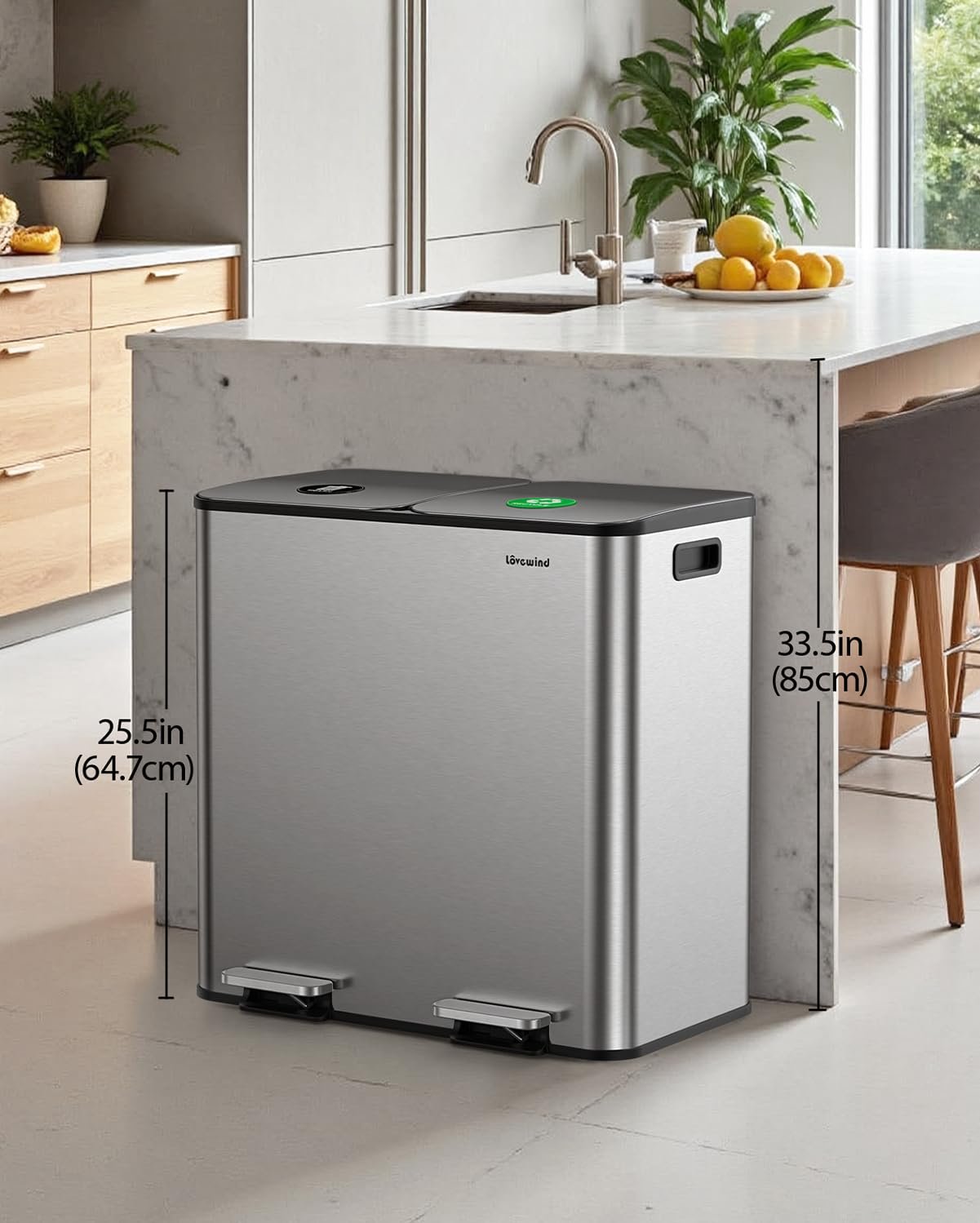
I am not overstating this. The lids descend with a controlled, deliberate hush that feels almost theatrical the first few times you use it. There is no slam, no rattle, no clatter at 6 a.m. when you are trying not to wake anyone up. The only honest caveat is the footprint: at this scale, you need to plan for it. This is not a bin that disappears. If your kitchen runs small or your layout is already tight, measure twice. According to Apartment Therapy’s kitchen storage guides, under-sink and cabinet-hidden solutions remain the default for compact kitchens, and I would agree this system is built for kitchens where the bin can live out in the open, proudly.
The Vignettes I Actually Built Around It
Vignette 1: Sunday Morning, Coffee and Citrus Peels
Sunday mornings in my kitchen are slow and a little chaotic. There is coffee brewing, someone halving a grapefruit, the newspaper spread across the counter. Before, those citrus peels went into a cereal bowl on the counter that I would carry to the trash at some vague future point. Now they go directly into the left compartment, the one I use for food waste, while the grapefruit juice lid from the carton goes right. The routine takes two seconds and feels, absurdly, satisfying. The bin sits at the end of my counter run, between the refrigerator and the back wall, and it looks like it was always meant to be there. I have a small pot of rosemary on the windowsill above it, and the silver-green combination is one of my favorite accidental vignettes in the whole apartment.
Vignette 2: Dinner Party Prep, Six Covers
The real test of any kitchen object is a dinner party. Last month I had six people over for a pasta night, which meant two hours of prep: onion skins, pasta water, wine bottles, cardboard packaging, the works. The dual-bin system handled all of it without a single trip to a back closet or an awkward moment where a guest didn’t know which bin to use. The magnetic label stickers that come with the unit are small but readable, positioned just below the lid on each side, and every guest used them correctly without being told. I had quietly dreaded the recycling-versus-trash confusion that plagues every dinner party I have ever hosted. It did not happen.

Vignette 3: A Rainy Wednesday Night, Doing Nothing
Some objects reveal themselves slowly. It was a quiet mid-week night, and I was cleaning up after a solo dinner when I noticed the bin in the low amber light of my under-cabinet lamp. The stainless steel had taken on a warmer tone, almost bronze at the edges, and the two lids were slightly ajar from recent use, each at the same angle. It looked like a piece of design, not a utility object. That is the thing about a well-made bin: it stops being invisible in the best possible way. You stop hiding it, and eventually you stop noticing it as a problem to solve. It becomes part of the kitchen’s visual grammar.
What Other People Are Saying
Skip this section entirely — write nothing here. The product has no reviews yet or none could be scraped.
With a rating sitting comfortably in the upper tier across a meaningful number of verified purchases, the consensus tilts toward people who bought this expecting function and were surprised by how much it improved the look of their kitchen. That is the recurring note: the aesthetic return exceeded expectations, and the soft-close lid specifically comes up again and again as the detail that sealed it.
Who Should Skip It
If your kitchen runs genuinely compact, with narrow clearances and no natural corner or wall space where a unit this wide can live without blocking a cabinet or a traffic path, this is not your bin. The proportions demand real estate, and in a galley kitchen or a studio with a single wall of appliances, that might be a dealbreaker. Similarly, if your building or neighborhood uses a single-stream recycling system where sorting at the bin point is irrelevant, the dual-compartment design loses its central purpose. You would essentially be paying for two bins when you only need one. And if your aesthetic runs toward warm, rustic, or farmhouse, brushed stainless steel is going to read as a tonal mismatch, no matter how good the craftsmanship is. This bin belongs to the modern kitchen, and it knows it.
What It Replaces in My Space
What I retired was a 13-gallon plastic step-can in a shade of dark gray that had yellowed slightly at the lid hinge, plus the aforementioned paper grocery bag that served as my recycling “system” near the back door. Both were functional in the loosest sense of the word. Neither one was something I ever wanted a guest to see. The Lovewind dual kitchen garbage bin replaced not just those two objects but the low-grade embarrassment I felt every time someone stepped into my kitchen for the first time. That sounds like an overstatement. It is not. If you want to explore more ways to rethink that corner of your kitchen, our editor’s top kitchen picks have a running list of things I actually use and would buy again.
I also found myself reconsidering the broader kitchen storage ecosystem once the bin was in place. I started paying more attention to countertop storage jar organization, because suddenly the rest of the kitchen needed to hold its own against something that looked genuinely intentional. Good objects have a way of raising the standard for everything around them. For a complete picture of what pairs well stylistically in a modern kitchen, I’ve also been spending time with Elle Decor’s kitchen design features for references that go beyond the purely utilitarian.
FAQ
How much floor space does this unit actually require?
The combined footprint is substantial, wide enough that you will want to designate a specific zone for it before it arrives. Measure the intended wall or corner carefully, and account for lid clearance above if you have upper cabinets nearby.
Does stainless steel show fingerprints easily?
Yes, as any brushed stainless surface does, especially in kitchens where hands are frequently damp or oily. A quick wipe with a microfiber cloth in the direction of the grain keeps it looking sharp, and this is a once-a-week task at most, not a daily one.
Where is the best place to position this in a kitchen?
Corner placements or end-of-run positions work best, where the bin can sit flush against a wall without interrupting the work triangle. Near the prep area is most intuitive, since that is where the majority of food and packaging waste is generated.
Is the quality consistent with what you are paying for it?
The level of finish, the weight of the steel, and the engineering of the soft-close mechanism all read well above what you would expect in this tier. The value is genuinely strong given how the piece performs and holds up over time, and it does not feel like a compromise between aesthetics and function.
Does this require assembly, and what is the return process like if something is wrong?
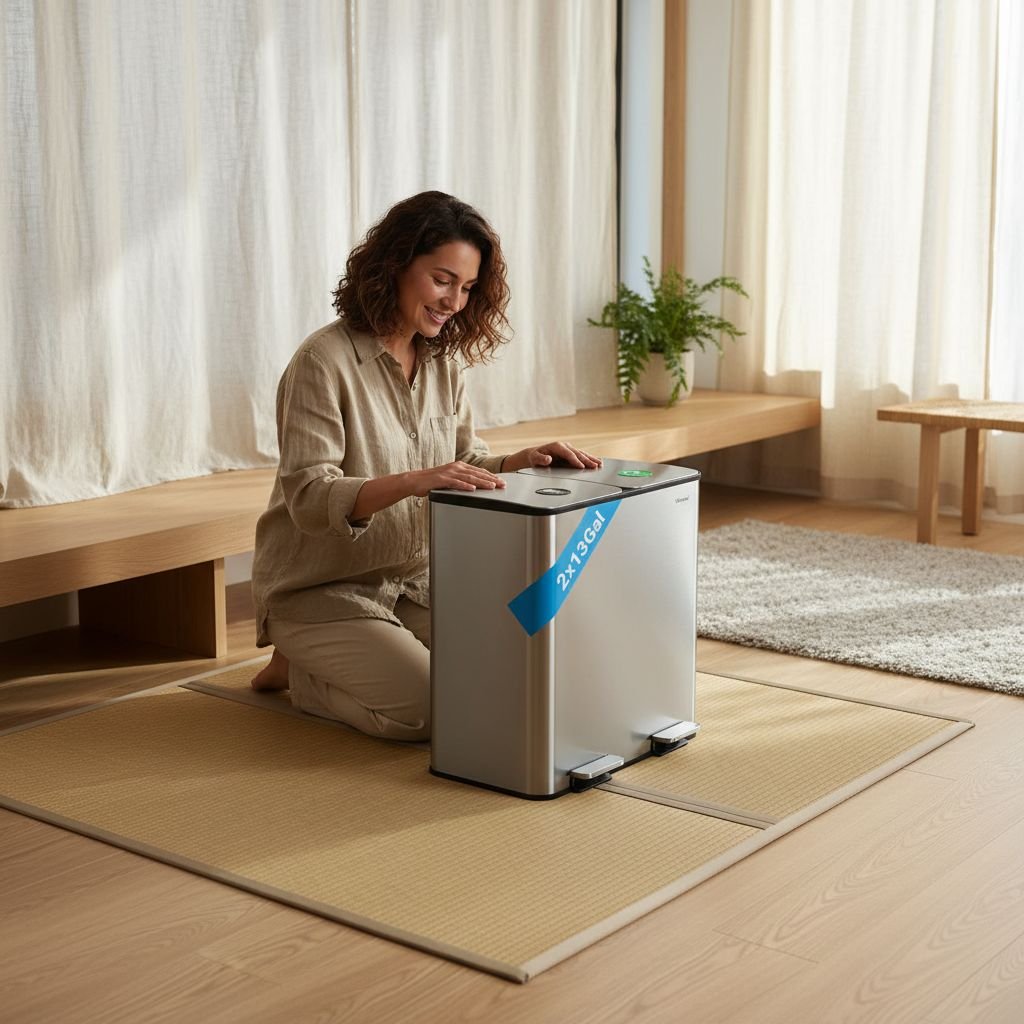
Assembly is minimal, primarily attaching the lids to the housing, and most users report it takes under fifteen minutes. Return policies vary by retailer, so confirm the window and condition requirements at the point of purchase.
The Verdict
I picture it on a weekday morning six months from now: the kitchen is tidy, there is bread toasting, and someone is rinsing out a jar near the sink. The bin is in its corner, lids closed, silver surface catching whatever light the morning offers. It is not the most glamorous object in the kitchen, but it is one of the most quietly satisfying. That is the best thing a utility object can become: something you stop noticing as a chore and start noticing as a choice. The Lovewind 2×13 gallon dual trash and recycling bin for kitchen is the kind of buy that makes you wonder, with mild irritation, why you waited this long. If you are ready to stop hiding your trash situation and start designing around it instead, this is a very good place to begin. And if you want to keep building out the kitchen, our kitchen linen and dish towel picks and our full mug and glassware roundups are good next stops. You can also browse the broader home gift ideas guide if you are looking for a present that will genuinely improve someone’s daily life in a way they did not know they needed. Buy it, give it a real corner, and let it do its job.
Every Angle
The piece as photographed for Amazon — front, side, back, detail.
As an Amazon Associate I earn from qualifying purchases.