Charcoal Step-On Trash Can for Kitchen: Honest Review

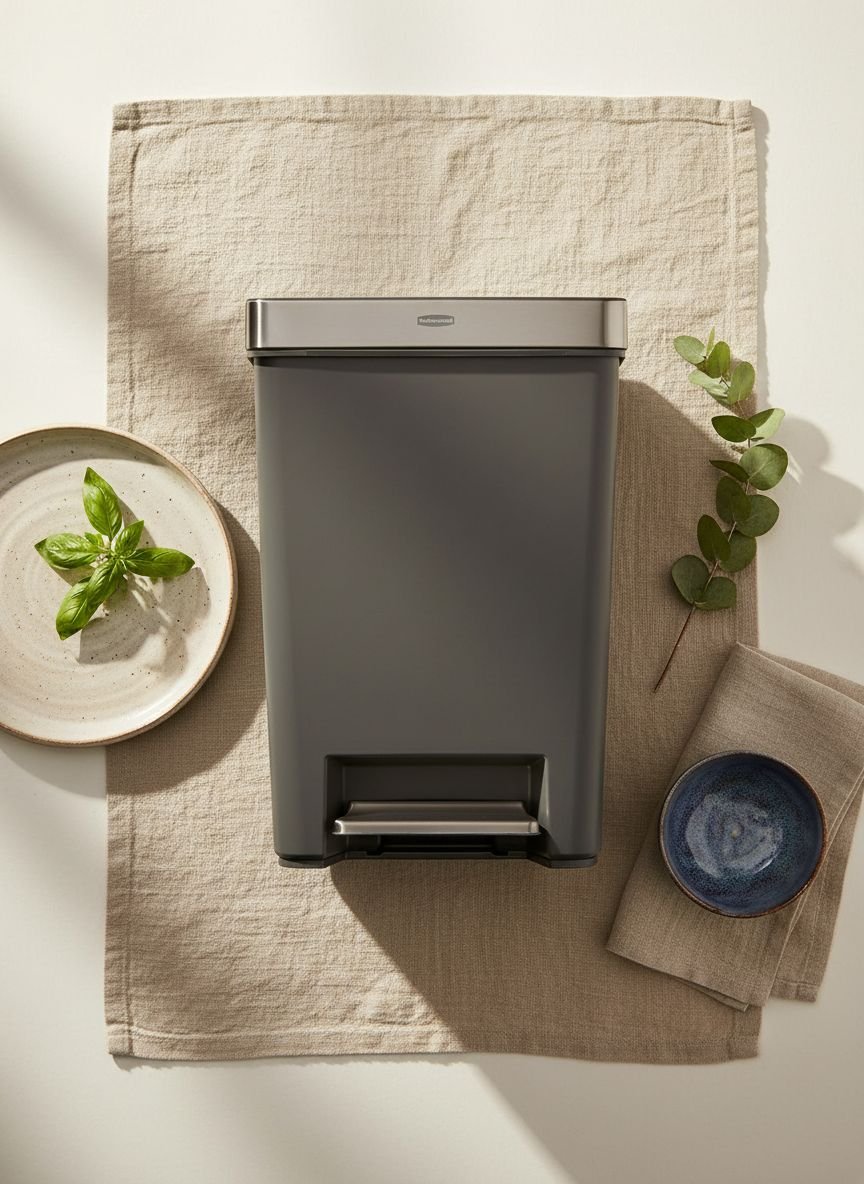
The Rubbermaid Premier Series III Step-On Trash Can has lived in my kitchen for four months now, and I’ve stopped thinking about it — which, for a trash can, is the highest compliment I know how to give.
There is a particular kind of Sunday morning in my apartment where everything feels assembled on purpose. The light comes in at a low angle through the kitchen window. The coffee is going. A linen dish towel is draped over the oven handle. And then there’s the trash can, which in previous apartments has been a rotating cast of flimsy plastic bins with lids that don’t close properly, or shiny chrome cylinders that looked expensive and dented immediately, or the open-top variety that required the kind of optimism about odors I simply do not possess. **The trash can is one of those objects that can quietly undermine a kitchen’s entire visual register.** I didn’t expect the Rubbermaid Premier Series III to be the piece that finally made me stop noticing it. But here we are.

The First Time I Saw It
I found it the way I find most things I actually end up loving: sideways, while looking for something else. I was deep in a late-night rabbit hole of kitchen countertop styling ideas, trying to figure out why my kitchen felt visually busy even when it was technically clean. Someone in a home forum had mentioned — almost as an aside — that swapping out a cluttered, mismatched waste bin for something with a clean silhouette had changed the whole feel of their space. That comment sent me looking.
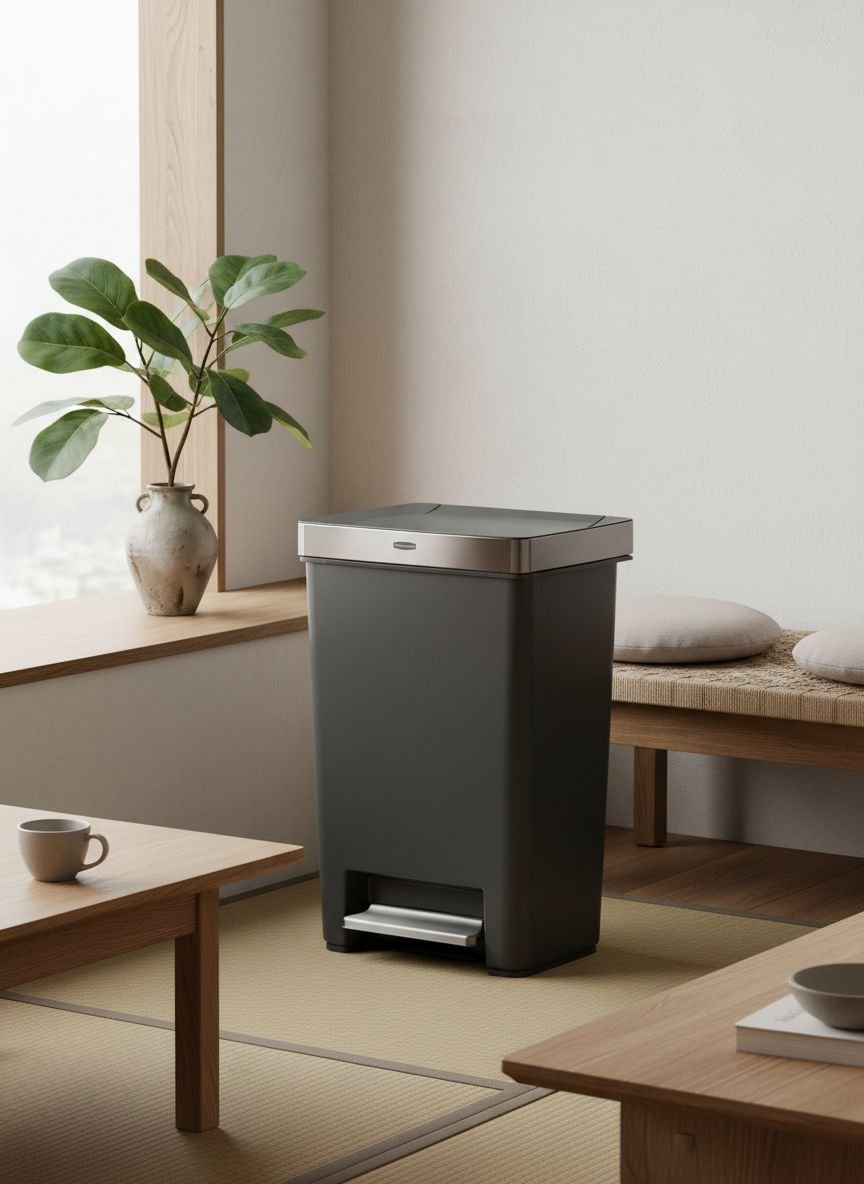
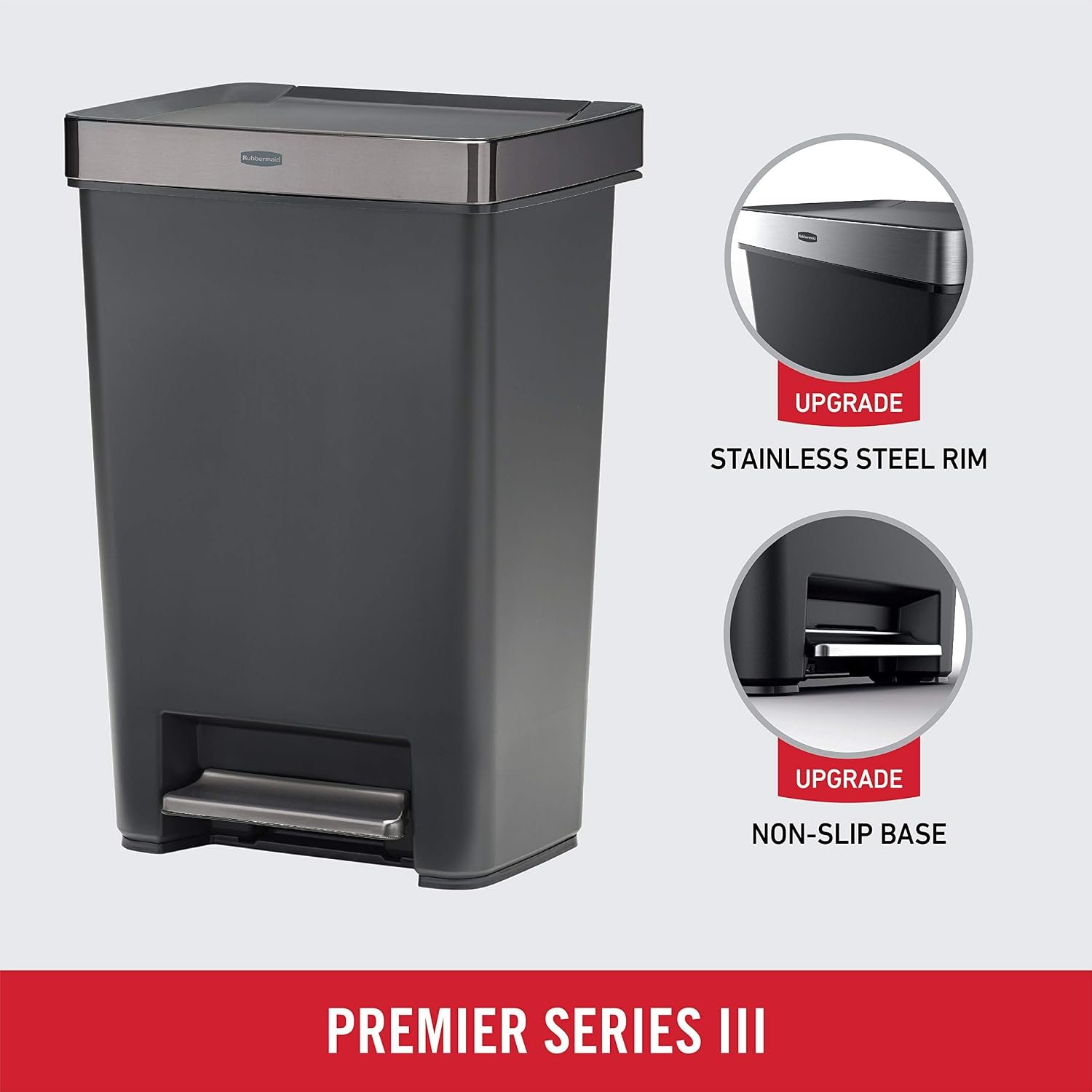
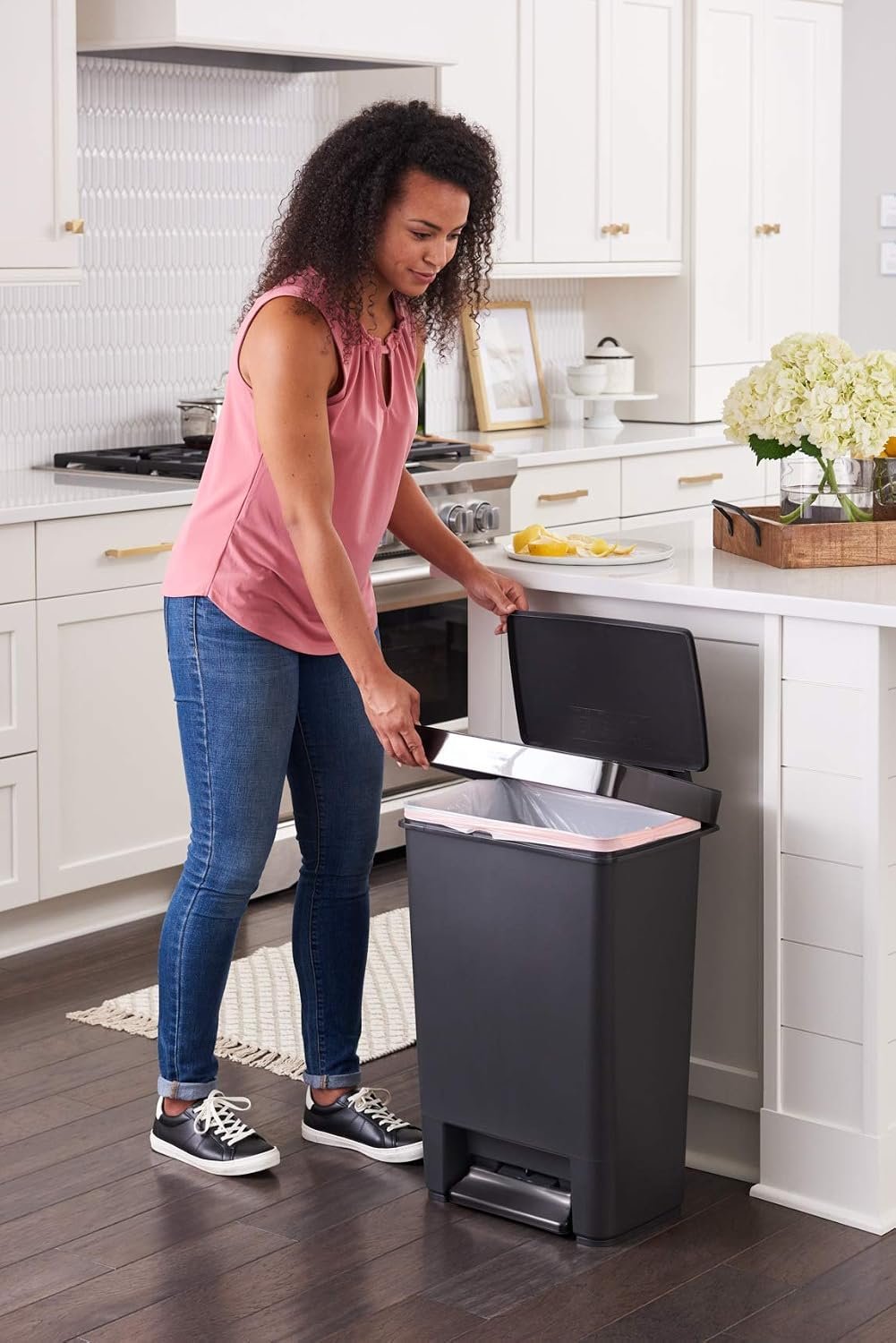
The charcoal colorway and the stainless steel rim detail stopped me cold. It looked like something you’d find in a kitchen that had been considered. I added it to cart before I talked myself out of it.
How It Actually Lives in the Room
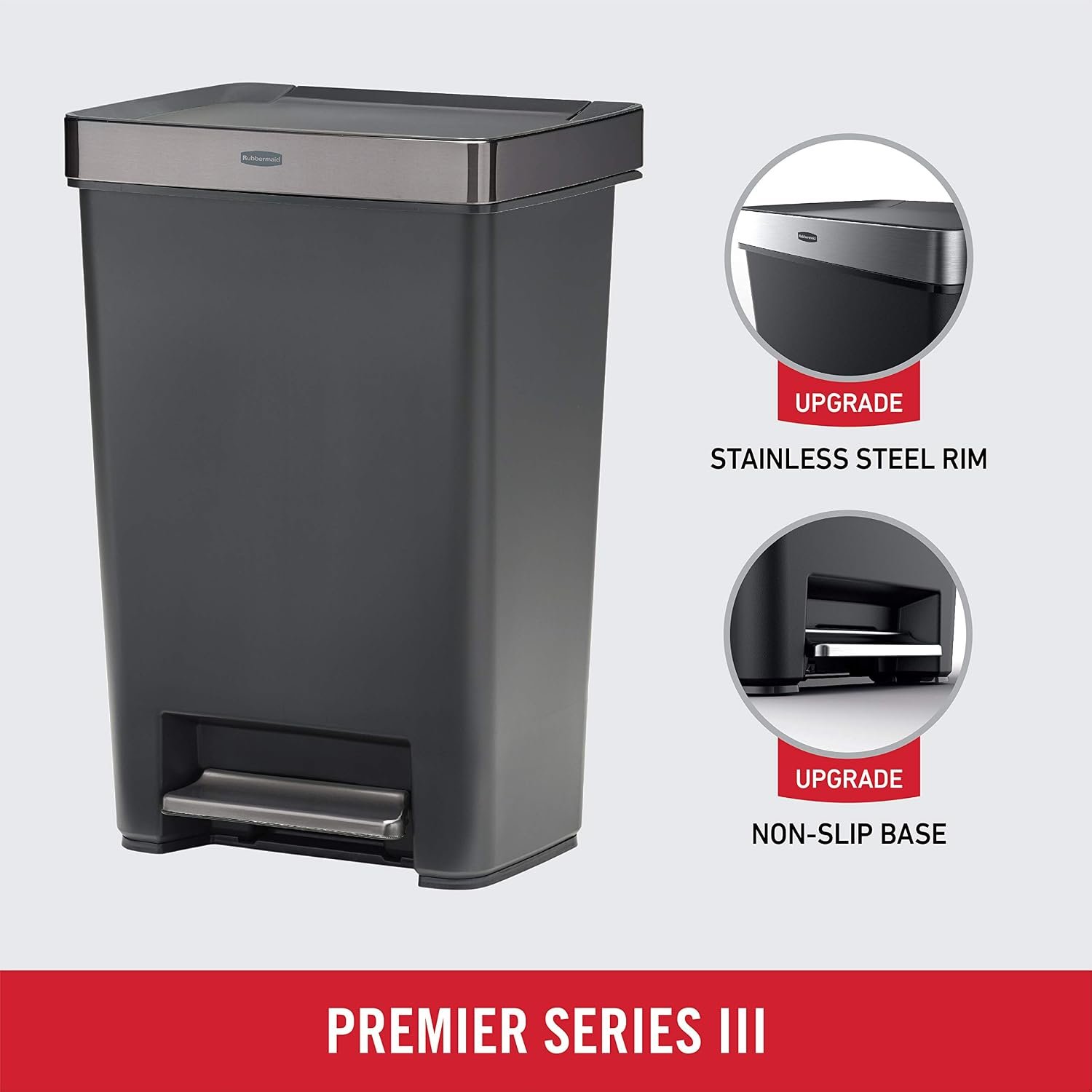
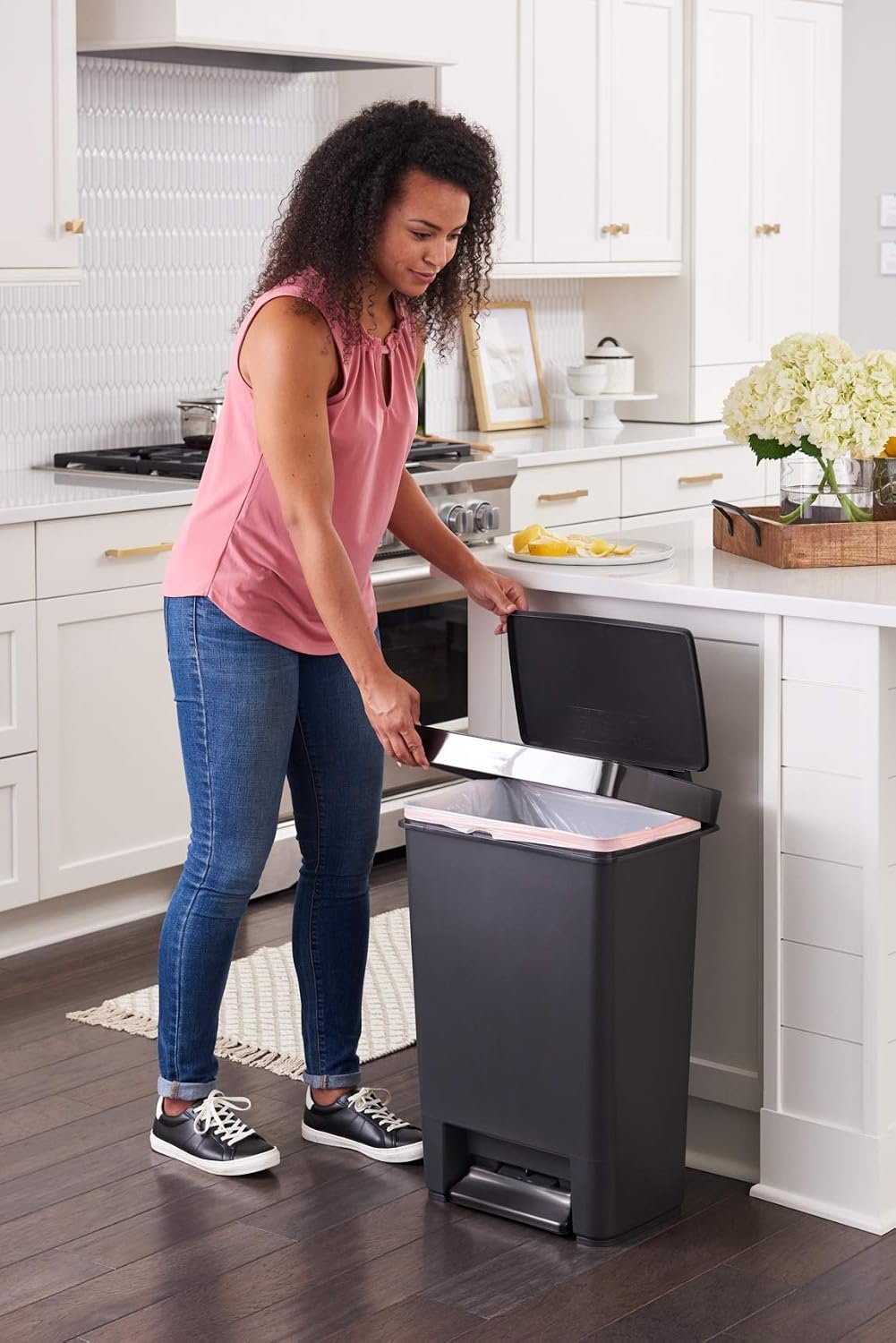
The charcoal is a true, deep gray-black, not the muddy plastic gray you sometimes get in product photos. **The stainless steel rim catches light in a way that reads intentional rather than decorative.** It sits next to my lower cabinet run without crowding the toe kick, and at 13 gallons, it handles a full week of kitchen waste without needing to be emptied every other day — something I didn’t fully appreciate until I stopped doing it. The step-on pedal mechanism is smooth and firm; it doesn’t require a running start or a stomp, which sounds like a low bar until you’ve owned a pedal bin that required both.
“A trash can that disappears into your kitchen is doing its job better than one that performs.”
I will be honest: the lid doesn’t have the weighted, whisper-soft close of cans that cost three or four times as much. It closes decisively, and quietly enough, but if you’re used to the near-silent descent of a high-end German steel bin, you’ll notice the difference. That said, the gap between this and those options is discussed at length in Apartment Therapy’s deep-dive on kitchen organization, and the consensus is consistent: finish quality versus functionality is a trade-off most kitchens can live with comfortably at this tier.
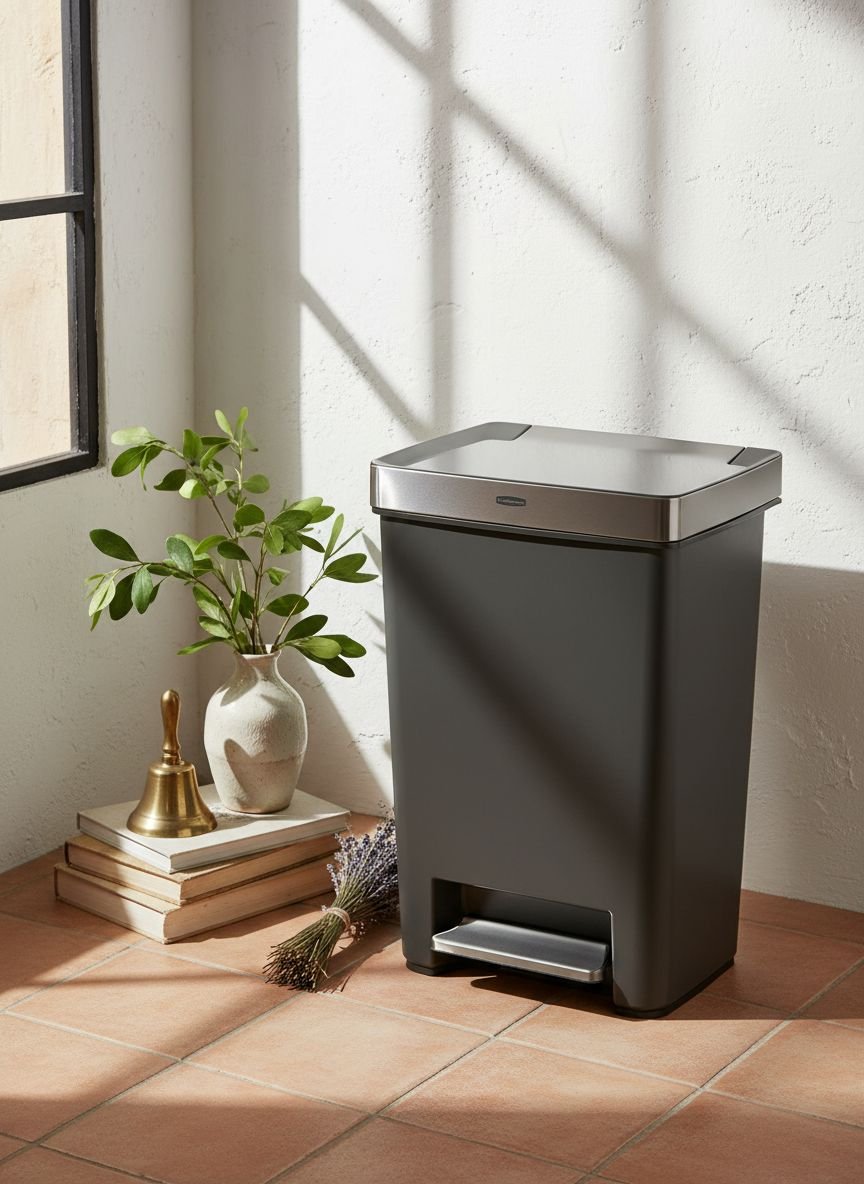
The Vignettes I Actually Built Around It
Vignette 1: Tuesday Morning, Making Lunches Before Work
This is the stress-test moment for any kitchen trash can. I’m moving fast, I’ve got one hand holding a coffee cup, and I’m using my foot to open the lid while scraping vegetable peels off a cutting board with my elbow. **The step-on pedal mechanism earns its keep here.** The lid stays open long enough to be useful, closes on its own without slamming, and the whole can doesn’t skitter across the floor because the base has enough weight to stay put. It sounds mundane. It is mundane. But mundane things done well are the architecture of a functional kitchen.
Vignette 2: First Dinner Party of the Season
I had six people in my apartment for a Friday dinner in early spring. The kitchen was open to the living space, which meant every surface in it was visible from the table. I hadn’t thought about the trash can at all in the weeks leading up to it, and then a guest walked past it, paused, and asked where I’d gotten it. **The charcoal and steel combination reads tidier than a white or chrome option would in a crowded kitchen.** It didn’t accumulate the visual noise that lighter finishes sometimes do when there are wine bottles, cutting boards, and six people’s clutter involved. It just sat there, doing its job, looking like it belonged.
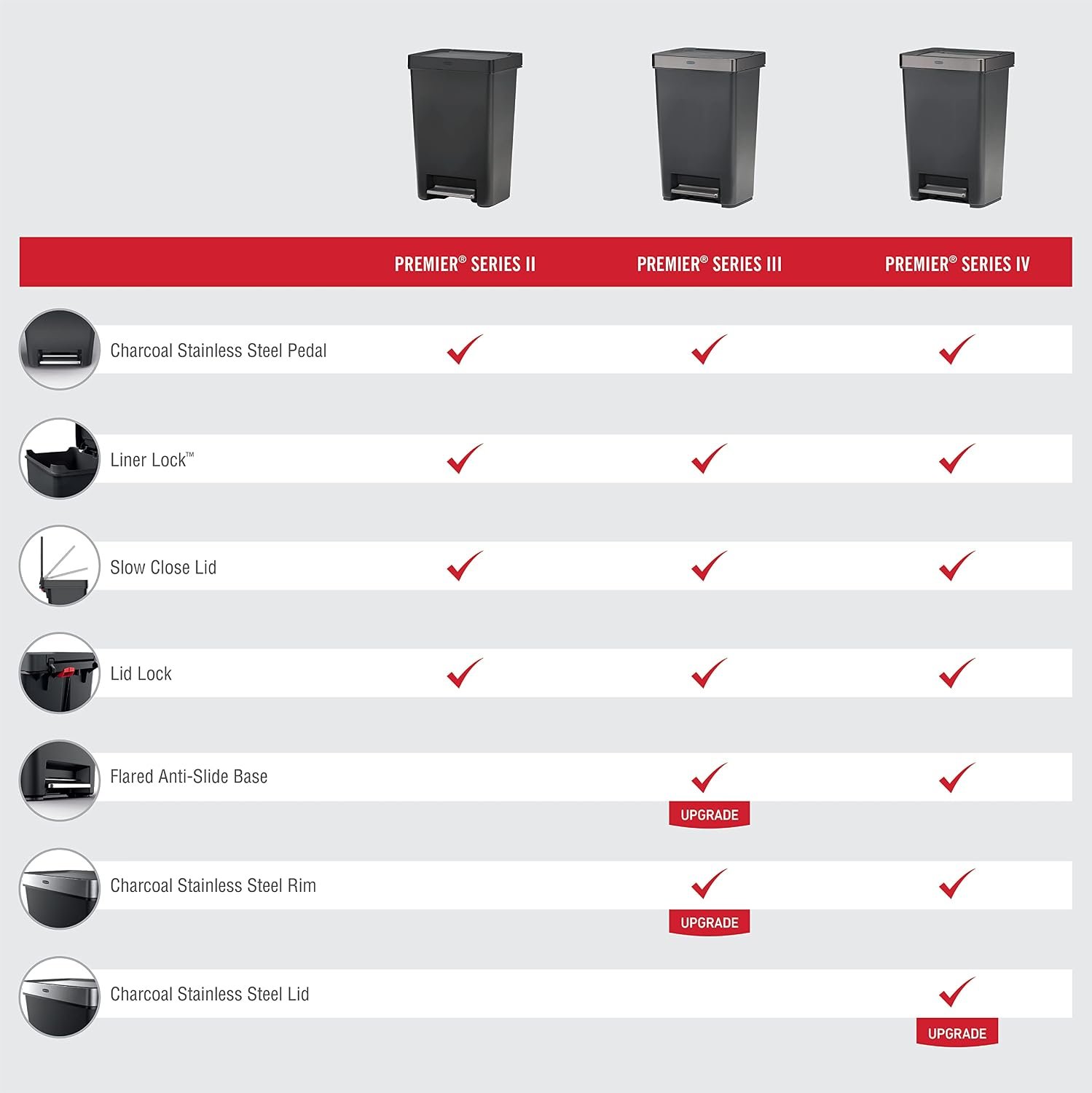
Vignette 3: A Quiet Rainy Evening, Reorganizing
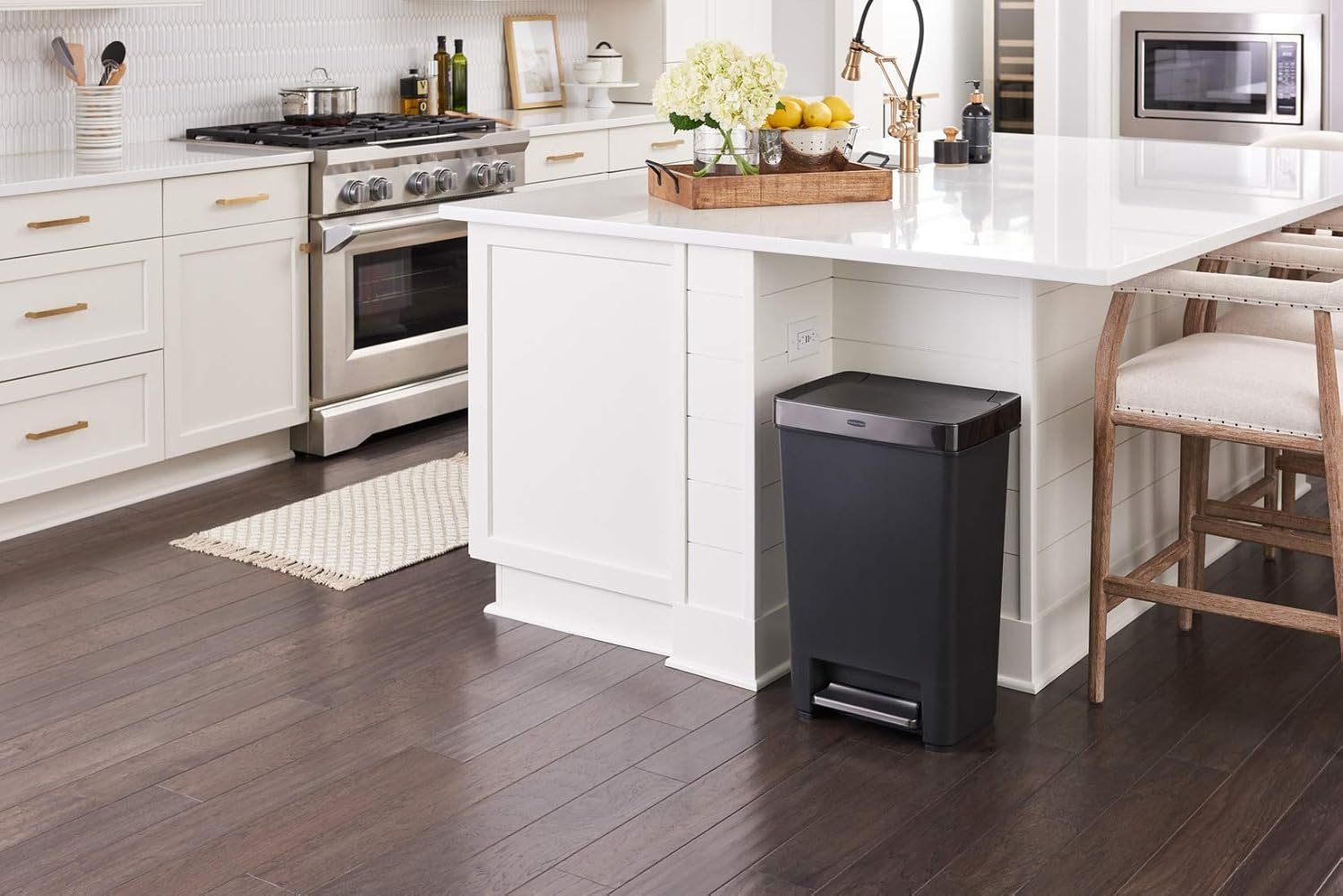
I spent one slow October Saturday reorganizing my kitchen storage. I pulled everything out, wiped down the interiors, and thought carefully about what stayed on the counter and what went away. The trash can was the one object I never questioned. It had already found its place beside the island leg, where the proportions work and the color doesn’t compete with the warm wood tones nearby. I paired it with a set of textured linen dish towels hanging nearby in a similar slate palette, and the whole corner felt like it had been styled rather than assembled by accident.
What Other People Are Saying
This product has no shortage of opinions behind it, and the pattern across thousands of reviews is remarkably consistent: people come for the price point, stay for the functionality, and the only dividing line is whether they were expecting something in a heavier-duty material category.
The 4.0 rating with over three thousand reviews tells a specific story: this is a workhorse that delivers on its core promise. The minority of dissatisfied reviews almost universally come from buyers who wanted restaurant-grade steel construction at an accessible price, which is a fair desire, just a different product category entirely.

Who Should Skip It
If your kitchen is a professional-grade space where every object is chosen for maximum longevity and you’re comfortable investing significantly for a bin that will outlast a decade of hard use, this is not your trash can. The plastic construction, however solid, is plastic, and there are all-stainless options that will take harder knocks without showing them. Similarly, if your kitchen aesthetic runs very warm, very natural, or very rustic, the charcoal-and-steel combination might feel cooler and more industrial than you want it to. It reads modern farmhouse at its most restrained, and genuinely contemporary at its most styled. Cottagecore it is not. And if 13 gallons sounds like it might be too large for a compact galley or studio kitchen, trust that instinct: the proportions are generous and the footprint reflects it.
What It Replaces in My Space
My previous trash can was a slim open-top cylinder I’d bought because it fit under the counter overhang and cost almost nothing. It had no lid, which I’d rationalized as “easier access” and was in reality just a slow accumulation of odors and a visual reminder that I had not yet made a decision about this corner of my kitchen. **Replacing it with the Rubbermaid Premier Series III felt less like an upgrade and more like finally finishing a sentence** I’d left trailing for two years. The lid alone changed how the kitchen smelled on warm days. The color change, from a dingy off-white to the deep charcoal, made the whole lower cabinet run feel more deliberate. If you’re browsing our editor’s top kitchen picks and wondering what object is quietly doing the most work in a well-styled kitchen, start here.

FAQ
What are the exact dimensions, and will it fit in a standard cabinet pull-out?
At 13 gallons, this can is designed for open floor placement rather than cabinet enclosures. It’s a freestanding piece, so measure your intended floor space before ordering, particularly if your kitchen runs narrow.
Does the charcoal finish show smudges or residue over time?
The matte charcoal surface is more forgiving than gloss finishes or brushed chrome, but the stainless steel rim will collect fingerprints in the way all steel hardware does. A quick wipe with a damp cloth handles both surfaces cleanly.
Where does it work best in the kitchen layout?
Beside a kitchen island leg, at the end of a lower cabinet run, or tucked into the corner near a prep zone all work well. The step-on pedal means you want clearance directly in front of it, so avoid placing it where foot traffic would be blocked by the lid arc.
Does the quality match the brand’s reputation at this price point?
Rubbermaid’s core brand promise has always been functional durability, and this delivers on that. The finish quality and the pedal mechanism feel consistent with a product built to last through daily use, not just light handling, and the value reads above what you’d expect for the level of detail on the rim and lid.
Is assembly required, and what’s the return situation like if it doesn’t work in my space?
Assembly is minimal, essentially placing the liner and confirming the lid mechanism is seated, and most major retailers offer straightforward returns within their standard windows if the proportions don’t work for your space once it arrives.
The Verdict
I imagine, sometime next spring, standing in this kitchen while something is roasting in the oven, the windows slightly fogged with steam, and a guest leaning in the doorway asking how I managed to make a rental kitchen look this pulled-together. I will probably not mention the trash can. **But it will be there, in the lower left of the frame, doing quiet, consistent work in charcoal and steel.** This is not a glamorous object. It is not trying to be. What the Rubbermaid Premier Series III Step-On Trash Can is, is resolved: a piece that has figured out exactly what it needs to do and does it without demanding your attention. For anyone trying to get their kitchen to a place where the functional objects stop undermining the aesthetic ones, this is a rational, good-looking, genuinely useful place to start. Explore more of our kitchen and dining picks if you’re building out the whole room, or check the glassware and mug category for the countertop pieces that sit above it.
The best home objects are the ones you stop seeing. This one earned its invisibility.
Every Angle
The piece as photographed for Amazon — front, side, back, detail.

As an Amazon Associate I earn from qualifying purchases.