Stainless Steel Step Trash Can: Honest Review
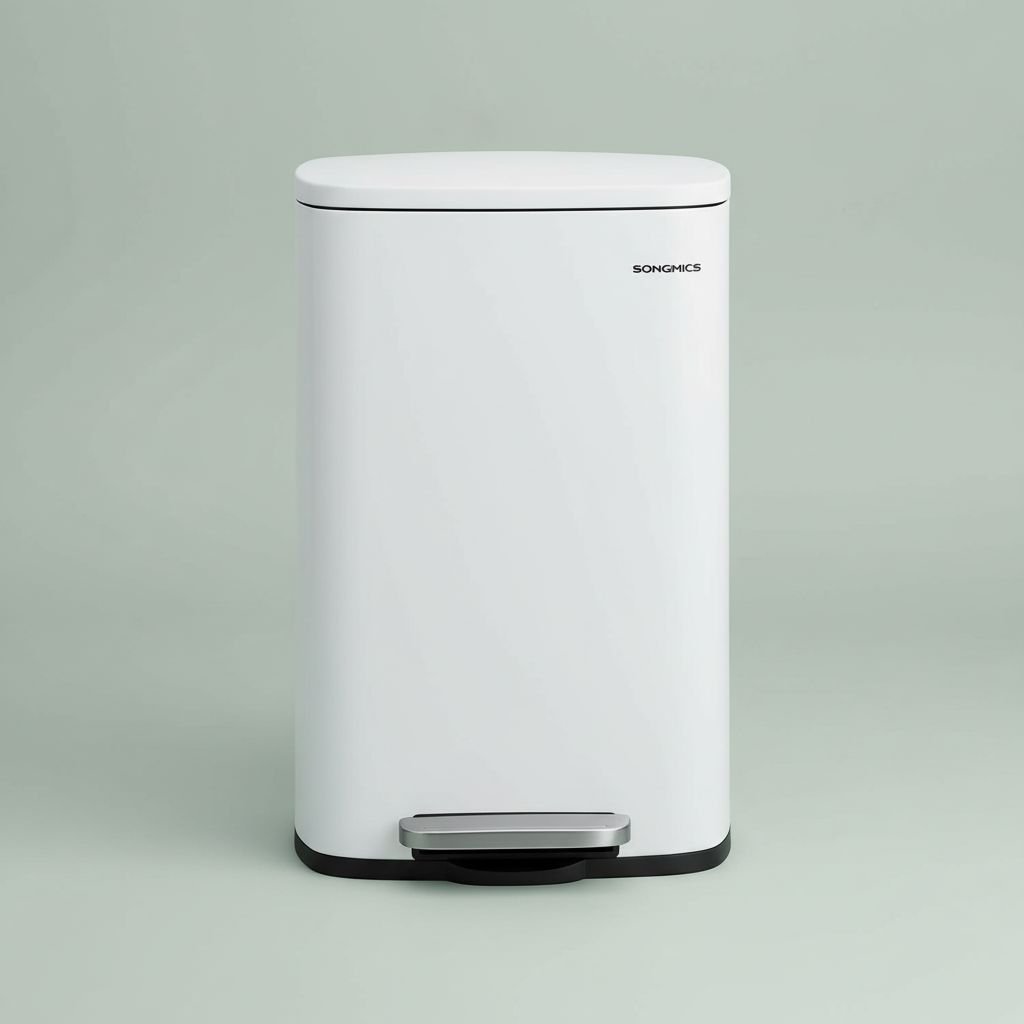
The moment I stopped hiding my trash can behind a cabinet door was the moment my kitchen finally started feeling like it was designed on purpose.
It was a Tuesday night in November, the kind where rain taps the window in that almost-rhythmic way and you’ve got a pot of something simmering on the stove. I was breaking down a butternut squash, scooping seeds into a bowl, and reaching every thirty seconds to nudge open the cabinet under the sink with my elbow, the way I’d been doing for three years. The cabinet door swung back and hit my shin. Again. I stood there, wooden spoon in one hand, squash guts in the other, and thought: this is not a problem I need to keep having. Two days later, the SONGMICS 13 Gallon Stainless Steel Step-On Trash Can was sitting in my kitchen, and the cabinet door has stayed closed ever since.
The First Time I Saw It
I came across this kitchen trash can the way I find most things that end up staying, by falling down a very specific rabbit hole at 11pm. I was looking for kitchen countertop organization ideas and kept landing on styled kitchen shots where the trash can was just… there. In the open. Looking intentional. Not shoved into a corner or draped in a linen cover like something embarrassing.
The SONGMICS step-on trash can kept appearing in those images, and I kept stopping on it. The brushed stainless finish. The clean, uninterrupted lines of the lid. The way it looked less like a utility object and more like something you’d see in a slow-living editorial spread about a Copenhagen apartment. I clicked through.
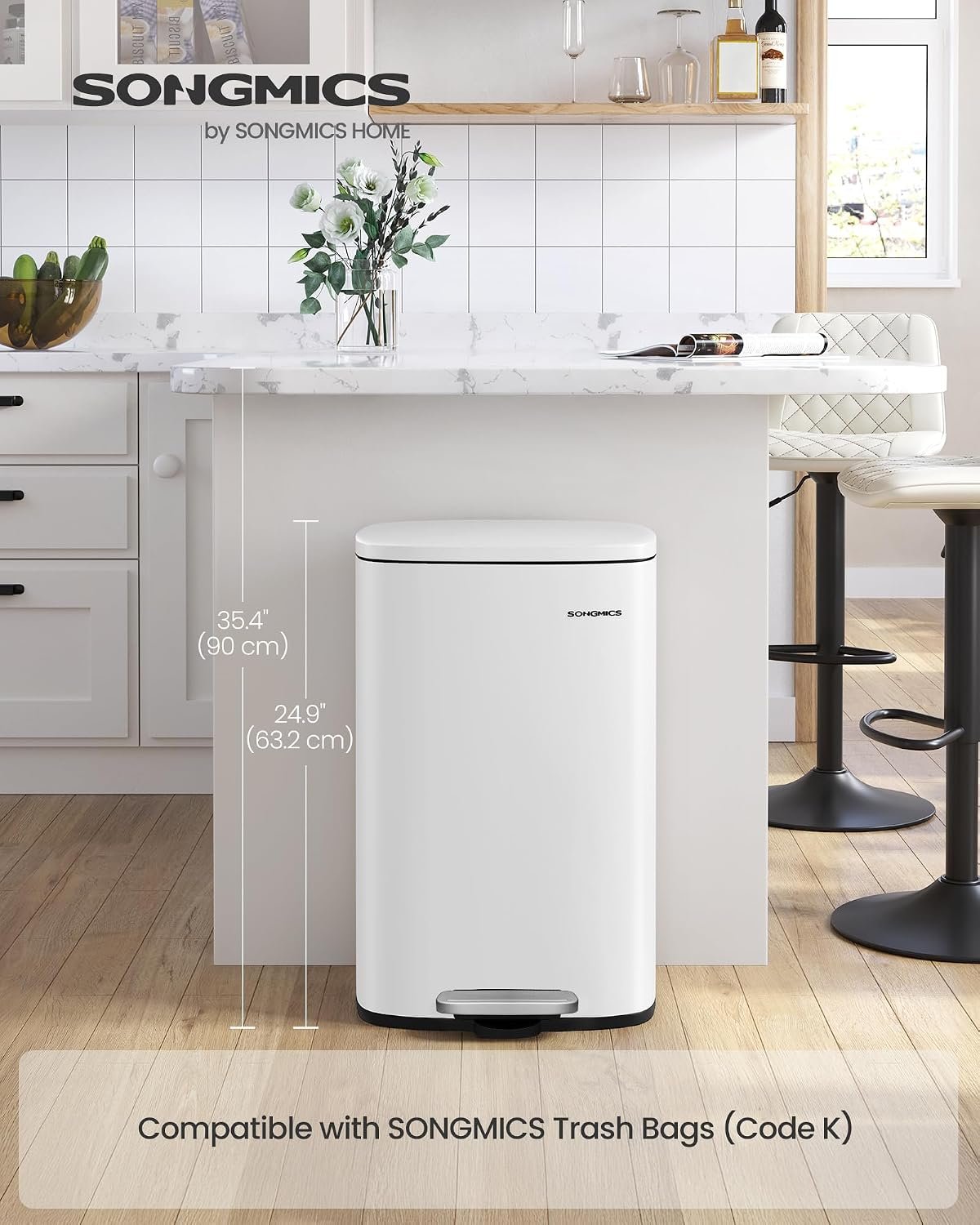
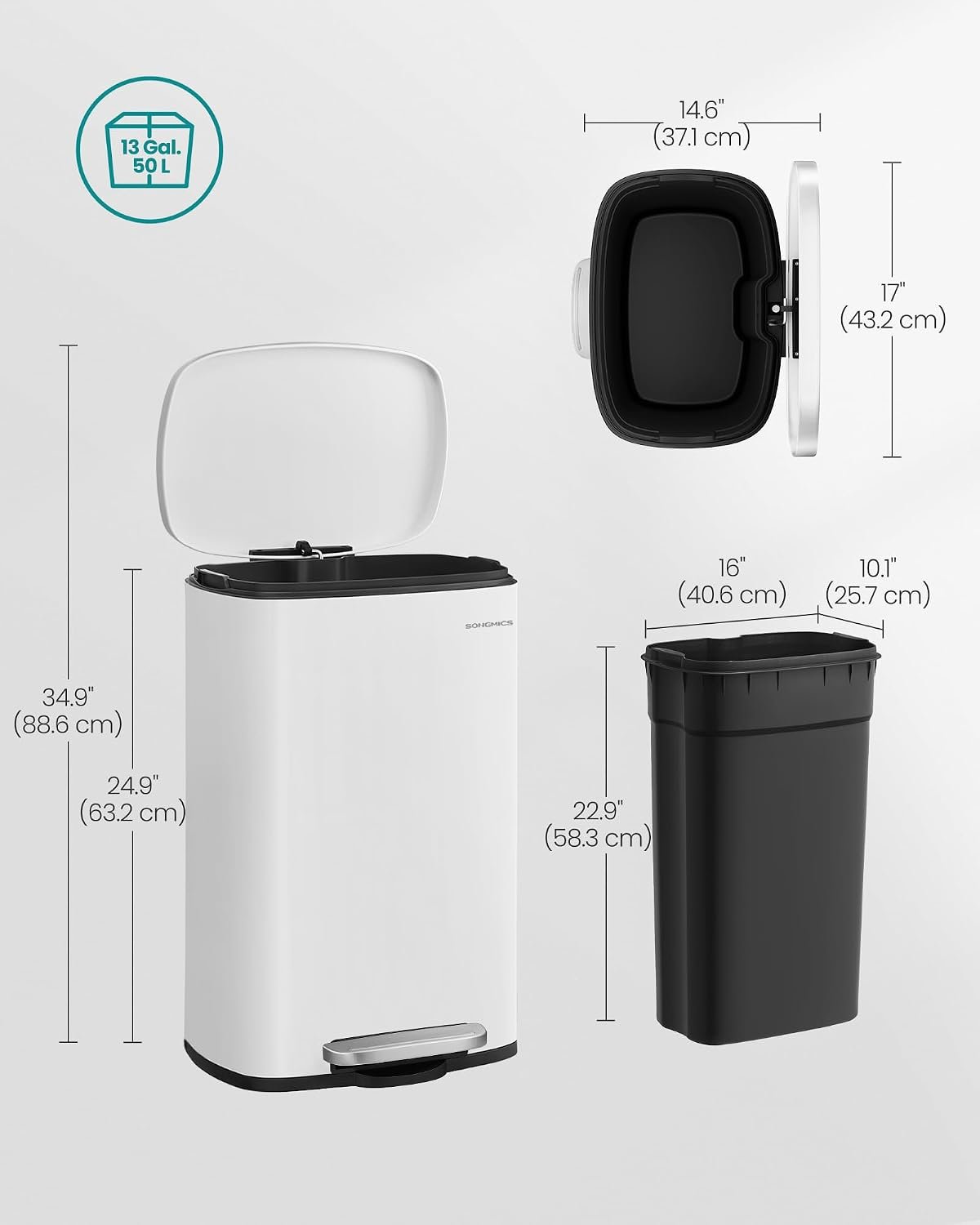
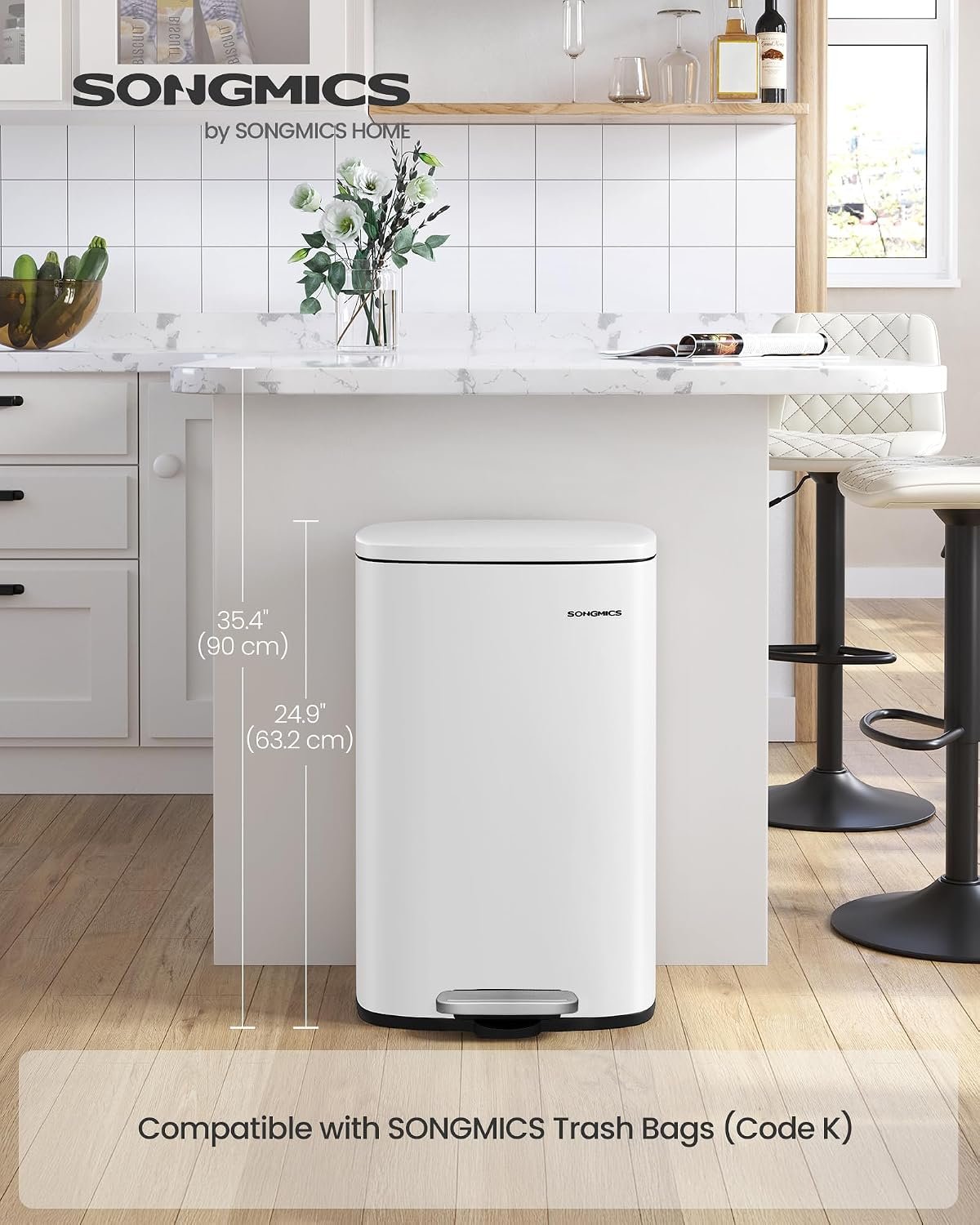
What pulled me in further was the capacity. Thirteen gallons is the sweet spot for a family-sized kitchen, generous enough that you’re not emptying it every single night, but not so cavernous that it dominates the room. I ordered it within the week.
How It Actually Lives in the Room
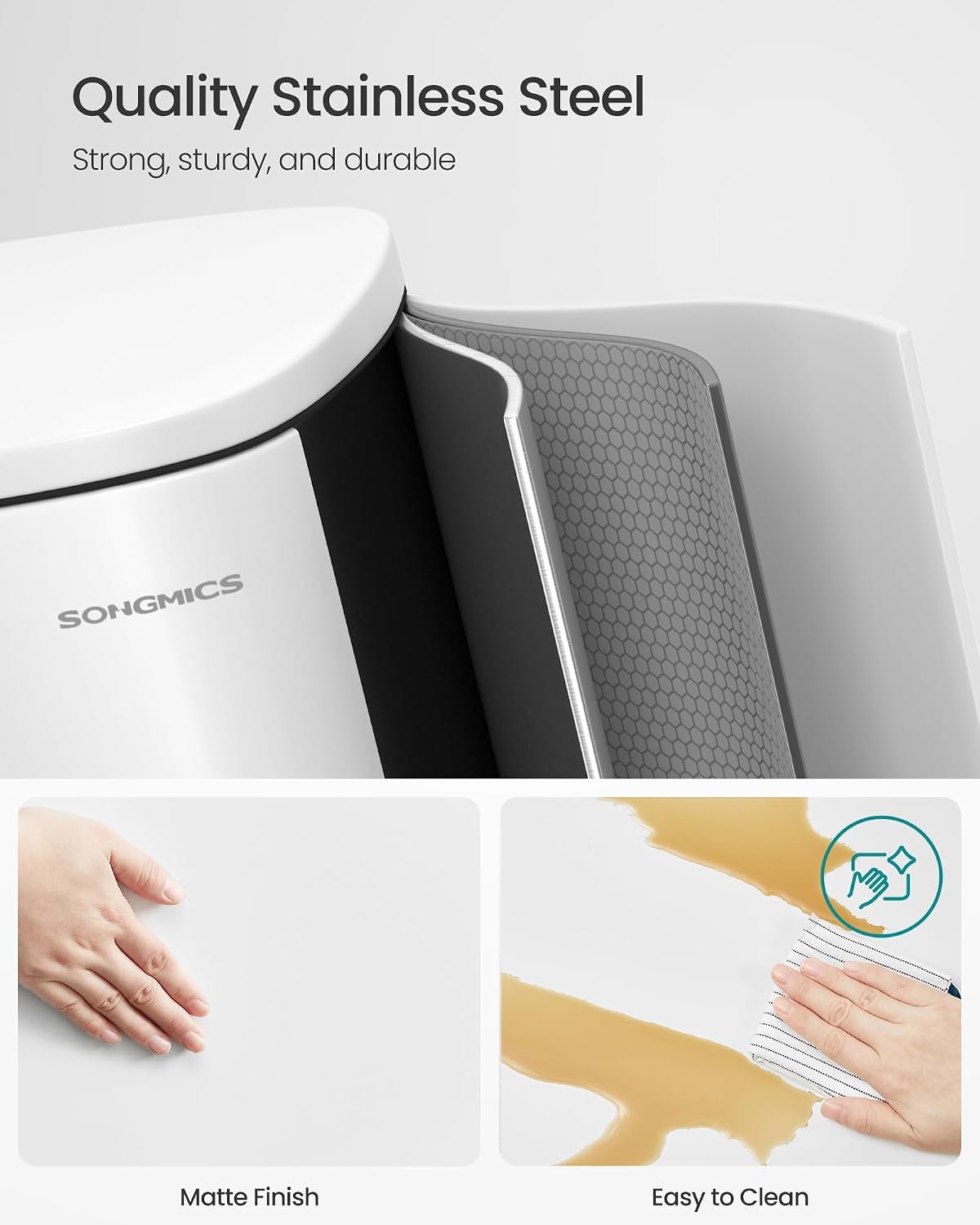
The first thing I noticed when I unboxed it was the weight. This trash can has real heft to it, the kind that tells you something before you’ve even pressed the pedal. It doesn’t skitter across the floor when you tap it open. It stays exactly where you put it. The stainless steel body has a brushed finish that reads warmer in person than in product photos, which is a pleasant surprise, since most stainless in this category photographs silver-cool and arrives looking like a refrigerator panel.
“The best kitchen trash can is the one that makes you stop thinking about your kitchen trash can.”
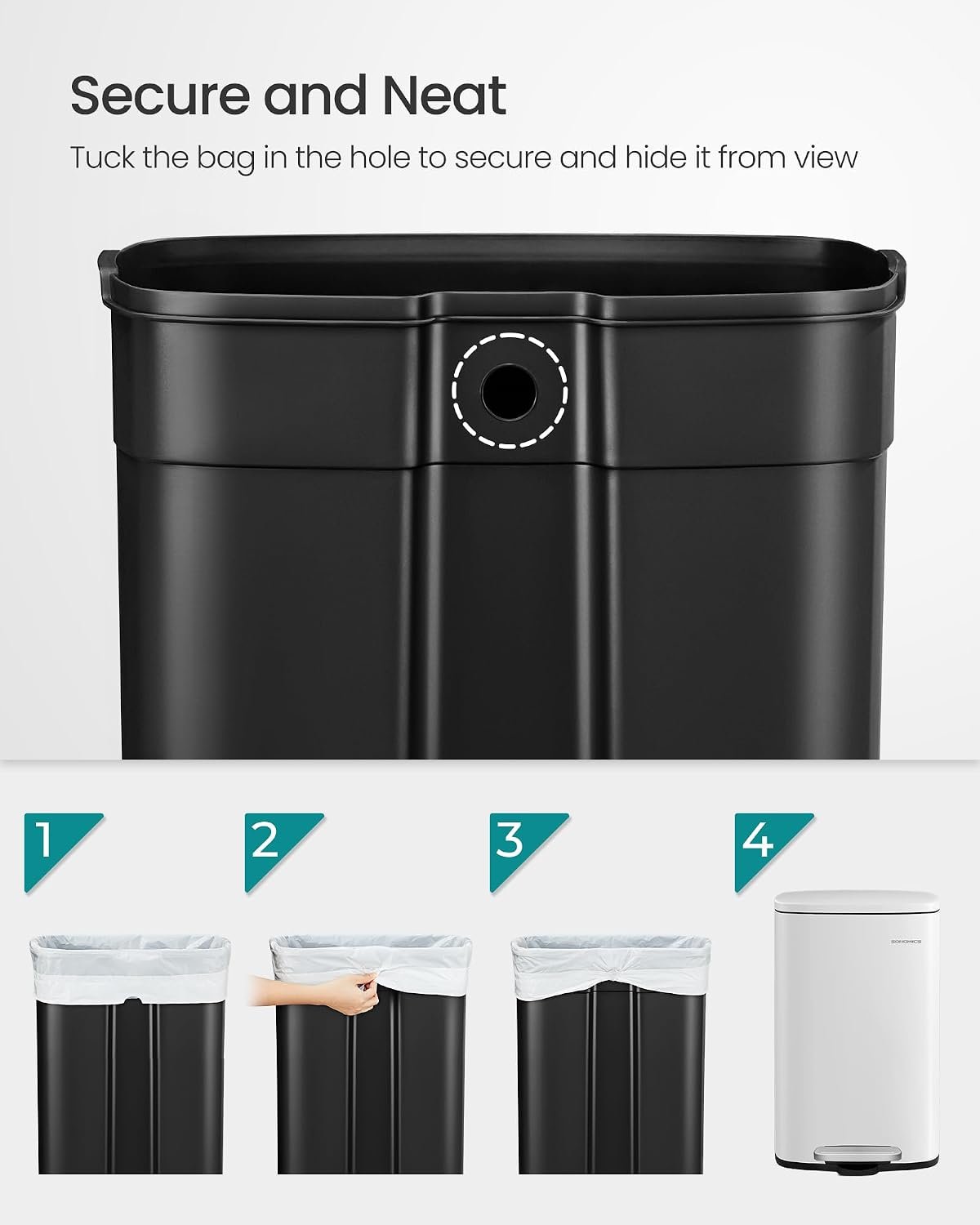
The step-on pedal has a satisfying, controlled resistance to it. Not stiff, not mushy. The lid opens to about a 90-degree angle and closes slowly, which means no dramatic slam when you release the pedal. This detail matters more than you’d think when you’re cooking dinner at 7pm and the kitchen is already full of noise. I did notice that the interior bucket, while removable for cleaning, is on the lighter-plastic side compared to the steel exterior, which is a fair trade-off at this price point but worth knowing going in. For a more complete look at how this fits within a broader contemporary kitchen design philosophy, the principle is simple: materials that acknowledge function honestly are almost always more interesting than materials that hide it.


The Vignettes I Actually Built Around It
Vignette 1: Sunday Morning, Coffee and Prep Light
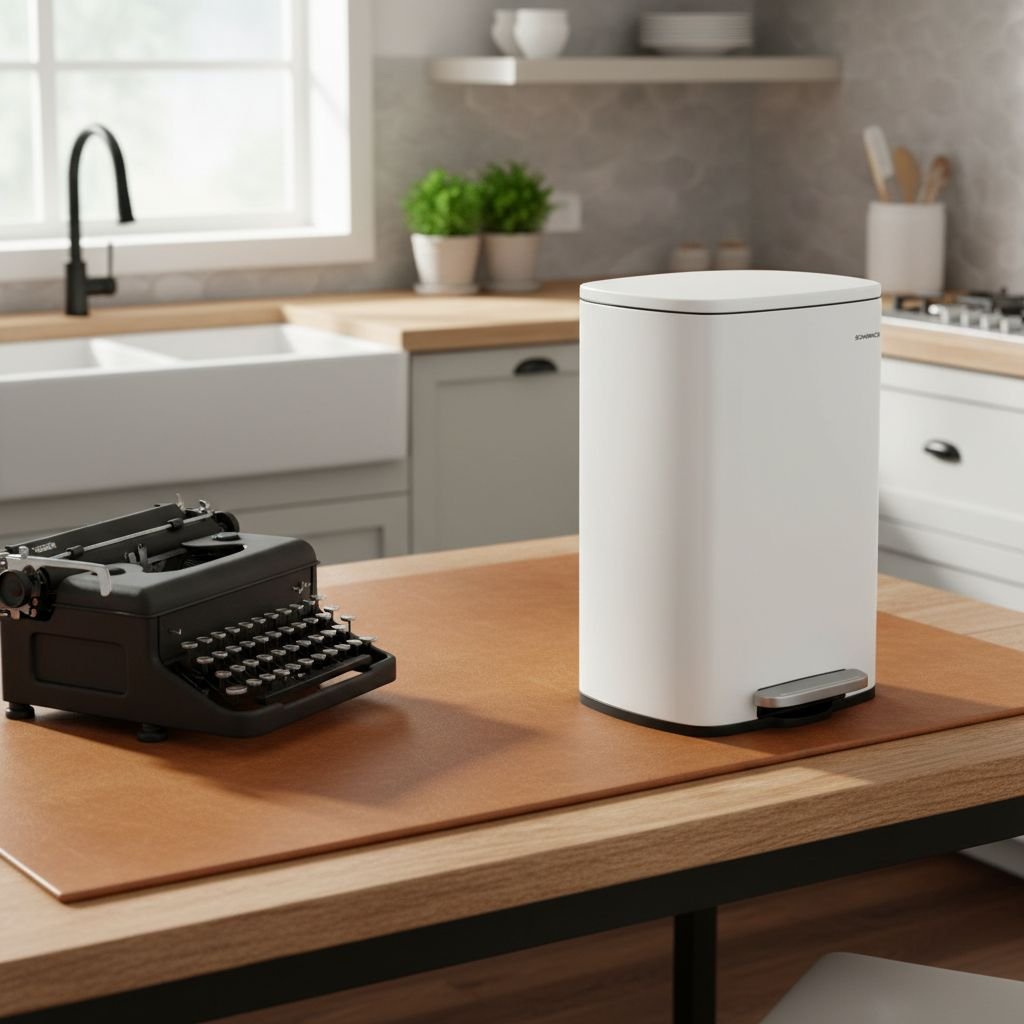
Sunday mornings in my kitchen involve a lot of citrus. Grapefruit halves, lemon rinds, the papery skin of garlic. The step-on pedal means my hands stay clean through all of it, which sounds like a small thing until you’ve spent years touching a lid handle with fruit-sticky fingers and then immediately touching everything else. I positioned the can to the left of the stove, between the island and the window. Morning light hits the brushed steel and diffuses rather than glares, and the whole corner looks composed in a way I genuinely did not expect from an object that holds garbage. It paired well with my matte black faucet and the warm honey tone of my butcher block. I’d have styled a corner like this on purpose.
Vignette 2: The First Dinner Party of the Season
In October I had eight people over for dinner, which in my apartment means the kitchen is very much part of the room. Guests wander in, they refill glasses, they hover near the stove asking questions. The kitchen trash can is visible the entire time, which used to send me into a mild spiral of wanting to hide it. This time, I didn’t. The stainless exterior wiped down in thirty seconds before people arrived, and because the lid seals cleanly when closed, there was no rogue smell creeping into the room while we opened wine. Nobody commented on the trash can, which is exactly the review it deserved.
Vignette 3: A Quiet Rainy Night, Home Office Overflow
I initially bought this for the kitchen, but after a few weeks I found myself wishing I had a second one for my home office, where I currently have a flimsy open-top bin that fills with paper and coffee cups within two days. The SONGMICS step-on trash can in a smaller context actually reads more like furniture than utility, especially in a room that’s already leaning into a modern, neutral palette. For anyone looking at this for a kitchen and dining space but also considering office placement, the proportions work in a room that has at least 9 square feet of open floor, give or take. It’s a considered object in any room it lands in.
What Other People Are Saying
With over four thousand reviews and a 4.5-star average, the feedback pattern is consistent: people buy this skeptically, expecting a step-down from the look of the product photos, and then are surprised when it exceeds their expectations in person. The most repeated notes are the pedal mechanism, the fingerprint resistance of the brushed finish, and the lid’s soft-close behavior. A few reviewers flagged the inner liner as a weak point, which matches my own observation. The consensus is that this is a workhorse dressed in good clothes, which is honestly the best thing a utilitarian object can be.

Who Should Skip It
If your kitchen runs small and you’re already negotiating every square foot, this trash can asks for real floor space and a deliberate placement decision. It won’t tuck neatly into a tight corner between a cabinet and a refrigerator without feeling like it’s fighting for territory. If your aesthetic skews heavily toward warm, textured, all-organic materials, like raw oak and unglazed ceramics and handwoven baskets everywhere, the steel finish may feel like the wrong note. And if you generate very low household waste and you’re used to a slim, 8-gallon bin, the 13-gallon size may simply be more than you need. Bigger isn’t always better; it’s just bigger. It’s also worth noting that the fingerprint resistance is good but not invisible. In a household with young children who touch everything, you’ll still be wiping it down more often than the marketing suggests.
What It Replaces in My Space
Before this, I had a plastic step-can from a big-box store that I’d painted with chalk paint to try to make it look like something it wasn’t. It had a pedal that stuck intermittently, a lid that didn’t quite center when it closed, and a color I would describe charitably as “determined beige.” I replaced it not because it stopped working, but because I finally admitted that objects you use a dozen times a day do affect how a space feels, and they deserve a little more consideration. There’s a category of home purchases that designers call editor-recommended daily-use pieces, things that don’t hang on the wall or sit on a shelf but that your hands touch constantly. This trash can falls into that category. Replacing it is one of the quieter good decisions I’ve made in this kitchen.
FAQ
What size kitchen works best with the 13-gallon capacity?
This trash can suits a medium to large kitchen comfortably, or any household generating regular daily waste from cooking and food prep. For a studio kitchen or a one-person household with minimal cooking, a smaller capacity might serve you better without using as much floor real estate.
How do you clean the stainless steel exterior?
A microfiber cloth with a small amount of dish soap or a dedicated stainless steel cleaner handles everyday grime well. Always wipe in the direction of the grain to avoid micro-scratches, and avoid abrasive sponges. The brushed finish is forgiving of light smudges between cleanings.
Where should this be placed in the kitchen for best use?
The most functional position is within a step or two of your primary prep area, typically near the stove or island, so you’re not crossing the kitchen every time you need to toss something. Leaving a few inches of clearance on each side also prevents the lid from grazing cabinetry when it opens.
Is the quality consistent with what you’d expect at this price point?
For what you’re paying, the exterior finish and the pedal mechanism punch well above where they land in the market. The inner liner is the one component where you feel the difference between this tier and a higher-end bin, but the overall build reads more expensive than the investment asks.
Does it require any assembly, and what is the return process like?
Assembly is minimal, typically attaching the pedal and inner bucket, and takes under five minutes with no tools. For returns, SONGMICS has a standard return window through most major retailers, and the packaging is structured enough that boxing it back up isn’t the ordeal it can be with larger items.
The Verdict
I picture next spring in my kitchen. The window is open, something is roasting, and I’m moving between the cutting board and the compost without once touching a lid or nudging a cabinet with my knee. The SONGMICS step-on trash can is just there, doing the thing it was designed to do, without asking me to think about it. That is, genuinely, the goal. For anyone looking at the broader conversation around kitchen design and intentional object selection, the through-line is always the same: the pieces that disappear into daily life because they work so well are the ones worth finding. This is a SONGMICS step-on trash can review that ends in a recommendation, and I don’t give those lightly for something this utilitarian. If you’re building a kitchen that feels cohesive rather than collected, this is the kind of best step-on trash can for a kitchen shortlist piece that deserves more than a footnote. It’s not flashy. It doesn’t need to be. It’s one of those finds that makes you wonder why you waited so long, and for anyone looking to browse similar kitchen textile and accessory picks or explore home goods gift ideas that exist in this same considered, practical-meets-aesthetic lane, this is a solid place to start. Buy it, place it well, and then never think about it again.
Every Angle
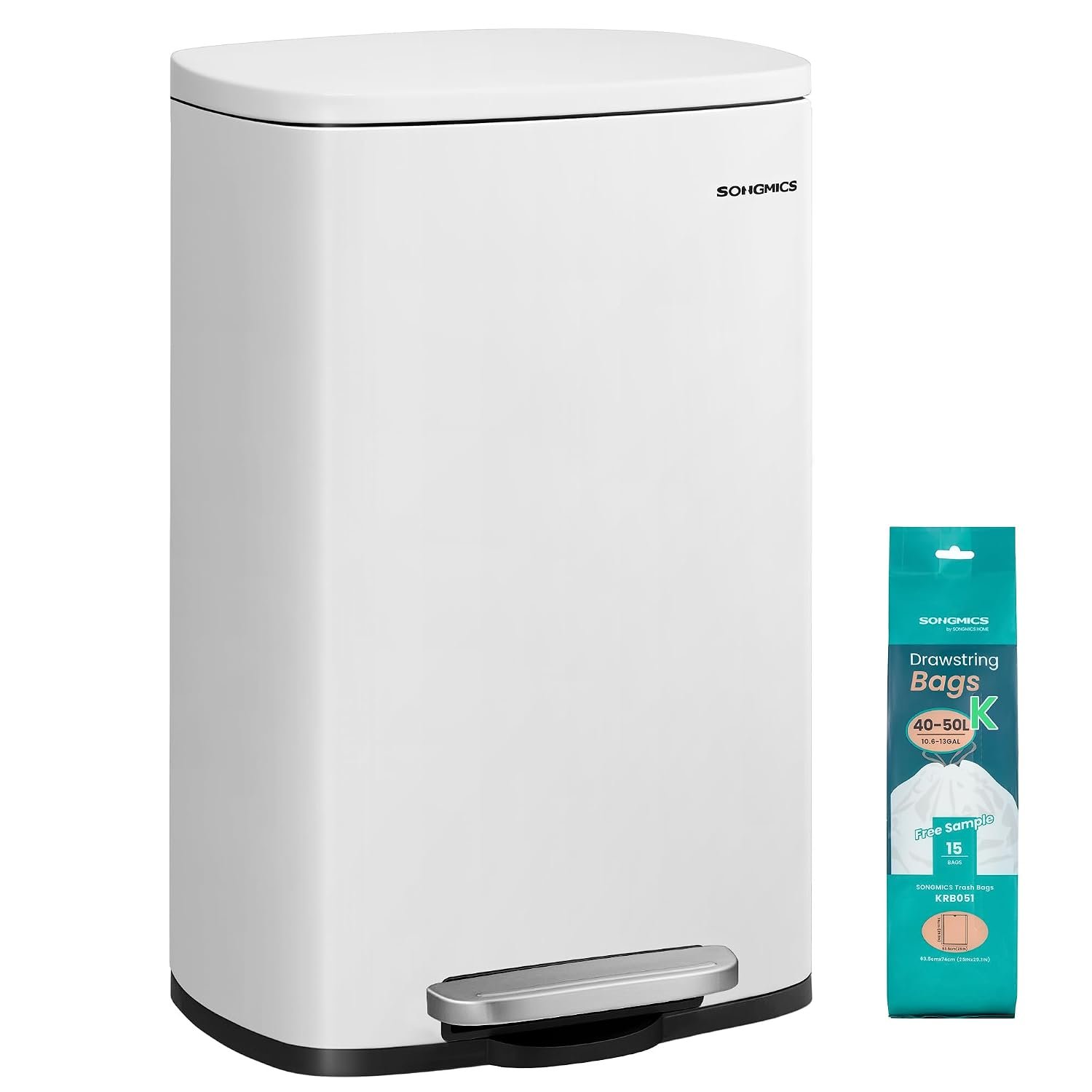
The piece as photographed for Amazon — front, side, back, detail.


As an Amazon Associate I earn from qualifying purchases.